As Tet (Lunar New Year) approaches, salaries and bonuses become the foremost concern for workers, while businesses face the challenge of addressing these expectations in order to retain labor and sustain production after the holiday.
In the first days of the twelfth lunar month, Pham Thi Hien, head of a production line at a food processing company in Vinh Loc A Industrial Park in HCMC, kept her eyes fixed on the newly signed notice outlining the company’s plan for Tet salaries and bonuses. The workshop was quiet, yet filled with anticipation as workers eagerly awaited her announcement.
This tension is not unique to this year—Tet is always the period when labor relations in industrial parks and export processing zones come under pressure. It is not merely a matter of year-end stability, but also a critical question of retaining manpower and sustaining production for the year ahead.
Maintaining smooth production post-Tet
“We prioritize retaining skilled workers, even if it means accepting reduced profits in the final months of the year. Losing employees at this time would make it extremely difficult to recruit replacements after Tet,” said the leader of an interior furniture company in HCMC.
In many factories, the recurring challenge is that retaining workers is just as critical as securing orders. Tet bonuses are viewed not merely as welfare benefits but as strategic expenditures. For many businesses, a one-month-salary bonus is considered the minimum threshold to prevent mass resignations after the holiday. Salaries and bonuses during Tet most clearly reflect a company’s financial resilience.
For employers, these payments are not simply gestures of goodwill but issues tied to year-end cash flow and capital turnover needed to sustain production. Against this backdrop, the HCMC government’s request that businesses publicly announce their salary and bonus plans before Tet is seen by personnel managers as necessary pressure. Transparency helps ease workers’ concerns while compelling businesses to plan early, rather than making last-minute decisions as the holiday approaches.
According to the HCMC Department of Internal Affairs’ report on Tet salaries and bonuses, as of December 25, 2025, a total of 3,892 businesses employing 694,302 workers had submitted salary reports for 2025 along with bonus payment plans for New Year and Tet 2026. The average Tet bonus for workers citywide is estimated at VND12.02 million, slightly lower than last year’s average of VND12.7 million.
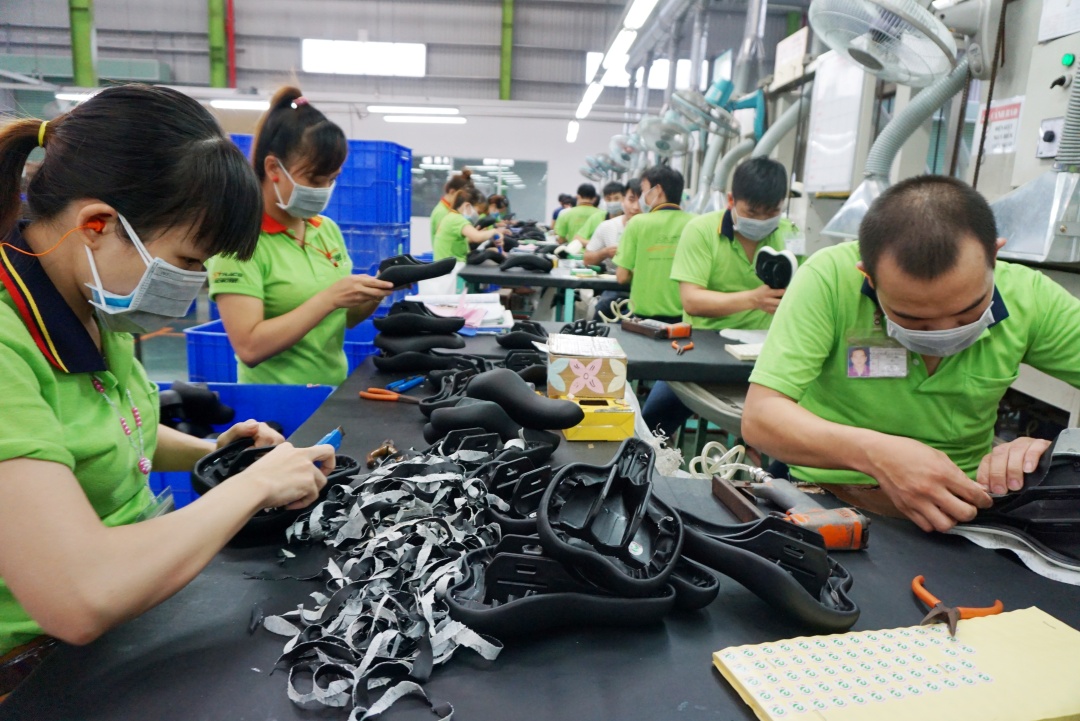
Many major businesses in HCMC have already announced their Tet salary and bonus plans. Pouyuen Vietnam, the city’s largest footwear manufacturer and employer, revealed it will allocate approximately VND1 trillion to reward nearly 41,000 workers for Tet 2026. Amid ongoing volatility in orders and rising costs, this expenditure carries more than welfare significance—it reflects the company’s deliberate strategy to stabilize its workforce and maintain production momentum ahead of the Lunar New Year.
Preventing disruption
In boarding houses across the former Binh Chanh and Thu Duc districts, the story of Tet is not only about whether bonuses are high or low, but whether they are sufficient to cover essential expenses. Rent, utility fees, and the cost of returning home all weigh heavily in the final month of the year.
One mechanical worker said that his bonus is expected to be only half of his monthly salary, prompting him to stay on and work several extra days during Tet to earn additional income. Faced with such practical choices, the importance of Tet care programs becomes clear. While bus tickets, holiday gifts, or cash support cannot solve every problem, they provide short-term relief and help ease the financial pressure on workers during this critical period.

With nearly 18 years at Saigon Food, Bui Van An, a production worker from Thanh Hoa, said that his company has consistently arranged buses to help employees return home for Tet. For some years he joined the company-organized trips, while for others he arranged transportation himself, but the proactive support plan always gave him peace of mind during the busy holiday season.
Another notable aspect of management this year is early intervention. Local authorities and industrial zones have been instructed to identify businesses at risk of salary arrears or delayed insurance payments and initiate dialogue in advance.
For businesses facing genuine hardship, local authorities in HCMC act as intermediaries, supervising legal compliance and working to prevent the worst-case scenario—collective work stoppages. Since most workers in the city are migrants, even small disruptions can escalate quickly if not addressed in time.
Businesses that succeed in retaining workers after Tet will gain a clear advantage in the first quarter of 2026, when production demand rises again. Many employers view Tet bonuses as an investment: companies that keep their workforce intact can resume operations quickly, while those facing labor shortages struggle to fulfill their orders.
At the company where Hien works, in addition to paying two months’ salaries before Tet, management has introduced a reward of 150% of the production norm for post-Tet shifts, designed to encourage workers to return promptly and stabilize production.