
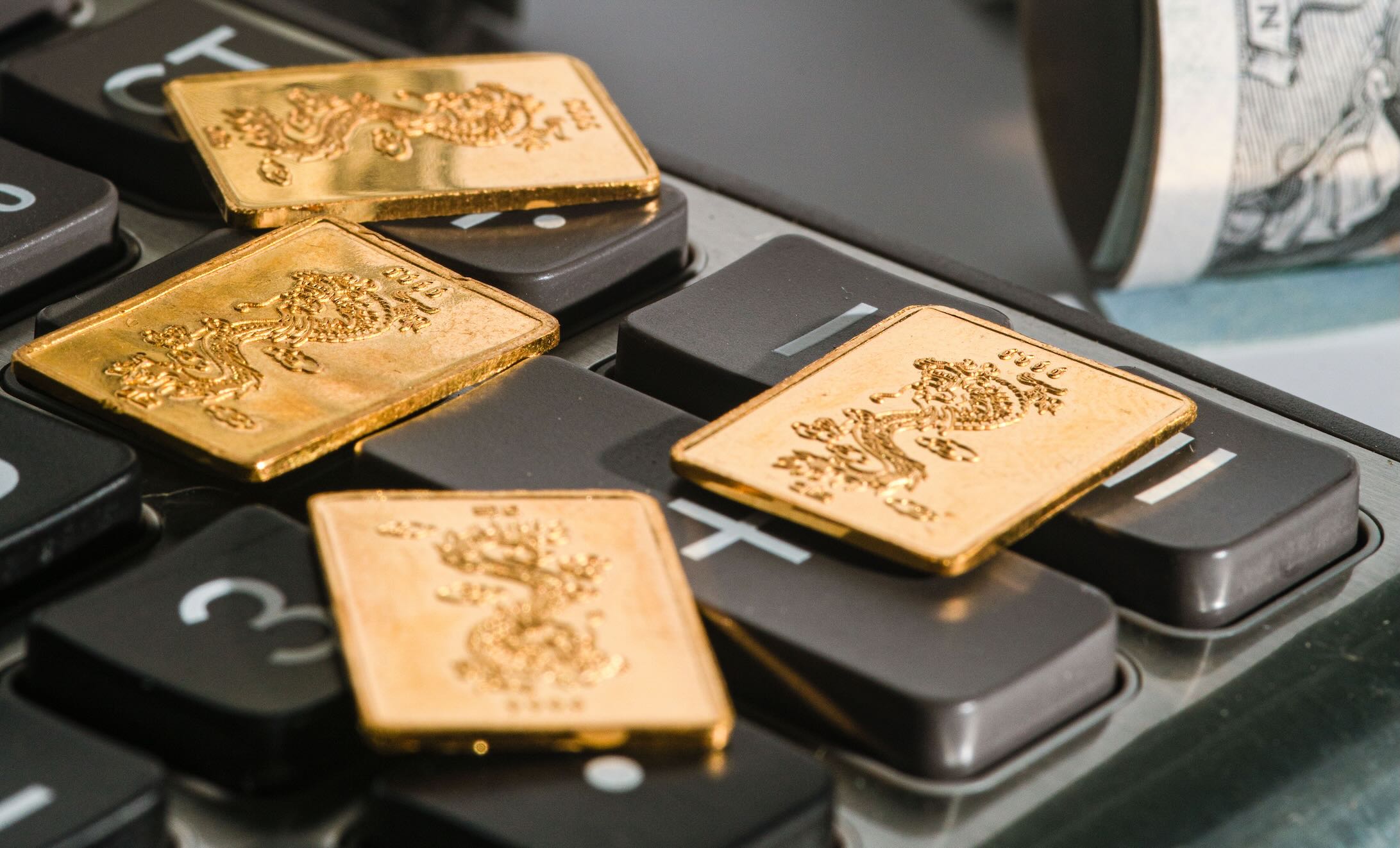



Gold prices climbed to successive record highs in 2025, continuing an upward trajectory that analysts believe is far from reaching its peak.
Price escalation Gold prices soared by more than 70% in 2025, marking their strongest annual performance in 46 years. The last time the precious metal enjoyed such a dramatic rally was in 1979, when Jimmy Carter was president of the United States. At that time, a crisis in the Middle East, surging inflation, and an energy crunch combined to drive gold sharply higher. Fast forward to 2025, and the parallels are striking. The year closed amid significant global upheavals: tariffs introduced by U.S. President Donald Trump are reshaping international trade, while military conflicts continue to flare in multiple hotspots—from the ongoing war between Russia and Ukraine and rising tensions between Israel and Iran, to border clashes between Thailand and Cambodia, and even the U.S. seizure of oil tankers off Venezuela’s coast and America carried out an attack on Venezuela and captured Venezuelan President Nicolás Maduro and his wife, and flew them out of the country to New York. In times of uncertainty, investors often gravitate toward safe‑haven assets such as gold. Long regarded as a resilient store of value, the precious metal has consistently demonstrated its ability to preserve wealth during periods of high inflation, economic turmoil, and currency devaluation. According to research by the World Gold Council (WGC), gold has historically appreciated in response to major geopolitical events since 2000. “Uncertainty remains a defining feature of the global economy,” noted Joe Cavatoni, senior market strategist at the WGC. “In this environment, gold has become increasingly appealing as a strategic diversifier and a source of stability.” Gold futures opened 2025 at around US$2,640 per troy ounce and closed the year above a record US$4,500, marking a surge of more than 70%. This dramatic rally far outpaced the S&P 500’s 18% gain over the same period. By comparison, in 2024 gold had risen 27%, while the S&P 500 advanced 24%. The boom in gold prices also reverberated through mining stocks. Two leading gold ETFs—GDX and GDXJ, which track large- and mid-cap mining companies—soared 163.9% and 177.3%, respectively, from January through Christmas Eve 2025. Other precious metals joined the ascent. Silver futures skyrocketed 146%, platinum nearly 150%, and palladium close to 100%. “Precious metals now serve as a hedge against an increasingly uncertain world,” observed Hakan Kaya, senior portfolio manager at Neuberger Berman. Interest rates, greenback, and the appeal of gold One of the key drivers behind the gold price spike is the U.S. Federal Reserve’s interest rate cuts. Lower rates typically push down bond yields, diminishing the appeal of fixed‑income assets and making gold—despite its lack of periodic income—more competitive in the eyes of investors. Analysts, citing labor market and inflation trends, expect the Fed to reduce rates at least twice in 2026. A weaker U.S. dollar, which often follows such moves, further supports gold’s rally by making the yellow metal more affordable for international buyers. Beyond boosting demand, lower borrowing costs also encourage speculation in gold, while reducing the attractiveness of holding cash or savings instruments. “An investor will want to get that money working somewhere else where they believe they can get a higher yield. So gold has historically been their go‑to commodity,” said Phillip Streible, chief market strategist at Blue Line Futures. Central banks and geopolitical factors Professor Campbell Harvey of Duke University argues that interest rates are not the sole factor behind surging gold prices. Another important factor is the growing unease among countries that have traditionally invested heavily in U.S. Treasury bonds. Confidence in assets denominated in the U.S. dollar has weakened, prompting many governments to seek alternative defensive holdings—with gold at the top of the list. “Countries that are heavily weighted in U.S.-dollar assets are looking for something else defensive, and gold is at the top of the list,” Harvey explained. This shift became more pronounced after Western governments froze Russian assets denominated in U.S. dollar following the outbreak of the Ukraine conflict in 2022. In response, Russia, China, and several other nations accelerated efforts to reduce their reliance on the Western‑dominated financial system, further bolstering demand for gold as a strategic reserve. The People’s Bank of China (PBoC) has sharply increased its gold reserves in a bid to reduce reliance on U.S. government bonds and the dollar, according to Ulf Lindahl, CEO of Currency Research Associates. In October 2025, China’s holdings of U.S. Treasuries fell to a 17‑year low of US$688.7 billion. By November, Beijing had extended its gold‑buying streak to 13 consecutive months, lifting total reserves to 74.12 million troy ounces—valued at roughly US$310.6 billion.
This trend reflects a broader shift among central banks worldwide. According to the WGC, they have purchased more than 1,000 tons of gold annually over the past three years, a sharp increase from the 400–500‑ton average of the previous decade.
“The current wave of central‑bank buying is different precisely because it is rooted in geopolitics,” noted Ole Hansen, head of commodity strategy at Saxo Bank. “The freezing of sovereign reserves and the broader fragmentation of the global financial system have introduced a structural element to gold demand that is likely to persist for years.”
2026 outlook: high prices are no longer a barrier
Major financial institutions have once again revised up their gold price forecasts. Goldman Sachs projects gold will climb to US$4,900 per troy ounce by December 2026, while Morgan Stanley expects US$4,500 by mid‑year. The Bank of America and JPMorgan are even more bullish, predicting the US$5,000 milestone will be reached before the end of 2026.
The long‑term outlook for gold is underpinned by three structural factors: sustained central‑bank buying with no signs of slowing, limited supply growth due to the high cost and lower yields of deep mining, and the emergence of a multi‑polar financial system in which gold plays a more prominent role in national reserves.
These dynamics have strengthened expectations that gold will continue its upward trajectory in 2026, even if other asset markets rebound. In a scenario of sharply rising investment demand combined with ongoing central‑bank accumulation, prices could potentially reach US$5,400 per troy ounce.
The question now is no longer whether gold is ‘too high,’ but rather what role it plays within an investment portfolio,” observed Stephen Innes, managing partner at SPI Asset Management. He explained that when gold is held as insurance against policy instability, currency devaluation, or systemic shocks, its price becomes a secondary consideration. “This is not a concern for central banks—buyers who are increasingly less sensitive to price,” Innes added.
That said, gold may face several obstacles ahead, particularly from high interest rates and a strong U.S. dollar. Analysts warn that if inflation in the United States accelerates again—driven in part by tariffs—the Federal Reserve could be forced to pause its rate‑cutting cycle or even raise rates. Such a move would increase the opportunity cost of holding non‑yielding assets like gold, potentially triggering selling pressure.
A strengthening dollar could also weigh heavily on gold prices. Robust U.S. economic growth or safe‑haven flows during market turmoil would likely bolster the greenback, creating headwinds for the precious metal.
Moreover, any easing of geopolitical tensions or a return to political stability in major economies could dampen demand for safe‑haven assets. Investors who bought gold amid conflict concerns may choose to take profits, leading to short‑term selling pressure and a correction in prices.
The People’s Bank of China (PBoC) has sharply increased its gold reserves in a bid to reduce reliance on U.S. government bonds and the dollar, according to Ulf Lindahl, CEO of Currency Research Associates. In October 2025, China’s holdings of U.S. Treasuries fell to a 17‑year low of US$688.7 billion. By November, Beijing had extended its gold‑buying streak to 13 consecutive months, lifting total reserves to 74.12 million troy ounces—valued at roughly US$310.6 billion.
This trend reflects a broader shift among central banks worldwide. According to the WGC, they have purchased more than 1,000 tons of gold annually over the past three years, a sharp increase from the 400–500‑ton average of the previous decade.
“The current wave of central‑bank buying is different precisely because it is rooted in geopolitics,” noted Ole Hansen, head of commodity strategy at Saxo Bank. “The freezing of sovereign reserves and the broader fragmentation of the global financial system have introduced a structural element to gold demand that is likely to persist for years.”
2026 outlook: high prices are no longer a barrier
Major financial institutions have once again revised up their gold price forecasts. Goldman Sachs projects gold will climb to US$4,900 per troy ounce by December 2026, while Morgan Stanley expects US$4,500 by mid‑year. The Bank of America and JPMorgan are even more bullish, predicting the US$5,000 milestone will be reached before the end of 2026.
The long‑term outlook for gold is underpinned by three structural factors: sustained central‑bank buying with no signs of slowing, limited supply growth due to the high cost and lower yields of deep mining, and the emergence of a multi‑polar financial system in which gold plays a more prominent role in national reserves.
These dynamics have strengthened expectations that gold will continue its upward trajectory in 2026, even if other asset markets rebound. In a scenario of sharply rising investment demand combined with ongoing central‑bank accumulation, prices could potentially reach US$5,400 per troy ounce.
The question now is no longer whether gold is ‘too high,’ but rather what role it plays within an investment portfolio,” observed Stephen Innes, managing partner at SPI Asset Management. He explained that when gold is held as insurance against policy instability, currency devaluation, or systemic shocks, its price becomes a secondary consideration. “This is not a concern for central banks—buyers who are increasingly less sensitive to price,” Innes added.
That said, gold may face several obstacles ahead, particularly from high interest rates and a strong U.S. dollar. Analysts warn that if inflation in the United States accelerates again—driven in part by tariffs—the Federal Reserve could be forced to pause its rate‑cutting cycle or even raise rates. Such a move would increase the opportunity cost of holding non‑yielding assets like gold, potentially triggering selling pressure.
A strengthening dollar could also weigh heavily on gold prices. Robust U.S. economic growth or safe‑haven flows during market turmoil would likely bolster the greenback, creating headwinds for the precious metal.
Moreover, any easing of geopolitical tensions or a return to political stability in major economies could dampen demand for safe‑haven assets. Investors who bought gold amid conflict concerns may choose to take profits, leading to short‑term selling pressure and a correction in prices.