Vietnam’s growth outlook this year is clouded by uncertainty in global trade, despite forecasts from international financial institutions that the country’s economic growth will remain among the highest in the region.
Awaiting trade barriers to be relieved
Nguyen Thuy Hanh, CEO of Standard Chartered Vietnam, said businesses and clients of the bank see reciprocal tariffs as a key source of uncertainty weighing on growth prospects this year. She added that ongoing negotiations with the U.S. to determine tariff rates on so-called transshipped goods are critically important.
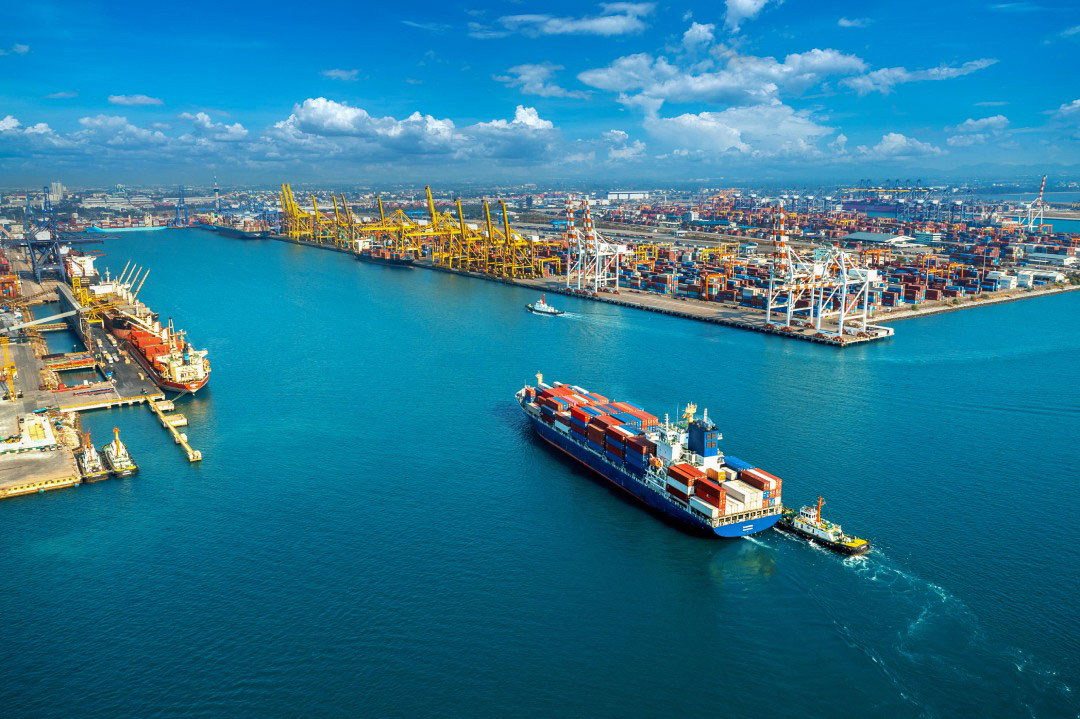
Vietnam’s international trade has shifted from anxiety to optimism. Despite being seen as one of the Asian economies most vulnerable to tariff risks, the country posted a record trade turnover of US$928 billion last year, up 18% from a year earlier, buoyed by a surge in accelerated orders, according to a report by HSBC.
As the impact of front loaded shipments to the U.S. market gradually eased, Vietnam continued to benefit from exporting products that were considered “well suited” to demand, including electronics. Electronics accounted for 35% of total export value, while exports to the United States rose by nearly 30% year-on-year.
Therefore, analysts are increasingly concerned that export momentum could slow in 2026. Earlier, Suan Teck Kin, head of Global Economics and Market Research at UOB Singapore, cautioned that a pullback following the earlier export surge, together with uncertainty over U.S. tariff policy, could act as a drag on the growth outlook.
Edward Lee, chief economist for ASEAN and South Asia at Standard Chartered Bank, said a key risk in the period ahead is that existing trade arrangements may turn out to be only temporary. For instance, the U.S.-China trade truce on rare earths is scheduled to expire at the end of this year, while Vietnam has yet to conclude an agreement on transshipment related tariffs.
Trade agreements remain vulnerable to regional geopolitical risks, even as the U.S. approaches its midterm elections. U.S. trade policy also hinges on Supreme Court rulings and uncertainty over the future trajectory of the U.S. dollar.
However, Southeast Asia is regarded as the most stable region and a prime destination for foreign direct investment, supported by competitive manufacturing capabilities and a broadly neutral stance amid global trade fragmentation. Experts at Standard Chartered said many foreign investors are currently staying on the sidelines, waiting to see whether Vietnam can secure a trade agreement that is more advantageous than those of its regional competitors.
Echoing this view, Global Investment Research at HSBC said a major source of uncertainty, particularly for Vietnam, is the U.S. announcement of a 40% tariff on transshipped goods, in the absence of a clear definition or enforcement framework. Another key concern for many Asian economies is the outlook for potential tariffs in the semiconductor sector.
Maintaining strong growth momentum
Tim Leelahaphan, senior economist for Vietnam and Thailand at Standard Chartered, said the bank’s global research team remains upbeat on Vietnam’s economic outlook. Growth is expected to be modest in the first half of the year before strengthening sharply in the second half.
Accordingly, GDP growth this year is forecast at 7.2%, a level that sits between the latest projections from HSBC at 6.7% and UOB at 7.5%.
Leelahaphan said the projected growth rate remains high for Vietnam, particularly when compared with the average of the past three years, reinforcing the country’s position as the fastest growing economy in ASEAN.

On the positive side, economic indicators such as exports continued to gain momentum toward the end of last year. On the other hand, other indicators, including industrial production, retail sales and consumption, remained stable but largely flat in the fourth quarter.
From a broader perspective, global growth dynamics, regional conditions and the outlook for global investment continue to have a significant impact on Vietnam. These factors represent persistent and uncertain headwinds.
Specifically, according to Edward Lee, global growth is expected to hold at around 3.3-3.4%, broadly in line with last year but still slower than the pace seen before the Covid-19 pandemic. Growth in Asia is projected to moderate, particularly in China, with spillover effects across the region.
Supportive factors include interest rate cuts by central banks, inflation remaining under control, and accommodative fiscal policy. Meanwhile, key concerns center on movements in U.S. dollar interest rates and the impact on valuations of artificial intelligence related companies. “Everything appears stable on the surface, but beneath that lie many hidden risks,” Edward Lee said in describing the global economic outlook this year.