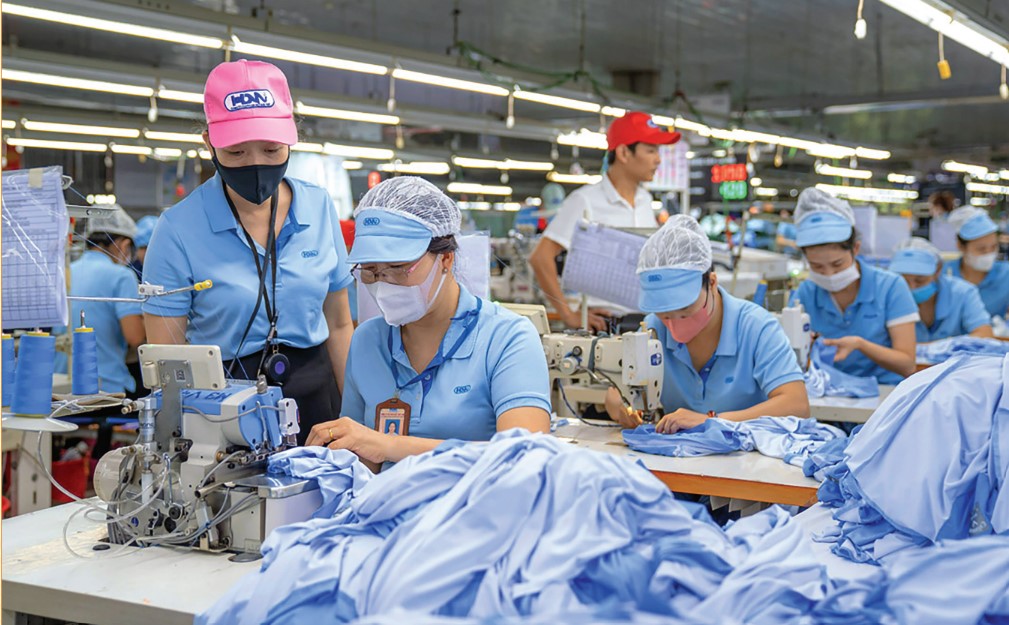
With the risk of an escalating trade war and unpredictable tariff policies under U.S. President Donald Trump, exporters in Vietnam are anxiously racing to get prepared. Strategies range from diversifying supply chains to expanding into new markets, all aimed at mitigating potential impacts.
Shifting supply sources to mitigate risk
The U.S. is moving forward with plans to increase tariffs on Chinese imports, potentially raising them to a total of 35%. While major trading partners like Canada and Mexico have been granted a 30-day pause on the tariff threats, the risk remains if agreements are not reached. Aware of these uncertainties, exporters in Vietnam are taking proactive measures for protecting themselves.
Viet Thang Jeans (VitaJean) has demonstrated agility in navigating these trade shifts, increasing U.S. exports from 30% to 45% of its total output by leveraging flexible manufacturing and strategic partnerships in Mexico. Anticipating potential U.S. tariffs on Mexican goods, the company is exploring options to shift orders back to Vietnam and secure alternative raw material sources to maintain its competitiveness.
According to Pham Van Viet, general manager of VitaJean, sourcing materials from India, Indonesia, Thailand, or even domestically is a key strategy to counter market volatility. Currently, over a third of VitaJean’s raw materials come from China, and a 10% tariff hike by the U.S. would translate to a 5-6% increase in production costs, posing a significant challenge to competitiveness.
The furniture industry is witnessing a notable shift. Dien Quang Hiep, general manager of Minh Phat 2 Company Limited (Mifaco), which exports over 90% of its products to the U.S., reported a surge in orders immediately following Trump’s re-election. First-quarter 2025 orders more than doubled compared to the same period last year.
“Mifaco’s experience is mirrored by many businesses in the sector, which are seeing increased U.S. orders as buyers look to diversify away from China,” Hiep said. The U.S. tariff hike on Chinese goods, he expects, could further boost exports from Vietnam, particularly from industries such as furniture, garments and footwear.
To avoid over-reliance on the U.S. market, Mifaco is also exploring those markets having free trade agreements (FTAs) with Vietnam to take advantage of preferential tariffs. Additionally, the company is transitioning to smart manufacturing and modern management practices to stay competitive. “Any advantage is meaningless if our prices are not competitive, especially as foreign companies increasingly relocate production to Vietnam for U.S. exports,” Hiep emphasized.
Industries like agriculture, footwear, seafood and electronics, which are key Vietnamese exports to the U.S., have also had contingency plans, drawing on their experience navigating trade tensions during Trump’s previous term and the Covid-19 pandemic.
“We have two or three backup strategies,” said Pham Van Viet of VitaJean. “One approach is securing domestic and international raw materials from countries not subject to tariffs. Additionally, our market reach has expanded significantly. The textile industry, for instance, which previously served fewer than 80 markets, now reaches over 100. Modern technology allows businesses to quickly adapt production for smaller orders in specific markets, ensuring greater flexibility and more competitive pricing than before.”
The need for domestic raw materials and FDI oversight
Pham Xuan Hong, chairman of the Association of Garments, Textiles, Embroidery and Knitting of HCMC (Agtex), noted that the shift of garment orders to Vietnam has accelerated following Trump’s re-election. Most businesses already have orders secured through the second quarter.
If the U.S. maintains high tariffs on Chinese goods, importers will continue shifting production to Vietnam, Hong said. He predicted that this trend could boost the industry’s export revenue by 15% this year.
The U.S. market accounts for over 60% of Vietnam’s wood product exports, and current trade conditions favor Vietnam. While Chinese wooden products face a 25% U.S. tariff, Vietnamese exports enjoy a 0% rate, positioning the country as a more attractive supplier. Industry leaders expect this tariff gap to further drive investment and export growth in Vietnam’s wood processing sector.
Despite these opportunities, a critical challenge remains: Vietnam’s textile, garment, and footwear industries still depend on imports with 70% of raw materials imported, a majority of them coming from China. Industry experts stress the need to boost domestic production of raw materials and accessories to strengthen supply chain resilience.
Another growing concern is the risk of Chinese goods bearing Vietnamese labels to circumvent U.S. tariffs. Businesses must remain vigilant and implement trade defense measures to prevent potential violations that could jeopardize Vietnam’s standing in the global market.
Hong stressed that Vietnam must carefully manage FDI inflows into the garment and footwear industries, particularly from China. Without proper oversight, such investments could expose Vietnam to U.S. tariff risks. He underlined the importance of selecting FDI projects that add real value to the industry, particularly in areas with raw material shortages, such as textiles.
Nguyen Quoc Viet, deputy director of the Vietnam Institute for Economic and Policy Research (VEPR), urged businesses to focus on improving product quality rather than competing solely on price, as lower-priced products are more susceptible to anti-dumping investigations. He also recommended increasing the use of domestic raw materials or sourcing from countries not subject to U.S. trade remedy measures to minimize risks of tariff evasion probes.
Experts warn that the U.S. trade deficit with Vietnam could lead Washington to impose tariffs on Vietnamese goods in the future. Such a move would significantly impact Vietnam’s trade and economic growth, given the country’s strong reliance on exports.
To mitigate these risks, businesses must adopt long-term strategies, including diversifying export markets, enhancing supply chain resilience, and ensuring compliance with international trade regulations.
Experts believe that proactive diplomatic efforts will be crucial in mitigating the risk of U.S. tariffs on Vietnamese exports. Maintaining open communication channels and engaging in direct dialogue with the Trump administration could help reduce trade tensions and prevent sudden tariff impositions.
Vietnam is exploring ways to increase imports from the U.S. to quickly narrow the trade deficit and demonstrate a commitment to addressing the trade imbalance.
Amid rising global trade protectionism, the Ministry of Industry and Trade advises businesses to stay informed about evolving trade regulations and policies. Regular updates on protective measures and trade barriers imposed by international partners will be essential for businesses to remain competitive and compliant.
While challenges persist, businesses see this period as one requiring careful planning rather than panic. Many are closely monitoring global developments to anticipate shifts in trade policy and proactively adjust their strategies.