Located on the outskirts of the central city of Hue, Long Ho Village in Kim Tra Ward offers a glimpse into a community where tradition and history remain deeply rooted.
The beach morning glory (Ipomoea pes-caprae) is a hardy vine that colors wild coastlines with bell-shaped, pastel-purple flowers at sunrise.
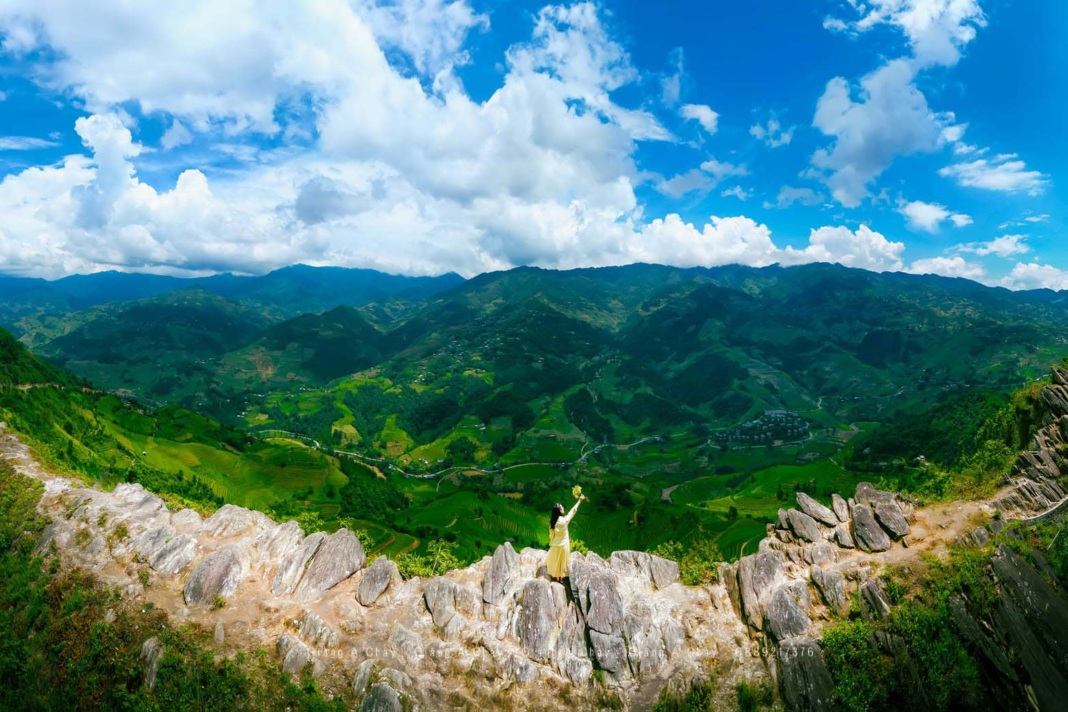
The dinosaur spine-shaped rock ridge atop a mountain in De Xu Phinh Commune, Mu Cang Chai District, Yen Bai Province, has become a popular destination for tourists seeking picturesque landscapes.
Located approximately 19 kilometers southeast of Mu Cang Chai Town, the ridge is a precarious geological formation resembling a dinosaur’s spine, drawing visitors for trekking and sightseeing.
A tourist poses on the “dinosaur spine” in De Xu Phinh Commune, Mu Cang Chai District, Yen Bai Province - PHOTO: GIANG A CHAY
Although less renowned than the ‘dinosaur spine’ formations in Binh Lieu (Quang Ninh Province) and Ta Xua (Son La Province), this site captivates tourists with its majestic mountainous scenery and dense forests. The narrow, rugged trail enhances its appeal, standing out against the natural beauty of Mu Cang Chai in Vietnam’s northernmost mountainous region.
Mu Cang Chai is known for its breathtaking landscapes across several communes, including La Pan Tan, Che Cu Nha, De Xu Phinh, Kim Noi, Mo De, and Lao Chai.
Located on the outskirts of the central city of Hue, Long Ho Village in Kim Tra Ward offers a glimpse into a community where tradition and history remain deeply rooted.