




“Vietnam has the second largest volume of rare earth deposits in the world, so it is important for the country to acquire new technologies for extracting and processing rare earths,” said Assoc. Professor Le Ba Thuan, former head of the Institute for Technology of Radioactive and Rare Elements, in a talk with The Saigon Times.
New technology required The Saigon Times: Experts at the seminar “Vietnam’s rare earths: current extracting and processing technologies and prospects” agreed that only a handful of countries have the deep-processing technologies but they would not transfer them. What is your view on this issue, and can Vietnam have the capacity to access and perfect rare-earth processing technologies? Assoc. Professor Le Ba Thuan: In the first place, it must be clarified that the desire to acquire new technologies does not mean we do not have the relevant technology. Rare earth extracting and processing technologies must always be further studied and improved to cut costs and maximize the recovery rate of precious metals and other precious elements in the ore, or to minimize impacts on the environment. We do own exploitation and processing technologies, but we need to further improve such technologies.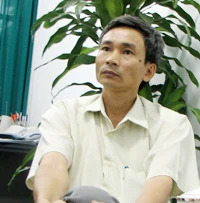
Given the peculiar properties of mineral deposits in Vietnam, do you think we should prioritize technologies from some particular partners?
That is not the point. Rare earth processing technologies share a similar chart, encompassing ore extraction, and refining rare earth oxide ore into separate rare earth metals. However, as mentioned above, each mine has particular properties. Therefore, it is important to single out a technology suitable to the mine. China’s technologies are good ones, and many countries have applied Chinese technologies after spending some time conducting their own studies. American technologies also have something in common with those of China and Japan. In addition, there are always exchanges and reciprocal learning of one another’s technologies. Regarding a technology for Vietnam, we cannot rely entirely on a single technology from a certain country. Based on the common technology platform, we need to localize research, identify and address problems, and single out a technology suitable for each specific ore or mine in Vietnam. Golden time There are some arguments that although the global rare earth market remains modest, worth less than US$10 billion a year, studies have been conducted to recycle rare earths or to look for other materials to replace rare earths. That means Vietnam does not have much time left if it wants to become a major exporter of rare earths. What is your view? This argument is among assumptions that are given on the basis of current data. We are now in a period when rare earths are viewed as an essential vitamin for new industries. The demand for rare earths is steadily rising, and the rare earth industry is making leaps and bounds. Extracting and processing rare earths is bringing about good profits for countries with large reserves. For Vietnam, the domestic economy will be more appealing to foreign investors once the country has a decisive say on the rare earth material. We will have better comparative advantages to lure high-tech investors who come to manufacture products using rare earths. On the other hand, under the current geo-political circumstance, the exploitation and processing of rare earths will enhance our position at international forums. In your opinion, what policies or solutions are needed to develop the rare earth industry in a sustainable way, without compromising the environment? In the rare earth industry, there are two major business spheres, namely research on the application of rare earths into the manufacturing sector, and processing rare earths into materials for the manufacturing sector. In my opinion, in the first business sphere, research institutes, universities and certain enterprises should be allowed to take the initiative in dertermining how to research and develop applications depending on their demands and capacity as well as the market demand. In the second sphere, at the above-mentioned seminar, we proposed that an R&D center be established to conduct technology transfer regarding the processing technology for Vietnam’s rare earths. This center will have several mandates. First, to continue improving the local rare earth processing technology. This is very important because in order to attract foreign investors into this industry, we need to own technologies on a commercial basis, albeit on a small-scale, which will help investors feel rest-assured when pouring millions or tens of millions of dollars as additional funds into rare earth processing. For domestic enterprises, the cost for R&D regarding rare earth processing technologies is very limited, and many enterprises want to cut corners by relying on imported technologies. However, if they want to become smart buyers, they must be able to assess whether the imported technology is advanced and efficient or not, the cost of investment, and its impacts on the environment. Importing a technology is not always easy. In case foreign owners do not want to or cannot transfer certain technologies, then local partners must have technologies of their own, their core technologies. Vietnam has the second largest reserves of rare earths in the world, so the country must develop technologies for extracting and processing this special natural resource. Second, such an R&D center will be the venue for introducing technologies to local and foreign enterprises with concerns so that they may feel assured of having technologies transferred by the center. Third, this center will pave the way for international cooperation regarding technologies for exploiting and processing Vietnam’s rare earths. Countries often seek to strengthen sci-tech cooperation to create investment opportunities for their own enterprises.
Finally, such an R&D center will be responsible for manpower training in this industry. The Institute for Technology of Radioactive and Rare Elements has studied technologies for rare earth exploiting and processing for some 30 to 40 years now. If further investment is made into this institute alongside policies to promote research-industry cooperation, Vietnam will soon have factories tapping and processing rare earths.
As a latecomer in the rare earth industry, how should Vietnam learn from other countries, such as China?
To attain the current development level, China used to experience failures. In the first stage, for example, China encouraged all stakeholders to invest in the rare earth industry. The uncontrolled exploitation pushed down rare earth prices, while environmental protection was not tightly supervised, resulting in grave consequences. Currently, apart from being able to remedy environmental woes, China has managed to shore up rare earth prices and control the export volume, and has had a strategy to retain the resource for domestic manufacturing and consumption, with globally competitive products like magnet for wind turbines or batteries for electric vehicles. Vietnam can learn from China as well as other developed countries like the U.S. and Japan those experiences and knowledge best suitable for the country’s rare earth industry.
Reported by Hoang Hanh





