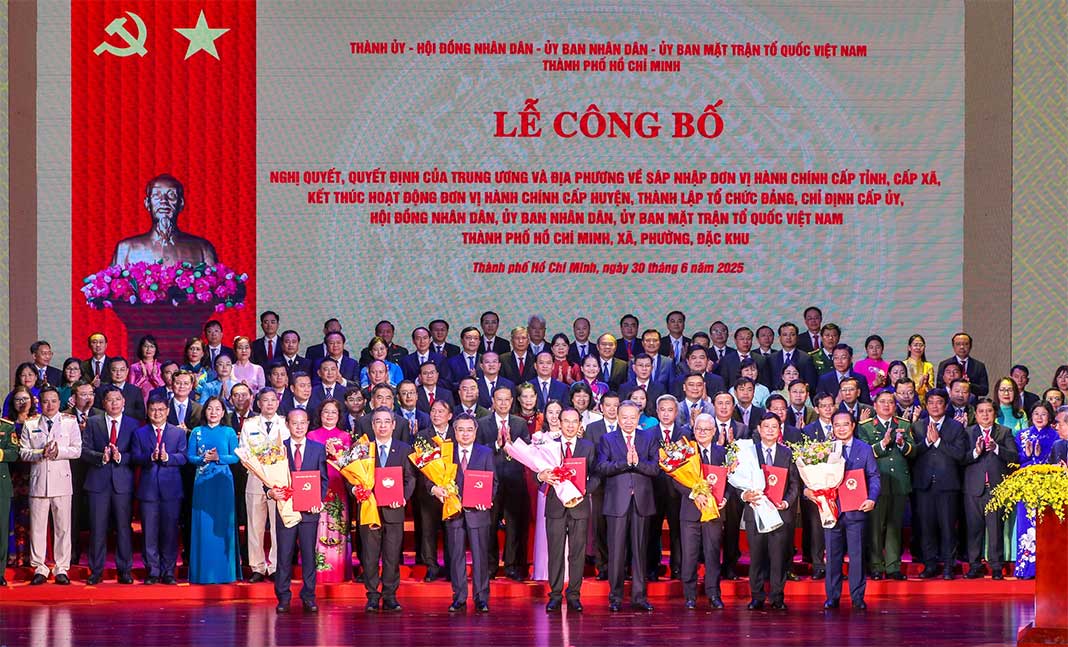
HCMC - Simultaneous ceremonies were held today across the country to announce sweeping changes to its administrative map and political apparatus, marking what is describe as a historic transformation aimed at streamlining governance and ushering in a new era of national development.
The nationwide events, beginning at 8 a.m., officially disclosed resolutions and decisions by the Communist Party of Vietnam, the National Assembly, the Government, and the Central Committee of Vietnam Fatherland Front concerning the consolidation of provincial- and commune-level administrative units, the formation of new Party organizations, and the appointment of key personnel across the political hierarchy — from Party committees to People’s Councils, People’s Committees, and Fatherland Front chapters at all levels.
Top Vietnamese leaders attended the ceremonies in key cities: General Secretary To Lam in Ho Chi Minh City, State President Luong Cuong in Hanoi City, Prime Minister Pham Minh Chinh in Haiphong City, National Assembly Chairman Tran Thanh Man in Can Tho City, and Permanent member of the Party Secretariat Tran Cam Tu in Danang City. Other senior Party, Government and National Assembly officials were dispatched to provinces and districts nationwide.
 Boldest territorial reform in nearly 50 years
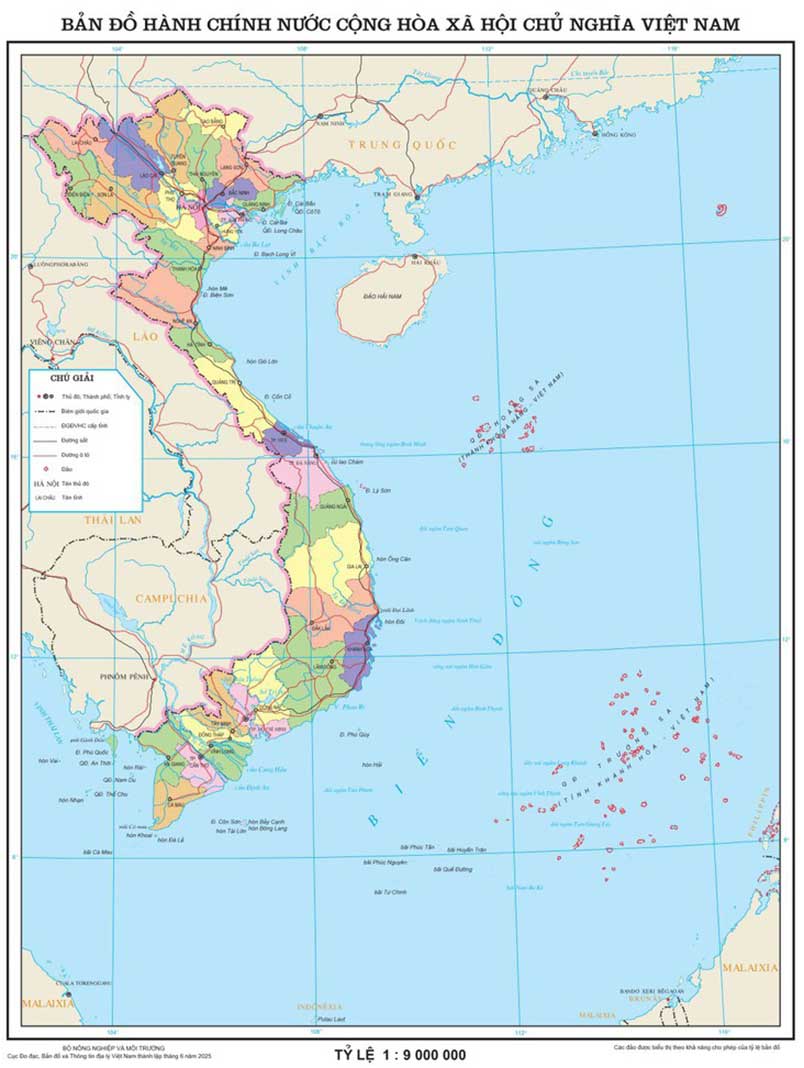
The scale of the administrative restructuring is unprecedented in modern Vietnamese history. For the first time since national reunification in 1975, the number of provincial-level units has been dramatically reduced—from 63 to 34—following a resolution approved by the National Assembly on June 12. At the commune level, the total has been slashed from 10,035 to just 3,321 units, now comprising 2,621 communes, 687 wards, and 13 special zones.
The consolidation is not merely geographical but deeply institutional. It introduces a two-level local government model, eliminating the district level, which is designed to be leaner, more efficient, and more responsive to the needs of citizens and businesses.
A structural shift toward proactive governance
The transformation stems from Resolution No. 60-NQ/TW issued on April 12 by the Party Central Committee, which outlined the blueprint for merging administrative units and overhauling the government structure. The Politburo and Secretariat subsequently issued guiding decisions, culminating in the sweeping resolutions made public today.
According to the newly issued decisions:
The National Assembly Standing Committee appointed leaders of People’s Councils and National Assembly delegations in the new provinces and centrally-governed cities.
The Prime Minister named chairpersons and vice chairpersons of provincial-level People’s Committees.
The Central Committee of Vietnam Fatherland Front established provincial-level chapters.
Provincial-level Party committees formed new Party organizations at the commune/ward level, appointing leadership.
The restructuring reflects evolving governance trends worldwide, with Vietnam embracing international models of two-level administration to improve policy implementation and bring government closer to the people.
As the new provincial and communal structures take shape, today’s ceremonies serve not only as an administrative milestone but also as a symbolic starting point for Vietnam’s next development chapter.