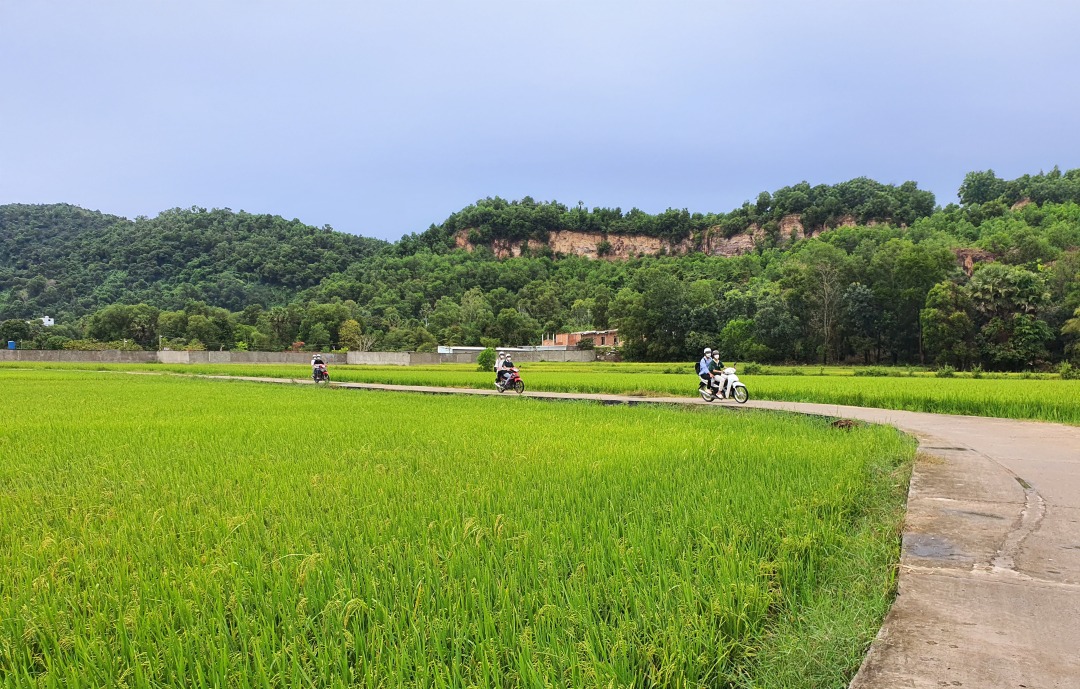
The Mekong Delta has long been perceived solely as a land for cultivating paddy, fruit trees, fish and shrimp. This mindset, entrenched over many years, has become an invisible barrier, preventing the country’s most fertile region from being systematically integrated into national strategies for forestry and timber development.
Vietnam’s wood and woodwork exports totaled approximately US$13.4 billion in 2023, reflecting the impact of weaker global demand. The industry rebounded strongly in 2024, with exports rising 20.3% year-on-year to US$16.25 billion, securing Vietnam’s position among the world’s top five woodwork exporters. Furniture shipments contributed US$6.44 billion, representing 30.4% of total exports. The United States remained Vietnam’s largest market, accounting for more than 55% of overall woodwork exports.
Despite robust export growth, Vietnam’s woodwork industry remains heavily reliant on imported raw materials. In 2024, wood and wood product imports reached US$2.81 billion, a 28.1% increase from 2023. Raw wood alone accounted for approximately US$2.4 billion, representing 85.2% of total imports. Sawn timber imports rose sharply to 2.39 million cubic meters, valued at US$923 million—up 66.4% year-on-year. In the first half of 2025, Vietnam imported 2.5 million cubic meters of timber worth US$838.4 million, marking a significant rise in both volume and value compared with the same period a year earlier.
Meanwhile, domestic forest resources remain insufficient to meet industry demand. In 2023, Vietnam harvested approximately 20.8 million cubic meters of wood. The volume rose to 23.3 million cubic meters in 2024, yet it still fell short of the requirements for export-oriented production. This underscores raw material supply as the most significant constraint facing Vietnam’s woodwork industry.
Having sufficient conditions for growing wood
When discussing afforestation or the development of the wood industry, attention is often directed toward mountainous regions in the North or the Central Highlands, where natural forests, vast land areas, and cool climates prevail. By contrast, the Mekong Delta has long been perceived solely as a land for cultivating paddy, fruit trees, fish and shrimp. This mindset, entrenched over many years, has become an invisible barrier, preventing the country’s most fertile region from being systematically integrated into national strategies for forestry and timber development.
A closer examination of the Mekong Delta’s natural, social, and economic conditions reveals strong potential for developing wood cultivation and processing as a sustainable industry. Owing to its unique geological features, many areas—particularly along the Vietnam–Cambodia border—are characterized by thin layers of young alluvium over ancient alluvial deposits that are infertile or affected by salinity. Historically, these lands were swamps, lowlands, or riparian forests, reclaimed only in recent decades. Beneath the seemingly fertile surface lies clay, acidic, or saline soil, which limits fertility retention and hampers effective drainage.
These borderland areas are strongly influenced by the hydrology of the Mekong River and lie far from reliable freshwater sources. As a result, they face severe water shortages during the dry season and prolonged flooding in the rainy season. Such conditions make intensive agriculture difficult, particularly rice cultivation, which requires stable water supplies and fertile soil. This harsh environment leaves many farming households vulnerable, with agricultural outcomes swinging between bumper harvests and crop failures, heavily dependent on climate and hydrological patterns.
In recent years, reclamation and irrigation programs have enhanced these areas for rice cultivation, particularly enabling a third crop in regions protected by embankments. A key advantage lies in the annual deposition of natural alluvium from floodwaters, which enriches soil fertility and improves its quality. As a result, farmers are able to harvest two to three rice crops each year, ensuring a steady source of income.
In recent years, however, low flood levels combined with extensive embankment construction have prevented these areas from receiving natural alluvium deposits. Floodwaters no longer flow across the fields, depriving the soil of its ability to “rest” and “self-recover” as in the past. Continuous intensive farming to maximize crop yields has further degraded soil structure and reduced fertility.
To sustain productivity, farmers have been forced to rely increasingly on chemical fertilizers and pesticides, driving up production costs. At the same time, fertilizer prices have risen steadily, paddy prices remain volatile, and labor and fuel costs continue to climb—eroding the economic value of rice cultivation. In many regions, farmers earn little or even suffer losses, yet remain tied to their work due to the lack of viable alternatives.
Rice, once a symbol of sufficiency, has now become a burden for farmers in the upstream Mekong Delta. Fields that were previously enriched by annual alluvium deposits have turned barren, requiring constant irrigation, fertilization, and pesticide use—a vicious cycle that consumes labor and money without ensuring stable income.
The situation has worsened as climate change and hydropower development upstream increasingly disrupt the river’s flow and sediment supply. Floodwaters arrive late and carry less alluvium, while the dry season extends and saline intrusion deepens. With the water regime no longer stable, many upstream and central areas experience temporary drought, while coastal zones suffer year-round salinity.
This volatility not only destabilizes agriculture but also jeopardizes the livelihoods of millions of people. Extreme events—such as the historic saline intrusion in 2016, severe flooding in 2020, and the unusual flood patterns of 2024 and 2025—underscore that the Mekong Delta is confronting unprecedented ecological challenges.
In this context, transforming the farming system has become a critical issue for the Mekong Delta, particularly in upstream regions and infertile paddy-growing areas. Various models have been tested—from cultivating lotus and vegetables to raising fish, and from growing fruit to pharmaceutical plants—but most remain small in scale and fail to deliver stable, sustainable income.
Three big barriers
In this context, cultivating perennial trees for timber emerges as a promising new direction to meet domestic demand. This approach enables more sustainable land use, eases the pressure of short-term cropping, reduces risks from volatile water conditions, and provides long-term livelihoods for local communities. Beyond economic value, timber trees also enhance soil quality, conserve water, and restore ecological balance—contributing to climate change mitigation in line with national programs for “green economy, circular agriculture, and low-emission” development. Nevertheless, the development of the wood industry in the Mekong Delta continues to face significant obstacles, which can be grouped into three major categories.
Incorrect social awareness: A prevailing perception among authorities and local communities is that “the Mekong Delta cannot be afforested.” As a result, the wood industry has never been incorporated into formal planning. This absence of recognition has left the sector without long-term direction, supportive incentives, or a foundation for research into applications tailored to the region’s unique soil and hydrological conditions.
Lack of programs for coordinated development and sustainable livelihoods: The Mekong Delta has yet to implement a forestry development program at the regional scale. Communities that rely on natural exploitation—such as fishing or riverside harvesting—continue to face unstable employment. Many households own only small plots of land, or none at all, making individual afforestation efforts unfeasible. In this context, organizing community-based production chains (through cooperatives and traditional craft villages) and fostering business–farmer alliances are essential to secure stable incomes during the initial stages of development.
Lack of support mechanisms, policies, and infrastructure: To date, there has been no clear policy framework for converting low-yield farmland into economic forestry land. Private enterprises remain hesitant to invest in wood processing in the Mekong Delta due to limited land availability, insufficient credit incentives, and inadequate infrastructure. Weak seaport facilities, underdeveloped logistics, and a fragile wood supply chain further drive up transportation costs, making the region less attractive to investors.
New vision needed
The challenges outlined above highlight the urgent need for a new vision for the Mekong Delta’s wood industry. With its flat terrain, extensive waterway networks, and abundant labor force, the region holds strong potential to develop a deep-processing, green-material wood industry. By establishing a closed value chain—from tree cultivation and processing to consumption and export—the Mekong Delta can transform its agricultural limitations into a sustainable forestry-based economy.
Drafting a wood industry development strategy for the Mekong Delta requires a regional vision that goes beyond addressing raw material shortages or supporting local livelihood transitions. The broader goal must be to strengthen the relationship between people and nature, enabling adaptation to unpredictable water regimes, restoring ecological balance in the downstream Mekong River, and contributing to the nation’s transition toward a green economy.