


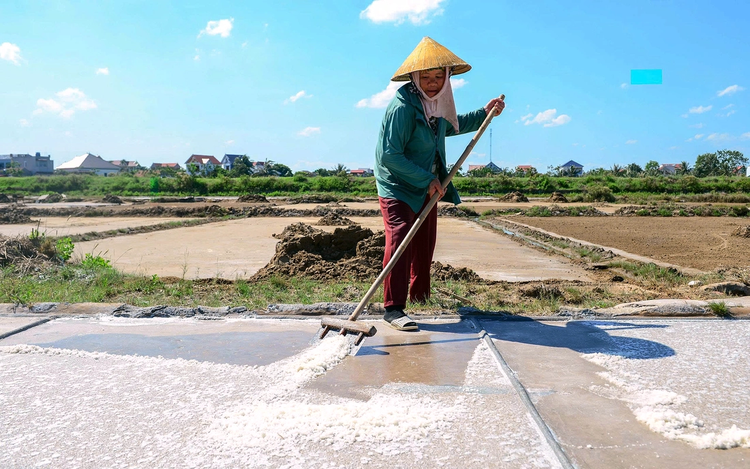
A salt farmer in Hoa Loc Commune, Thanh Hoa Province works on a salt field under 40-degree-Celsius heat. Photo: Hoang Dong
According to salt workers in Tam Hoa salt village in Hoa Loc Commune, home to the largest salt fields in Thanh Hoa, salt-making has existed in the area for hundreds of years.
The profession depends heavily on hot weather conditions, with stronger sunlight and higher temperatures creating ideal conditions for salt production.
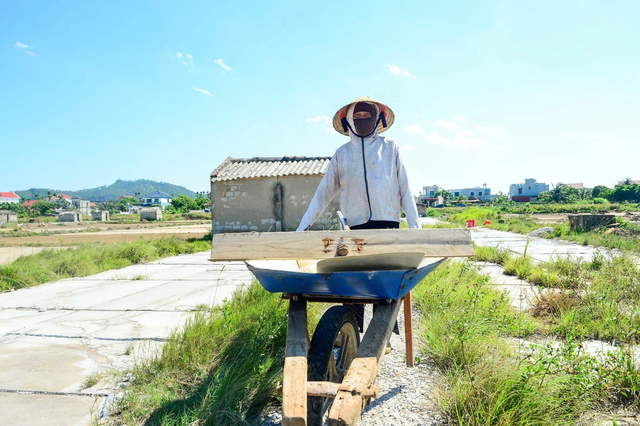
A salt farmer heads to her salt field in Hoa Loc Commune, Thanh Hoa Province, north-central Vietnam. Photo: Hoang Dong
Each year, local salt farmers can only work during about six sunny months.
To produce salt, workers head to the fields early in the morning to prepare the ground, shovel soil into embankments, and pump seawater from reservoirs onto drying yards.
They then soak sand in seawater, known locally as first-grade brine, before spreading the sand across compacted earthen yards to dry.
Seawater filtered through the dried sand creates a saltier solution called second-grade brine.
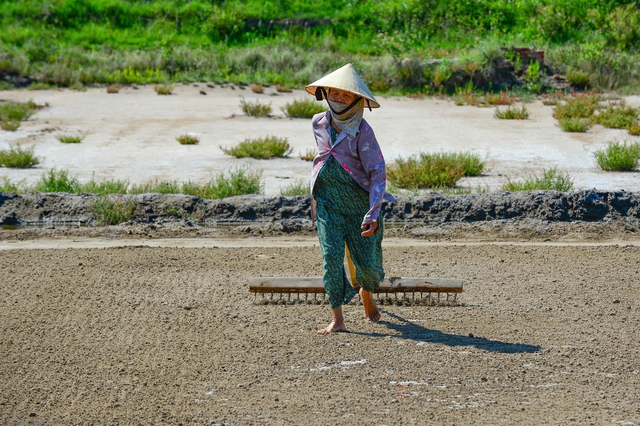
A salt farmer works on a salt field in Hoa Loc Commune, Thanh Hoa Province, north-central Vietnam. Photo: Hoang Dong
The process continues by drying the sand further and filtering second-grade brine through it to create even saltier third-grade brine.
After many additional stages, salt farmers adjust the amount of seawater flowing into the salt fields based on sunlight intensity and wind direction.
Between 3:00 pm and 5:00 pm each day, after hours of intense heat causes seawater to evaporate, salt begins forming on the concrete fields.
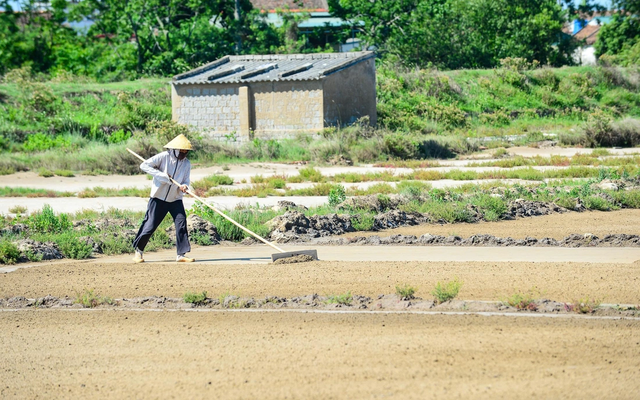
A salt farmer works on a salt field in Hoa Loc Commune, Thanh Hoa Province, north-central Vietnam. Photo: Hoang Dong
Le Van Kien, director of Tam Hoa Salt Cooperative in Hoa Loc, said the commune currently has two salt fields covering a total area of around 26 hectares, with about 80 households engaged in salt production.
However, salt prices have remained low for many years, ranging from just VND2,100 (US$0.07) to VND2,300 ($0.08) per kilogram.
Two laborers working strenuously under 40-degree-Celsius heat can produce around 100 kilograms of finished salt per day, earning only slightly more than VND200,000 ($7.6).
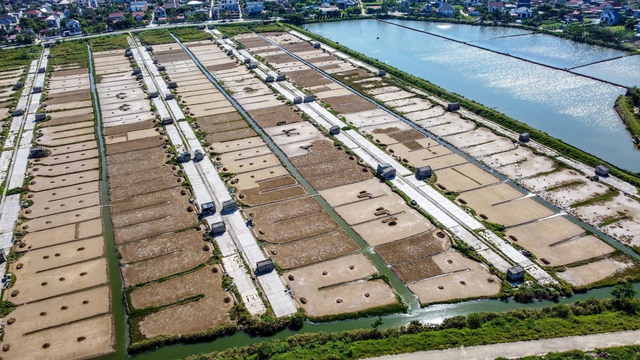
Salt fields in Hoa Loc Commune, Thanh Hoa Province, north-central Vietnam. Photo: Hoang Dong
Despite the hardships, local salt farmers remain devoted to the traditional trade passed down through generations and continue to stay committed to their traditional craft.
They hope the government will introduce practical support policies, including funding to improve salt fields, assistance in finding stable markets, and measures to increase the value of salt products so farmers can continue making a living from the salt fields.
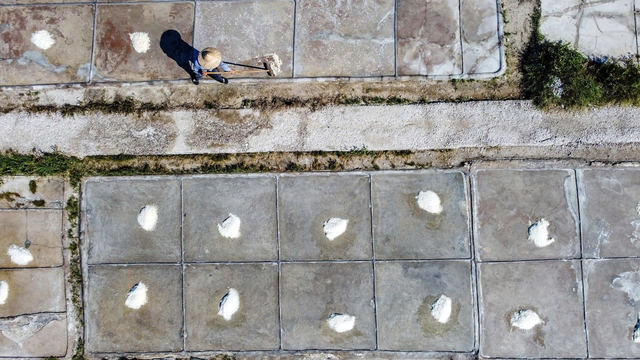
Finished salt products are gathered on salt fields in Hoa Loc Commune, Thanh Hoa Province, north-central Vietnam. Photo: Hoang Dong
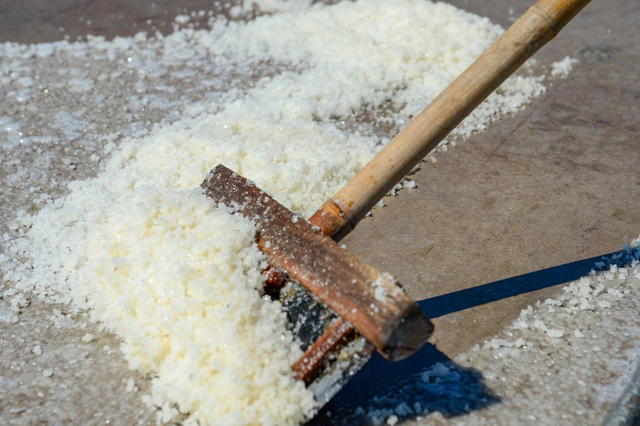
Salt is produced during 40-degree Celsius heat in Hoa Loc Commune, Thanh Hoa Province, north-central Vietnam. Photo: Hoang Dong
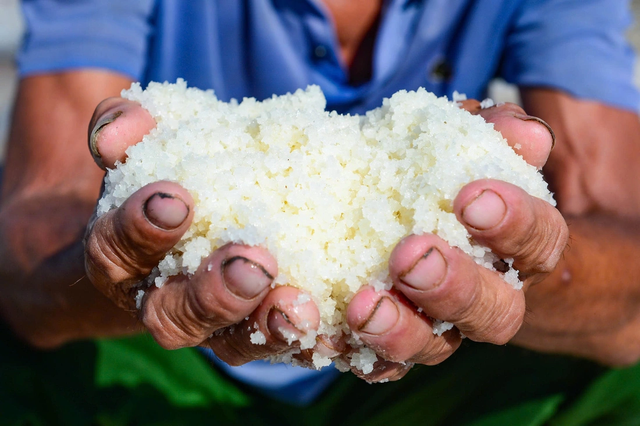
The fruits of labor of salt farmers in Hoa Loc Commune, Thanh Hoa Province, north-central Vietnam. Photo: Hoang Dong
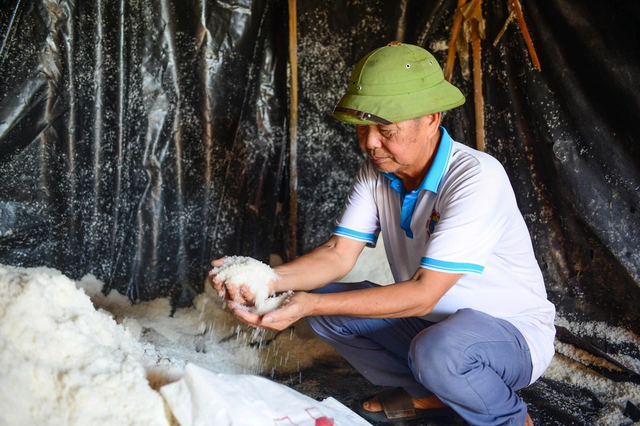
Finished salt products are transported to storage warehouses. Photo: Hoang Dong

A salt farmer takes a break on a salt field in Hoa Loc Commune, Thanh Hoa Province, north-central Vietnam. Photo: Hoang Dong








Max: 1500 characters
There are no comments yet. Be the first to comment.