


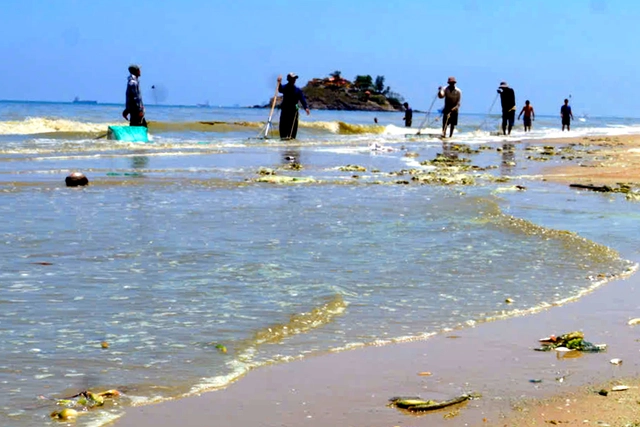
Bai Sau Beach in Vung Tau Ward, Ho Chi Minh City, where seawater turned green, likely due to a microalgae bloom, April 4, 2026. Photo: A.B.
On that day, nearshore waters from Bai Sau Beach in Vung Tau Ward to Long Cung Beach in Rach Dua Ward appeared unusually green, in sharp contrast to offshore waters, which remained blue.
As waves rolled in, green patches washed onto the sandy shore, with some containing a few small dead fish.
Meanwhile, several small pools of seawater along the beaches turned purple and gave off an unpleasant odor, raising concerns among tourists, many of whom were hesitant to enter the water because of the unusual conditions.
Local residents said the seawater still occasionally turns green during hot days.
They explained that it is likely caused by rapid algae growth followed by a die-off as water temperatures rise, with decomposing algae contributing to the purple coloration and odor.
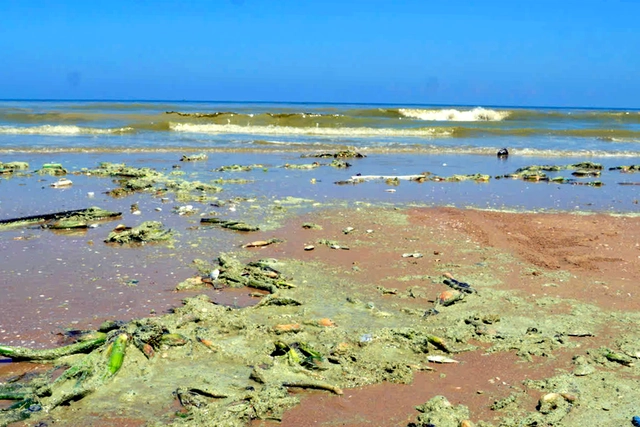
Small dead fish are seen mixed with green patches along the shore from Bai Sau Beach to Long Chau Beach in Ho Chi Minh City, where seawater turned green, likely due to a microalgae bloom, April 4, 2026. Photo: A.B.
A resident said the phenomenon typically lasts only one or two days before the sea returns to normal.
Regarding reports of dead fish along the shore, residents said most were leftover catches washed ashore by waves, not an abnormal die-off linked to algae.
A similar phenomenon in which the seawater turned green had previously occurred in the area, causing concern among visitors.
Authorities then collected seawater samples and concluded that the seawater turning green was caused by the microalgae Noctiluca scintillans.
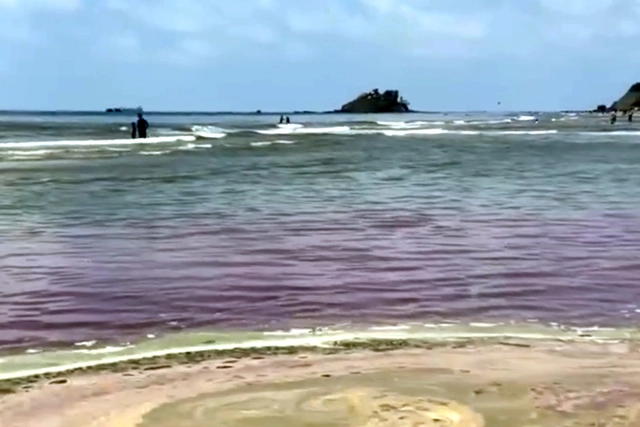
One of the seawater pools along the shore from Bai Sau Beach to Long Chau Beach in Ho Chi Minh City turned purple and emitted an unpleasant odor, April 4, 2026. Photo: A.B.
This type of algae is widely distributed, with its density varying over time, but it does not produce toxins and does not affect residents or tourists swimming or engaging in recreational activities.
Noctiluca scintillans, a bioluminescent dinoflagellate found worldwide, is especially common in nearshore waters, with its density varying by salinity, temperature, and nutrient levels.
Local authorities affirmed that the seawater turning green is a natural phenomenon.
- REFERENCE MORE








Max: 1500 characters
There are no comments yet. Be the first to comment.