


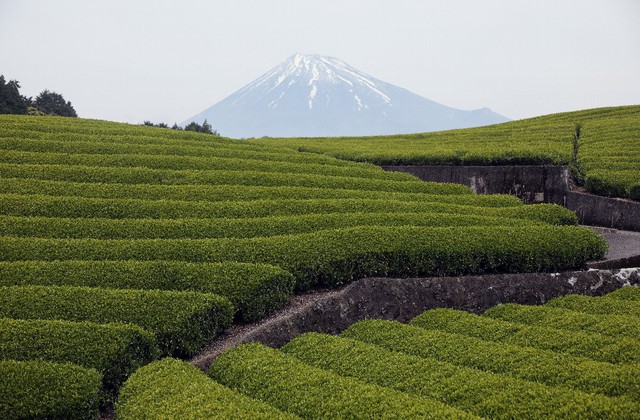
Tea fields and Mount Fuji, photographed in the city of Fuji, Shizuoka Prefecture, in May 2022. Photo: Jiji Press
Riding the wave of the global boom in 'matcha' powdered green tea, Shizuoka is shifting its production focus from 'sencha,' the most commonly consumed type of green tea in Japan, to 'tencha,' the crude tea leaves used as the base for matcha.
At the same time, the prefecture is working to expand organic tea cultivation.
Long supported by the strength of its brand, Shizuoka now faces a number of challenges as it moves to rebuild its position in the tea market.
According to statistics for 2019 released by the agriculture ministry, Shizuoka Prefecture in central Japan was overtaken for the first time by Kagoshima Prefecture in southwestern Japan in terms of the value of tea production.
Shizuoka also lost its long-held top position to Kagoshima in 2025 in the volume of first-flush tea harvested from spring to early summer.
Producers in Shizuoka have been unable to keep pace with growing overseas demand, particularly for matcha.
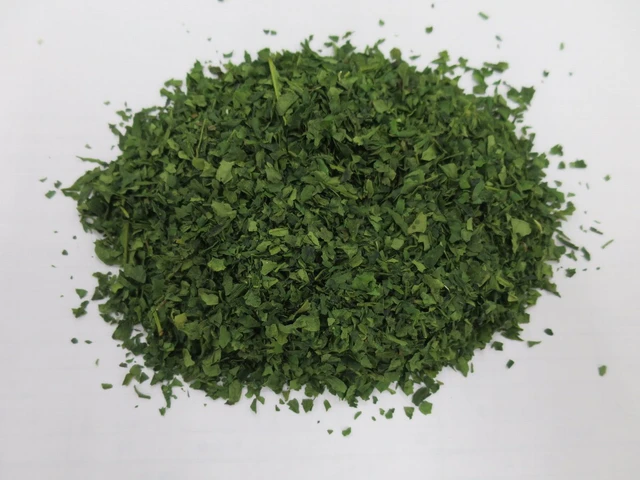
'Tencha' crude tea leaves of 'Tsuyuhikari,' a green tea variety developed in Shizuoka. Tencha is used as the base for matcha. Photo: Courtesy of Shizuoka Prefecture
Explaining the sluggish growth in output, an official at the Shizuoka prefectural government said, "Each cultivated plot is small, and few producers are capable of large-scale production."
A significant portion of tea fields is on sloped terrain in hilly and mountainous regions, where operating ride-on agricultural machinery is difficult and production efficiency remains low.
This challenge is further intensified by the aging tea-growing population, as farmland that is hard to mechanize not only burdens existing growers but also discourages potential new entrants, particularly younger people.
By contrast, Kagoshima Prefecture has made significant progress in developing agricultural infrastructure, leading to many fields that can easily accommodate ride-on machinery.
Compared with Shizuoka, farm management in Kagoshima is more consolidated, making it easier for farmers to switch the tea varieties they grow.
This flexibility is regarded as a key factor that has propelled Kagoshima to the position of Japan's leading tea producer.
Seeking a turnaround in the local tea industry, the Shizuoka prefectural government launched a base development plan in 2024 to support tea factories and producers engaged in exports.
Around 50 factories across the prefecture have joined the initiative.
The plan also supports small-scale farmers who mainly produce sencha but hope to sell part of their harvest to tencha-processing factories that serve overseas markets.
According to prefectural officials, the base factories also provide guidance and technical support to growers. In some cases, factory workers even visit elderly tea farmers to help them with fieldwork.
"Domestic demand for sencha will never disappear. We want to build a production system that can serve both export and domestic markets in a well-balanced way," one official said.
In the production of tencha, tea leaves are picked, steamed, then spread out flat and dried without being rolled.
The dried leaves are later finely ground with a stone mill or similar equipment to make matcha powder.
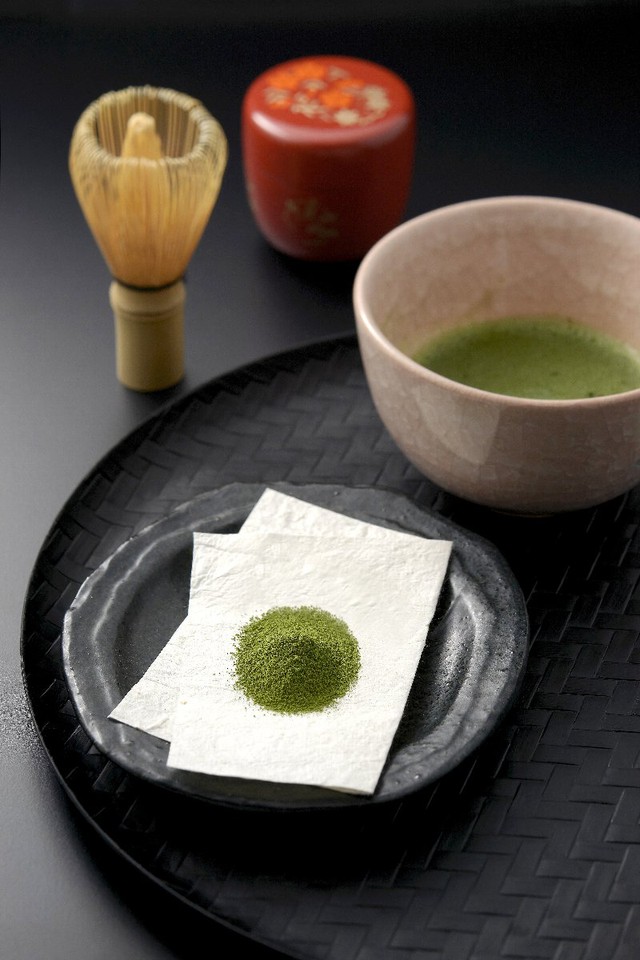
Matcha and tea ceremony utensils. Photo: Courtesy of Shizuoka Prefecture
In fiscal 2025, the agriculture ministry introduced a basic policy to increase tencha production in response to rising demand, including from overseas markets.
As of 2024, tencha accounted for only about two pct of Shizuoka Prefecture's total tea output. The prefectural government's tea promotion section is encouraging sencha growers to switch to organic tencha, which is seeing particularly strong demand abroad.
In May 2024, Kikugawa, a tea-producing city in western Shizuoka Prefecture, began selling its products on Alibaba, the major China-based e-commerce platform.
Local producers are now listing small quantities of sencha, matcha and 'hojicha' roasted green tea.
The city government is covering the listing fees, lowering the barrier for both sellers and buyers and making it easy for overseas customers to sample Kikugawa's teas.
"We hope this will serve as an opportunity to connect Kikugawa with the rest of the world," a city official said.
By the end of 2025, about 90 pct of all inquiries were about matcha.
On the other hand, under 30 pct of tea farmers in the city grow tencha, used for matcha production, or organic tea, which enjoys strong demand overseas.
The prefectural official expressed hope, saying, "If producers recognize the strong overseas demand for tencha and organic tea, it may encourage a shift in production."









Max: 1500 characters
There are no comments yet. Be the first to comment.