


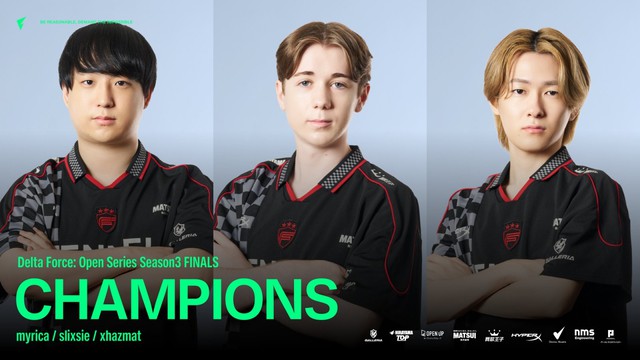
The Japanese team claimed the championship after two South Korean players were caught cheating. Photo: Esports World
South Korean gamers Yumin and Sana2 were found to have used information from external broadcasts during the final of Delta Force Open Season 3 in Japan, according to the tournament organizers.
The practice, known as stream sniping, involves monitoring another player's livestream or obtaining outside information to gain an unfair advantage during a match.
Both players were handed six-month competitive suspensions, effective from October 1, 2026 to March 31, 2027.
South Korean gamers call for tougher penalties
The incident has drawn attention in South Korea, particularly following a similar controversy involving Vietnamese players La Phuong Tien (Himass) and Tran Tan Vu (TanVuu) at PUBG Asia Stars 2026 on September 17.
The invitational tournament featured participants from six Asian regions: Vietnam, Thailand, mainland China, Taiwan, Japan, and South Korea.
Following allegations that the Vietnamese duo had used information from outside matches, South Korea-based game publisher KRAFTON permanently banned their PUBG accounts and barred them from official PUBG esports competitions for life.
The contrasting penalties have prompted comparisons among South Korean gamers, with some describing the latest scandal as an embarrassing setback for the country's esports community.
Rather than defending the players, some South Korean netizens called for stricter punishment, arguing that cheating in an international tournament final could damage the country's competitive reputation.
“If they cheat, they shouldn't be called professional players anymore,” commented a user named Lim Junseo.
Another took a harsher stance, saying, “A lifetime ban wouldn't be unjustified for what they did.”
Others expressed disappointment that the incident had cast a shadow over South Korea's participation in international esports tournaments.
South Korean netizens turn against two players caught cheating at the Delta Force Open tournament. Photo: X
Vietnamese gamers question differences in punishment
The case has also sparked discussion among Vietnamese gamers, many of whom recalled the lifetime sanctions imposed on Himass and TanVuu just weeks earlier.
“The South Korean gamers have really shot themselves in the foot,” one Vietnamese user commented.


Others questioned whether the six-month suspensions were sufficient.
“Prize money confiscated and a six-month suspension. Is that really enough of a deterrent?” one asked.
Some users also compared the disciplinary procedures applied in the two cases.
“Delta Force has clear regulations, and the organizers imposed penalties accordingly. Meanwhile, KRAFTON handed down permanent account bans,” another gamer wrote.
The discussions have raised broader questions about how esports organizers determine appropriate penalties for competitive misconduct.
However, the two incidents involved different games, tournament organizers, and disciplinary rules, meaning the sanctions are not directly comparable.
The controversies have nevertheless renewed attention to fair play and the importance of clear, transparent disciplinary procedures in professional esports.



Max: 1500 characters
There are no comments yet. Be the first to comment.