


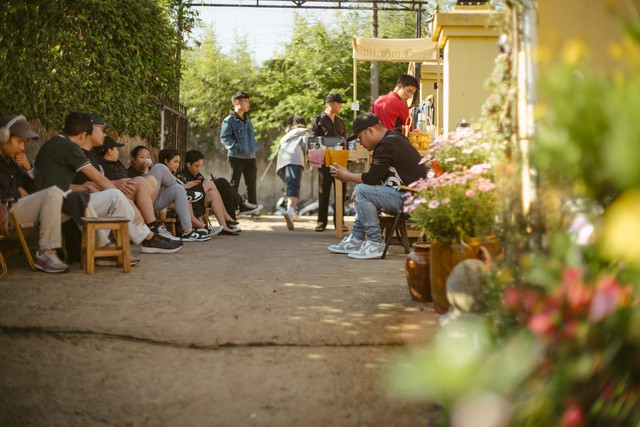
Over a cup of coffee on the sidewalk, people talk about just about everything. Photo: DATTAE
Vietnamese people have long gathered in public spaces to drink tea, chat, and observe the world around them.
From house verandas and village tea stalls to street-side tea shops, a cup of tea has never been just about quenching thirst.
It has also been an excuse to meet, exchange stories, catch up on local news or simply sit and take in the rhythm of everyday life.
Tea once held a particularly important place in Vietnamese culture.
In his celebrated 1940 short-story collection Vang bong mot thoi (Echoes of a Bygone Time), renowned Vietnamese writer Nguyen Tuan portrayed tea drinking as an art, complete with its own rituals and cultural traditions.
As urbanization and social life evolved, another drink gradually found its way into the lives of city dwellers, creating a culture of its own: coffee.
Humble setting, exceptional coffee
Calling it 'sidewalk coffee' does not imply inferior coffee, poor service, or a casual approach to the drinking experience.
Beyond those assumptions, sidewalk coffee has become a distinctive part of Hanoi’s urban culture, shaped in part by its long-standing tea-drinking traditions.
It does not necessarily mean coffee served in dusty or makeshift surroundings. It can be found on clean, open sidewalks by lakes, along city streets, or beneath tree-lined roads.
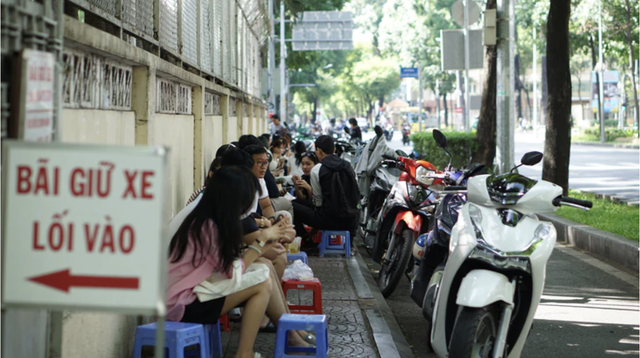
Sidewalk coffee, or 'coc' coffee, has become part of the urban culture of both Saigon and Hanoi. Photo: Tran Mac / Tuoi Tre
Summer brings the crimson blooms of flamboyant trees, while autumn carries the faint scent of frangipani through the breeze, against a backdrop of women in elegant, traditional Vietnamese ao dai.
City dwellers come to sidewalk cafés to savor coffee that is bitter, sweet, rich and fragrant while taking in the constant flow of life around them.
Familiar sounds, voices calling out, motorbike engines and vendors selling tofu pudding, sticky rice and sweet soups, become part of the rhythm of everyday life.
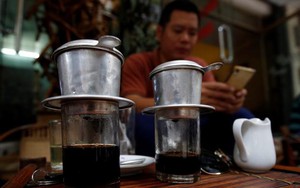
Some watch each drop of coffee slowly fall, letting the passing minutes inspire quiet, reflective thoughts.
Others come to listen to friends’ conversations and banter, picking up new bits of information and perspectives along the way.
The habit of observing the world around them is not unique to coffee drinkers.
It may also reflect a broader trait shaped by Vietnam’s traditional agricultural culture, in which people have long lived closely connected to their surroundings.
Sidewalk coffee, then, is not simply about an affordable cup of coffee. It is an unpretentious style of socializing open to everyone, regardless of status.
A sidewalk café offers a modest, easygoing social space without the flashiness or pretension found elsewhere.
Each customer comes for their own reasons, following their own tastes and looking to connect with others.
Often, the coffee and the sidewalk are simply an excuse to sit down, talk, share personal stories or discuss whatever has caught their attention.
Coffee, conversation, and everything in between
Vietnam’s diverse regional cultures are reflected in the conversations that unfold over coffee, which can range from politics and business to culture and sports, both at home and around the world.
Sometimes, the conversation turns to business, with deals discussed and settled quickly, efficiently and with a distinctly businesslike air.
The atmosphere becomes even livelier when groups of writers, intellectuals or students gather for a chat. No topic is off limits, and all kinds of issues are brought up and debated.
Every now and then, someone carried away by the moment may even recite a few gentle, lyrical lines of 'luc bat,' Vietnam’s traditional six-eight verse form.
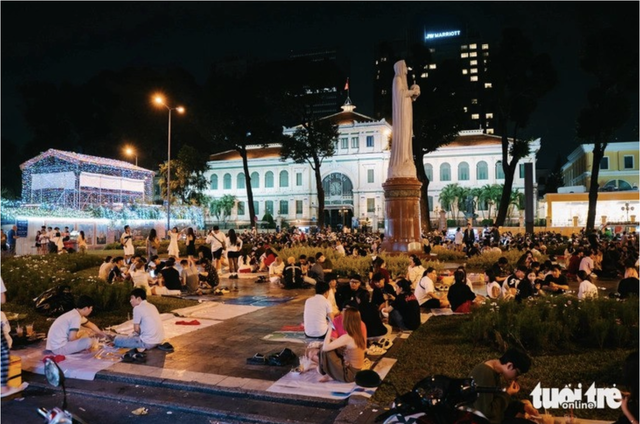
There is room for both lively chatter and quiet reflection. Vietnam’s sidewalks offer not just coffee, but moments of connection and contemplation. Photo: Thanh Hiep / Tuoi Tre
This may partly explain why sidewalk cafés tend to have a different atmosphere from beer halls or drinking spots, with fewer arguments and raised voices.
The setting is simple: a few small plastic or wooden stools, a menu of hot or iced coffee, perhaps some peanut candy and a few cigarettes.
Regardless of who they are, a successful businessperson, an overseas Vietnamese, a government official, a manual laborer, a factory worker or a shoe shiner, customers sit in the same kind of space and are offered much the same menu.
That natural sense of equality is enough to give sidewalk coffee its distinctive character, without the need for expensive, upscale restaurants.
Coffee culture has become such an ordinary and natural part of daily life that meeting a friend or business partner often begins with a familiar invitation: “Let’s grab a coffee.”
If language is a tool for expressing how people think, this everyday phrase may also reveal something about the way coffee is woven into Vietnamese culture.
Vietnamese coffee is typically brewed strong rather than diluted, unlike coffee in many other parts of the world.
That preference may stem partly from Vietnam’s regional climate and partly from the long-standing habit of drinking strong tea.
Together, these influences may have helped shape a Vietnamese temperament that is assertive and decisive, yet also measured and restrained.
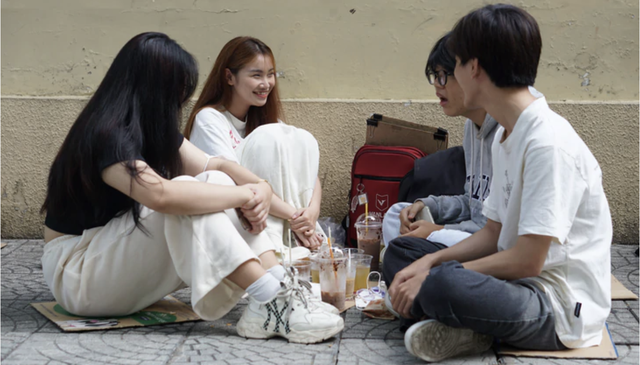
Sidewalk cafés, whether by chance or by design, have become gathering places where countless people share conversations and connect. Photo: Tran Mac / Tuoi Tre
By definition, sidewalk coffee takes place along streets with sidewalks, so the culture has flourished mainly in major cities such as Hanoi, Ho Chi Minh City, and Nha Trang.
It tends to thrive where tradition and modern life intersect, among people who appreciate coffee and value the simple, authentic and beautiful things in life.
Today, no Vietnamese writer has elevated coffee, or sidewalk coffee in particular, into a way of its own, as writer Nguyen Tuan once did with tea.
Yet coffee may have already become part of the cultural fabric of many Hanoians.
To understand that spirit, one place to start is with a cup of sidewalk coffee.








Max: 1500 characters
There are no comments yet. Be the first to comment.