In the bustling heart of Ho Chi Minh City, a small banh can stall tucked deep inside alley 100/73 Tran Hung Dao Street has long been a familiar stop for generations of diners, from local residents to regulars who have been coming for decades.
The breakfast shop, Bep Co Tu – Banh Can Nha Trang, is run by Tu, the second generation to carry on the family trade.
Tu said her mother began selling banh can (Vietnamese mini pancakes) when she was still a teenager, nearly 50 years ago.
Despite selling the dish for nearly half a century, the stall remains very small in scale, with no elaborate signage, offering only a few low tables and stools.
It opens from 6:00 am to around 10:00 am.
Once the stove is lit, waves of customers from near and far gradually fill every seat.
On some days, by as early as 8:00 or 9:00 am, trays of shrimp and squid are already empty, forcing latecomers to turn back and promise to return another day.
According to Tu, at first, the shop’s customers were mostly locals.
Those who enjoyed the food introduced it to friends and relatives, and word of mouth spread steadily over the years.
As social media grew, food review channels began to visit, and Bep Co Tu gradually became more widely known.
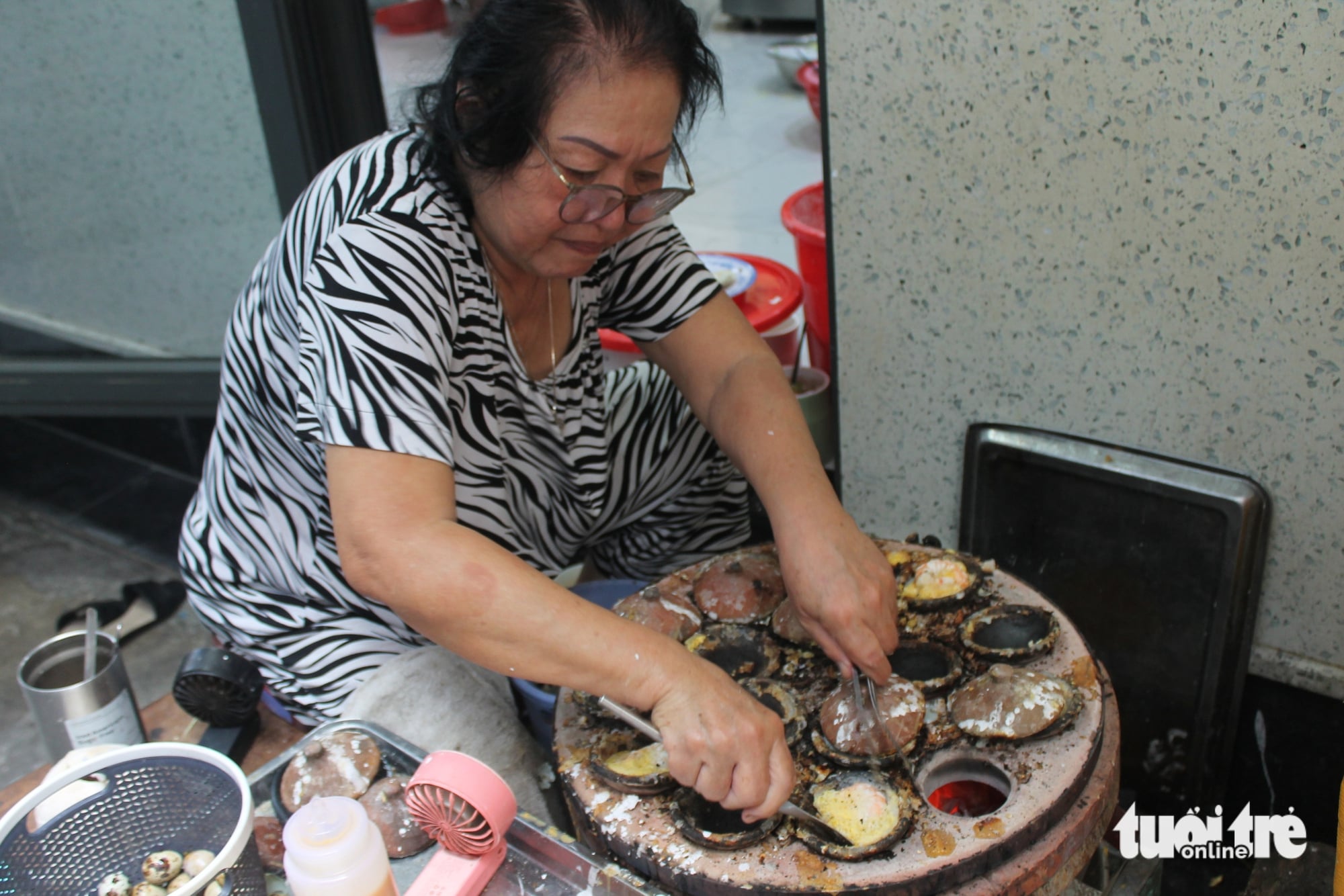
Tu lifts freshly cooked 'banh can' from the mold for customers. Photo: To Cuong
Carefully selected ingredients, family sauce recipe
Banh can – made from rice flour and cooked in an inverted dome-shaped clay oven with a charcoal base, a round tray with small holes, and molds for each piece – originated as a dish of the Cham people in Ninh Thuan, now part of Khanh Hoa Province.
Over time, it was adapted across central Vietnam, with additions such as eggs, shrimp, squid, and a variety of dipping sauces.
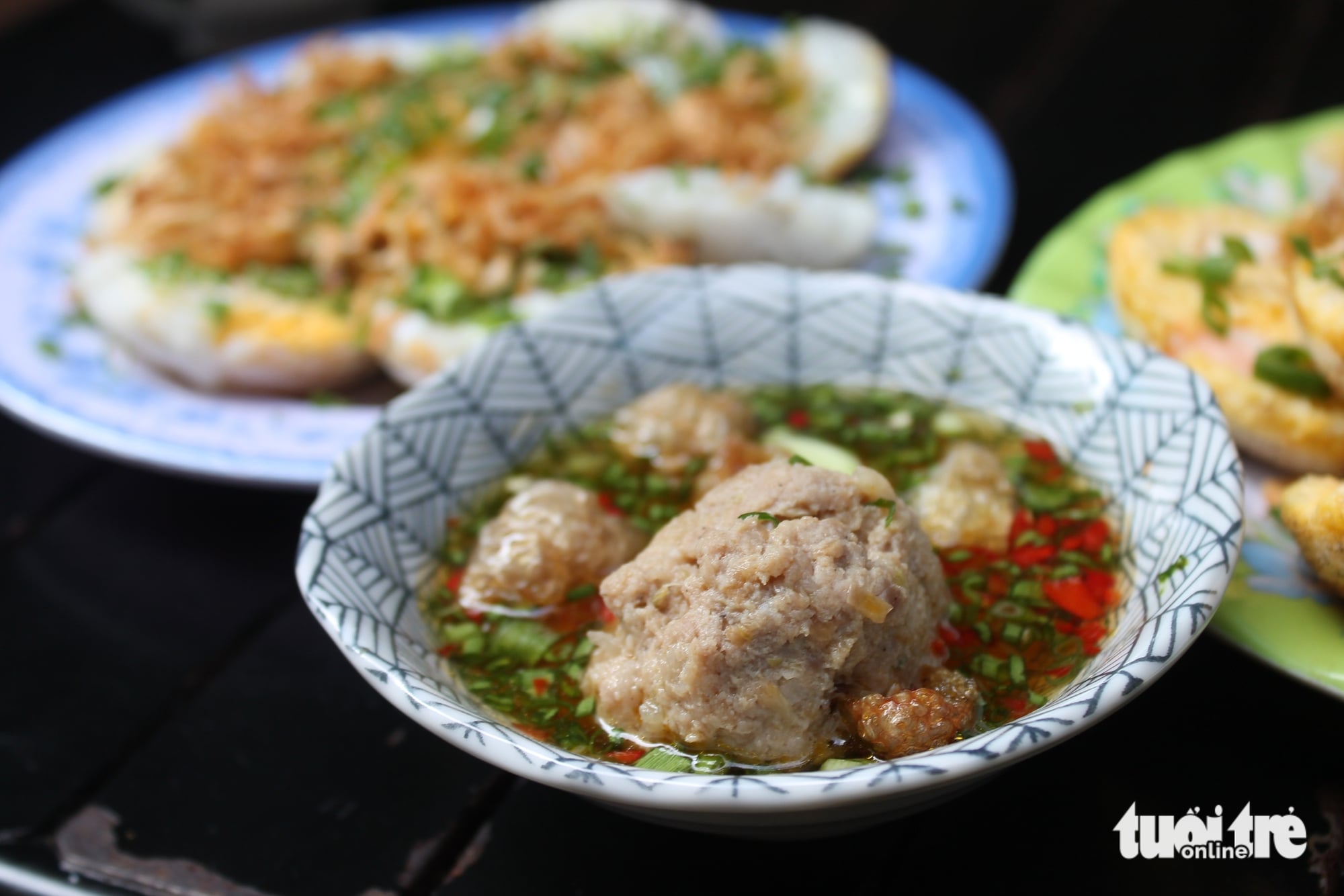
At Bep Co Tu, banh can is offered with a range of toppings including chicken eggs, quail eggs, and seafood, served with a flavorful dipping sauce, with xiu mai (meatballs) available as an optional add-on.
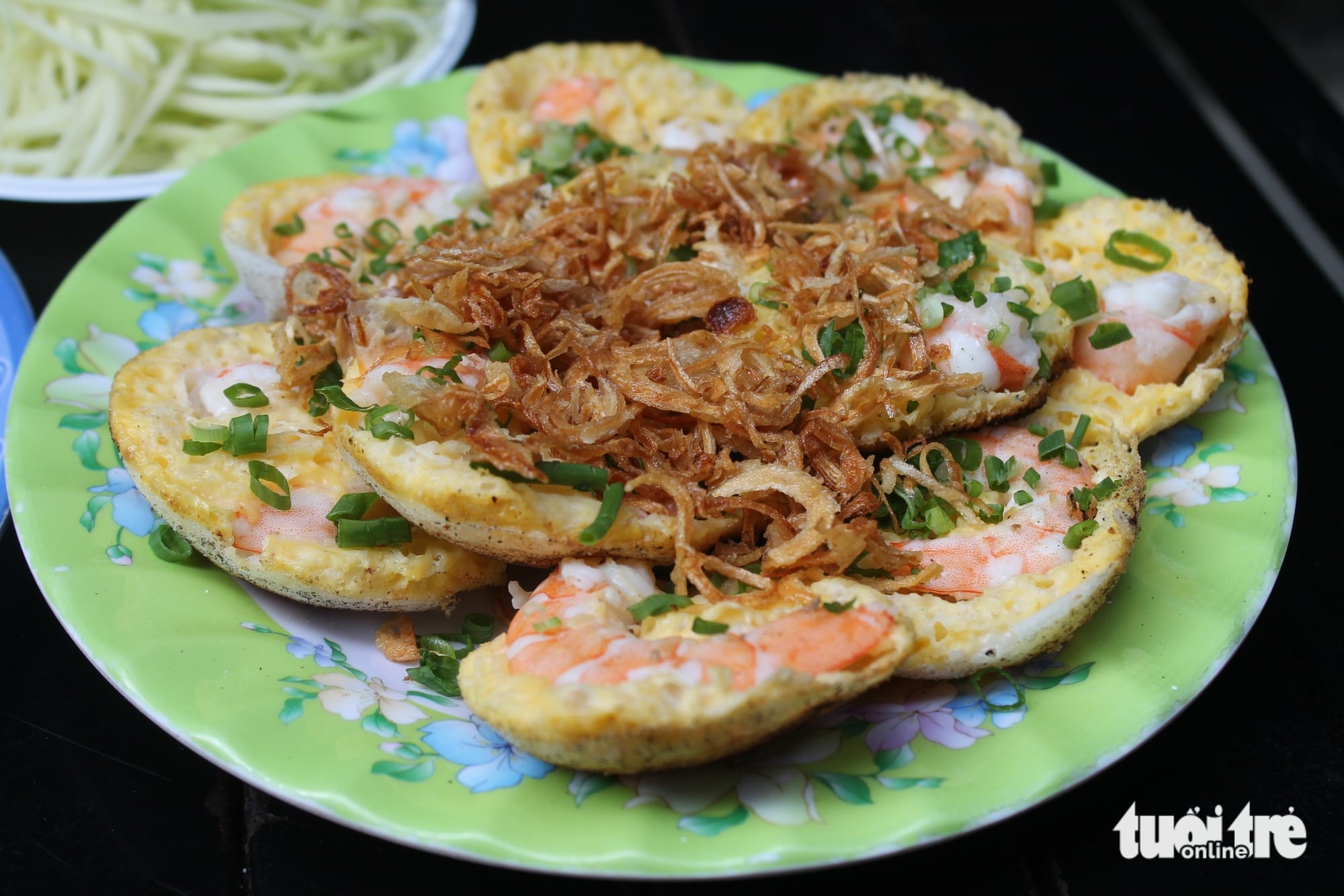
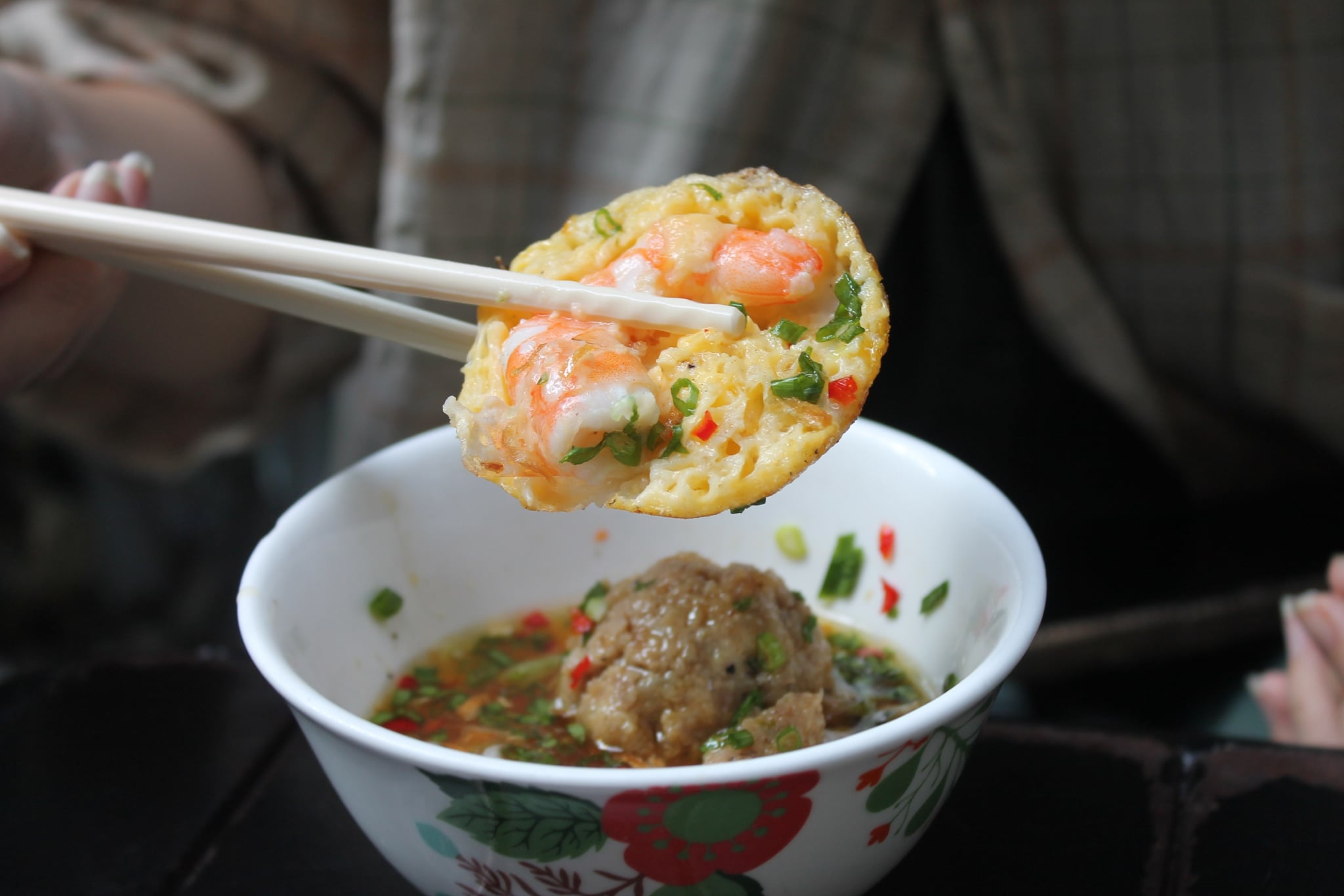
Shrimp 'banh can' at Bep Co Tu. Photo: To Cuong
The stall also serves 'xiu mai' (meatballs), a familiar side dish in Nha Trang. Photo: To Cuong
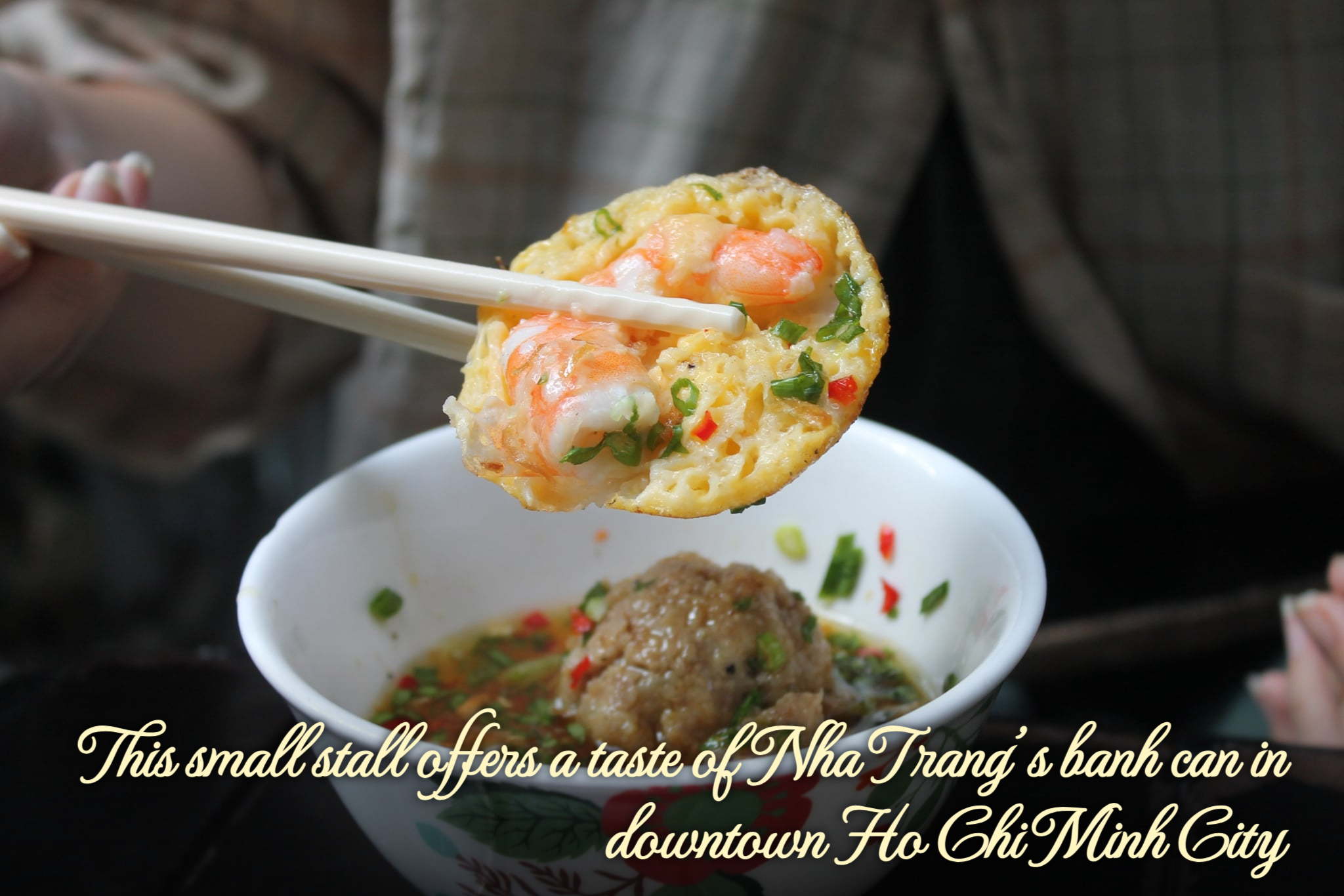
Bep Co Tu’s banh can stands out for its large, bright red shrimp, which are fresh, sweet, and pleasantly chewy.
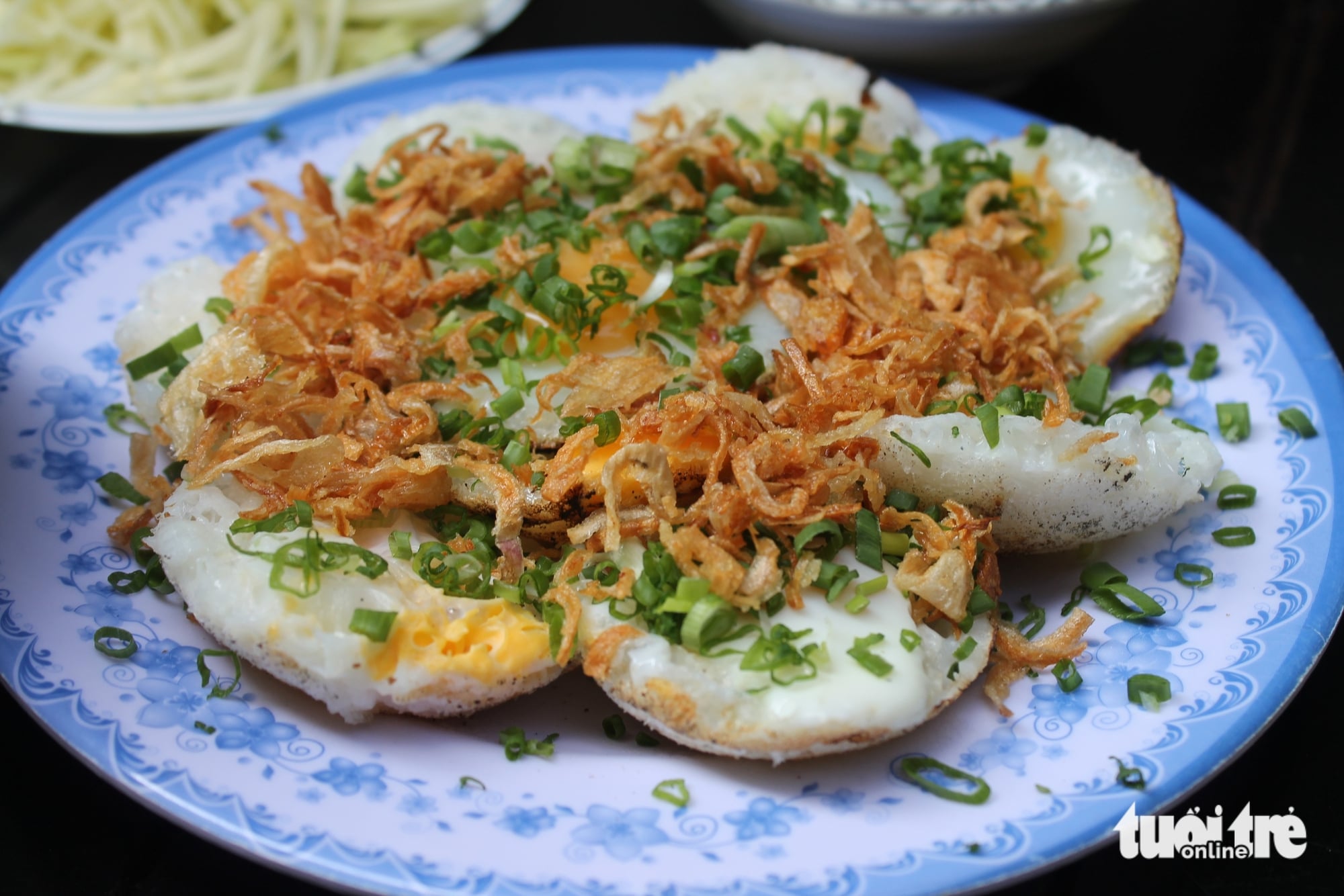
The quail egg version is poured with care, with a soft, runny yolk and a crisp base.
Quail egg 'banh can' at Bep Co Tu. Photo: To Cuong
The dipping sauce here remains rich and savory, but carries a gentle sweetness, mild acidity, and a faint aroma of calamansi.
The secret lies in cooking the sauce with fresh coconut water instead of plain water, combined with a family recipe.
“Our family cooks the sauce with coconut water and a few personal tricks, so it does not overlap with others,” Tu said.
When eating, the 'banh can' is dipped into the sauce with meatballs and finely chopped scallions. Photo: To Cuong
Trained as a chef and with experience working in restaurants, Tu was born in the fishing port area of Vinh Truong in Nha Trang, where her family has a long tradition of fish sauce making.
She maintains a strict habit of carefully selecting ingredients.
The fish sauce is made in Nha Trang before being brought to Ho Chi Minh City, meanwhile, most of the seafood also comes from Nha Trang, with only shrimp sourced locally in the city.
On days when fresh squid is unavailable, the shop openly announces that it is sold out, accepting the loss of customers rather than using squid from other sources to protect quality.
Favorite among regulars
So many customers are regulars that Tu can recognize them by face alone, knowing what they usually order and how many pieces, without needing a menu.
She recalled a special customer, an elderly man from Nha Trang who had been a regular since the days when her mother still ran the stall.
He came almost every day, riding his motorbike to the shop for a plate of egg banh can priced at just VND30,000 (US$1.14).
He continued until the age of 93.
When he became too weak to travel, his son still regularly stopped by to buy five cakes to take home for him.
“He said as long as he is alive, he will keep eating banh can,” Tu shared.
Many customers describe the prices as reasonable for a central location.
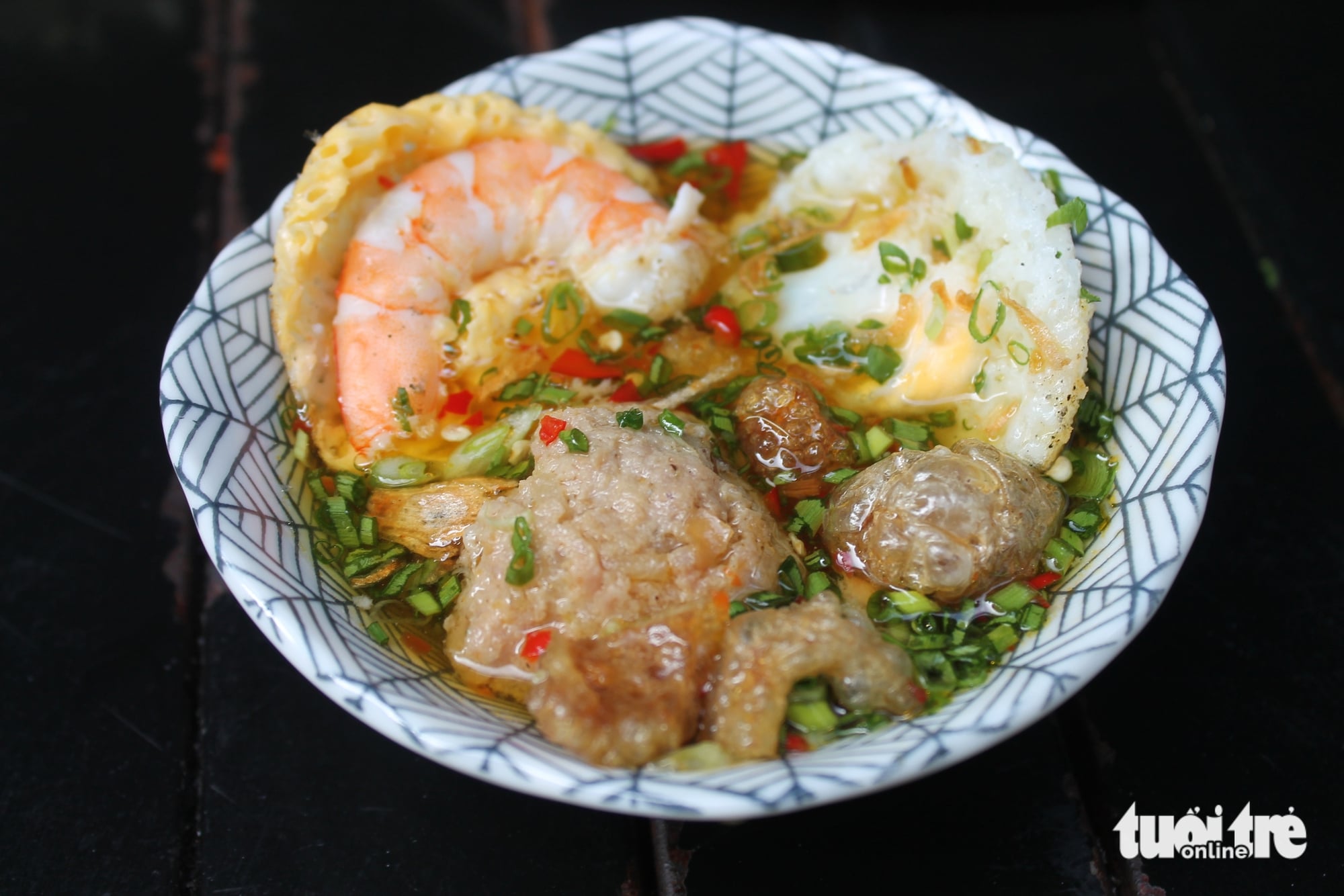
Shrimp and quail egg 'banh can' dipped in a bowl of sauce with meatballs and finely chopped scallions. Photo: To Cuong
A plate of banh can at the stall is priced at VND35,000-80,000 ($1.33-3.04).
Specifically, the quail egg banh can with soft yolk costs VND45,000 ($1.71), while the shrimp banh can is priced at VND80,000.
The prices used to be even lower, but rising ingredient costs recently forced an adjustment.
Unstable weather has also made seafood supplies inconsistent, prompting the shop to raise prices by VND5,000 ($0.19) per plate.
Even so, many loyal customers continue to support the stall, understanding the challenges faced by the seller.
Open for only a few hours each morning, Bep Co Tu feels like a brief appointment for those who truly cherish Nha Trang–style banh can.
In that small alley, the steady crackle of fire beneath the molds continues to tell a story, more than half a century old, of a humble dish that has endured with time.










Max: 1500 characters
There are no comments yet. Be the first to comment.