


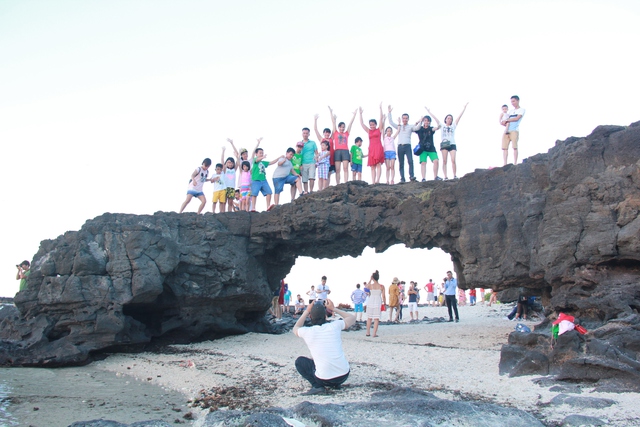
The volcanic rock arch known as To Vo Gate in Ly Son Special Zone, an island off Quang Ngai Province in central Vietnam. Photo: Tran Mai / Tuoi Tre
Nguyen Van Huy, chairman of the Ly Son administration, said on Thursday that despite warning signs placed at the site, many tourists continue to climb the arch, especially at sunset when the basalt rock contrasts with the sea and creates striking silhouettes.
The local official stressed that the natural structure cannot withstand repeated pressure from visitors climbing on top.
The uneven surface also poses a risk of accidents.
Continuous climbing could weaken the arch’s volcanic formation, eventually damaging the fragile heritage.
Ly Son Island, formed by ancient volcanic activity, is among Vietnam's popular destinations during the Reunification Day (April 30) and International Workers’ Day (May 1) holiday, which lasts from Thursday to Sunday.
All 119 lodging facilities are fully booked, with daily visitor numbers expected to exceed 3,000 at peak times.
While this is a positive sign for tourism, local authorities are concerned about protecting the island’s landscapes and heritage.
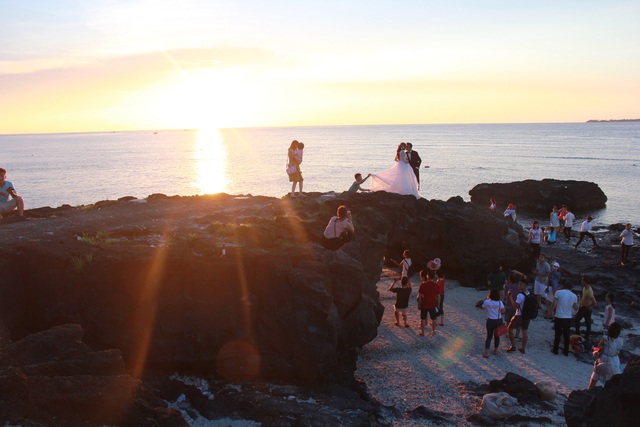
The administration of Ly Son Special Zone in Quang Ngai Province, central Vietnam has warned tourists against climbing the volcanic rock arch To Vo. Photo: Tran Mai / Tuoi Tre
To Vo Gate, located on the island’s western coast, is considered the best spot to watch sunsets and has become a symbol of Ly Son tourism.
The arch stands around three meters high and about nine meters long, formed millions of years ago when lava met cold seawater, solidified into basalt, and was later eroded by waves and tides.
In 2025, the site was recognized as a national heritage area covering approximately 26,000 square meters.
The official emphasized that visitors must respect guidance and warnings to ensure both safety and preservation.








Max: 1500 characters
There are no comments yet. Be the first to comment.