


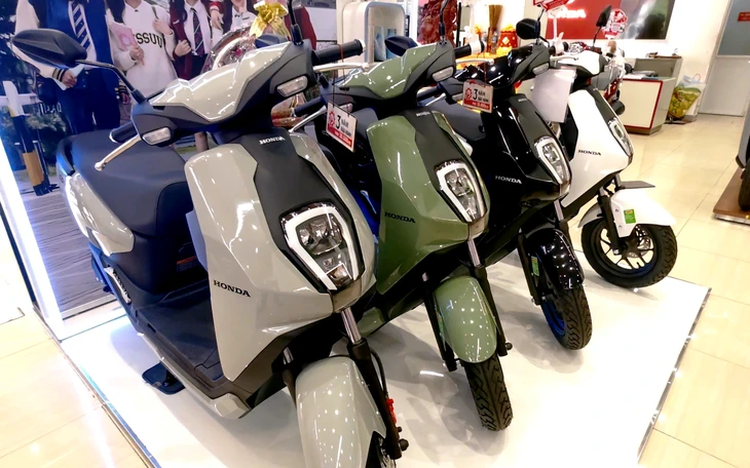
Honda electric motorcycles are displayed at a dealership in Vietnam. Photo: Cong Trung / Tuoi Tre
Industry experts, however, said Vietnam must strengthen its domestic supply chain to secure long-term benefits from the investments.
Honda plans to relocate production of its UC3 electric motorcycle from Thailand to its plant in Phu Tho, with production beginning in September 2026.
Honda has produced motorcycles in Vietnam since 1998 and currently operates three factories, supported by a network of workshops and parts suppliers, with a combined annual production capacity of about 2.5 million motorcycles.
The company manufactures vehicles for both the domestic market and export.
This production base has helped Honda secure more than 80 percent of Vietnam's motorcycle market.
However, its dominance in gasoline-powered motorcycles is facing increasing pressure as consumers shift toward electric vehicles.
VinFast and other domestic electric vehicle manufacturers, including Pega, Dat Bike, and Selex, have rapidly expanded their market share, particularly as major cities introduce policies aimed at reducing emissions.
While gasoline-powered motorcycles remain Honda's primary source of revenue, its electric motorcycle models are relatively expensive and battery replacement remains less convenient.
Analysts said the company risks losing younger customers in one of its key markets unless it accelerates its transition.
Honda is not the only manufacturer increasing production in Vietnam.
Toyota Vietnam plans to invest an additional US$360 million to build the country's first hybrid vehicle production line, while Honda seeks to begin assembling hybrid cars in Vietnam in 2026.
Ford previously shifted production of its Ranger pickup truck from imports from Thailand to assembly at its Hai Duong plant in 2021.
Meanwhile, SAIC Motor, the owner of the MG brand, is negotiating with partners to build an assembly plant in Vietnam.
Tang Donghui, general director of SAIC Motor Vietnam, said the project could begin by the end of 2027.
The investment plans come as Vietnam's automotive market is on track to become one of the largest in Southeast Asia.
Vehicle sales reached approximately 630,000 units in 2025, nearly matching sales in Thailand. Domestic vehicle production rose 25 percent year on year to around 484,500 units.
The market is forecast to reach about 700,000 vehicles in 2026, including roughly 550,000 domestically produced units.
The Ministry of Industry and Trade projects annual vehicle demand could rise to between one million and 1.1 million units by 2030.
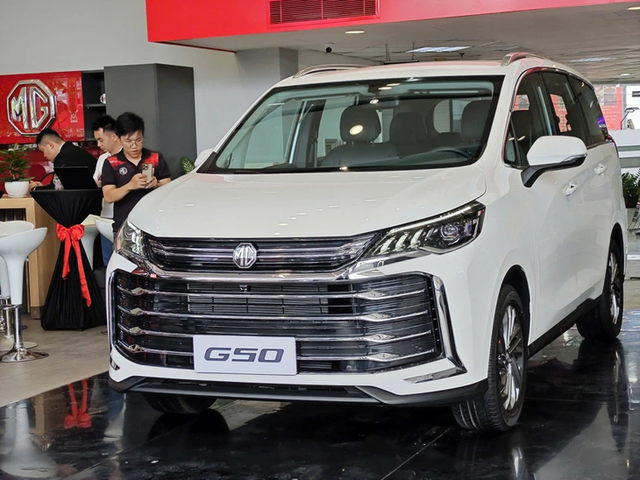
MG Vietnam is studying plans to build an assembly plant in Vietnam, with the project expected to begin by the end of 2027. Photo: Cong Trung / Tuoi Tre
With a population exceeding 100 million, rising incomes, relatively low vehicle ownership, and a rapidly expanding expressway network, Vietnam offers significant growth potential for automakers.
Local production also helps manufacturers reduce transportation costs, shorten delivery times, and lessen exposure to exchange rate fluctuations and import tariffs.
During the first six months of 2026, Toyota and Lexus sold 36,669 vehicles in Vietnam, up 22 percent from a year earlier.
Toyota Vietnam also contributed more than $482 million to the state budget and exported $37.2 million worth of auto parts.
Supply chain remains the weak link
Industry observers said each new factory not only increases vehicle production but also creates jobs, generates tax revenue, supports parts manufacturing, and strengthens Vietnam's participation in regional supply chains.
Many automakers, including Honda, Nissan, Suzuki, and Subaru, have scaled back or restructured some manufacturing operations in Thailand, creating opportunities for Vietnam to attract additional production lines as its market expands and demand for electric and hybrid vehicles grows.
However, analysts cautioned that factory closures do not mean Thailand is losing its position as Southeast Asia's automotive manufacturing hub.
Thailand continues to possess a mature industrial ecosystem comprising thousands of parts suppliers, engineering firms, and a highly skilled workforce developed over decades–advantages that cannot be replicated quickly.
The Vietnam Association for Supporting Industries said Vietnam has attracted more vehicle manufacturers and brands, but its supporting industries remain underdeveloped.
Many high-value components, including engines, transmissions, electronic systems, batteries, and control units, must be imported.
Low localization rate keeps production costs high, while links between vehicle assemblers and domestic suppliers remain too weak to encourage global manufacturers to establish deeper roots in Vietnam.
For example, although Toyota has manufactured vehicles in Vietnam since 2018, it has also expanded imports.
Of the 17 Toyota models currently sold in Vietnam, 12 are imported from Thailand, Indonesia, and Japan.
Industry analysts said global automakers allocate production of each vehicle model to locations offering the greatest cost advantages.
While production lines may move to Vietnam when market conditions are favorable, they can also relocate if component costs rise, production volumes remain low, or government policies become less predictable.
Economist Pham Chi Lan told Tuoi Tre (Youth) online newspaper that after decades of attracting foreign investment, Vietnam has succeeded in bringing major automakers into the country, but most of the value created by the industry still lies in foreign-owned brands, technologies, and core components.
Domestic companies continue to focus mainly on vehicle assembly, while localization targets have fallen short of expectations.
Lan said Vietnam has offered generous land and tax incentives to foreign automakers but has yet to build a sufficiently strong automotive industry capable of retaining most of the value generated by each vehicle.
She added that although Vietnam now has several domestic automotive companies seeking technological self-reliance and production expansion, the next challenge is not only attracting more production lines but also enabling Vietnamese suppliers to play a much larger role in the automotive supply chain.








Max: 1500 characters
There are no comments yet. Be the first to comment.