



A moss-covered stilt house surrounded by terraced rice fields in Xa Phin Village, Tuyen Quang Province, northern Vietnam. Photo: Nam Tran / Tuoi Tre
Tay Con Linh is a mountain range known as the “roof of northeast Vietnam,” with its highest peak standing about 2,431 meters above sea level.
The range is not only known for its wild and rugged beauty but has also been home to Dao and La Chi ethnic communities for generations.
One of the scenic villages on the mountain is Xa Phin in Thanh Thuy Commune, where moss-covered stilt houses are nestled among green forests and surrounded by winding terraced rice fields.
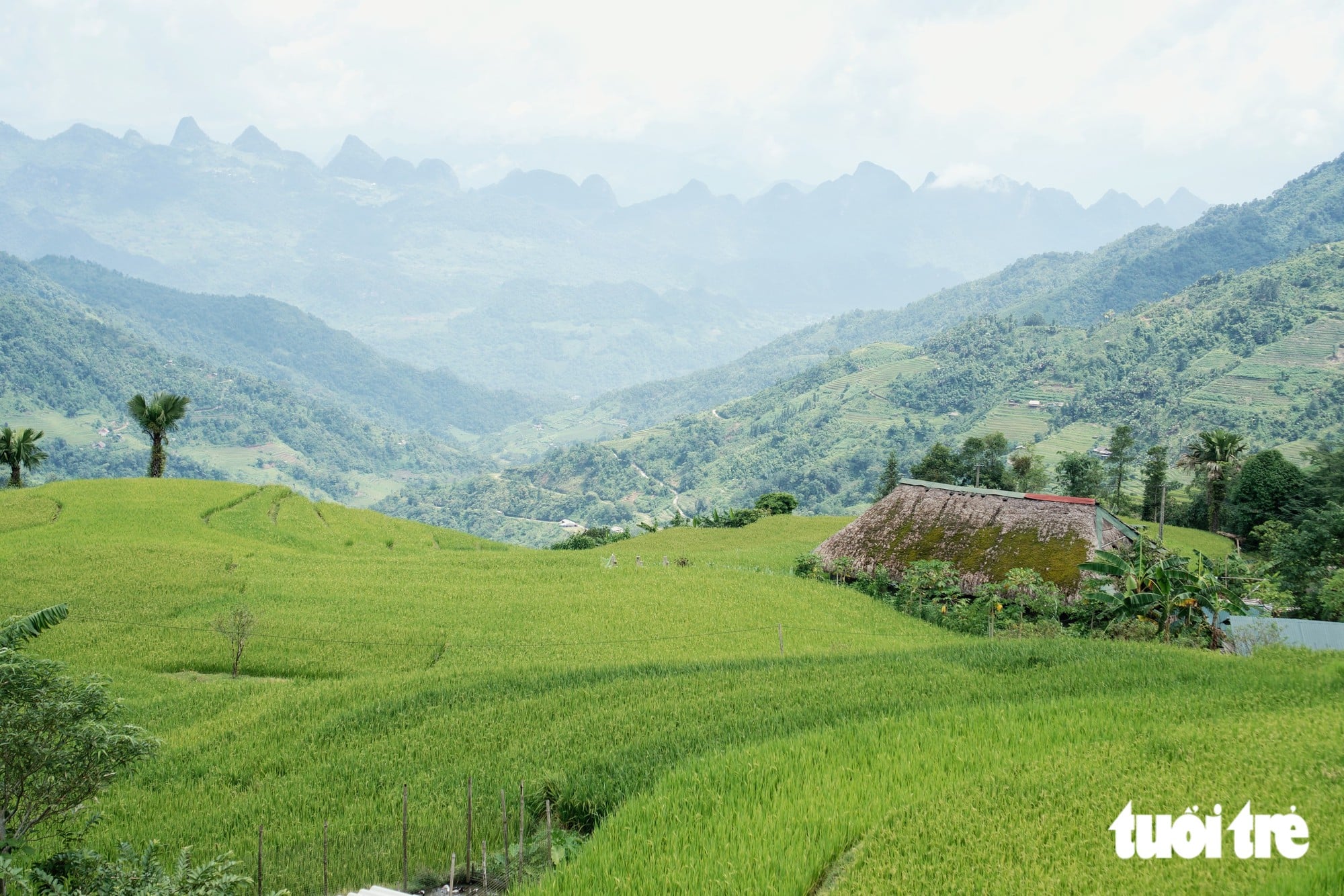
Terraced rice fields amid layers of mountains. Photo: Nguyen Hien / Tuoi Tre
In Xa Phin, local farmers grow only one rice crop a year. The rice ripens later than in many other areas, with the best time to visit falling in late September and early October.
Located midway up Tay Con Linh, where the terrain is steep, Xa Phin’s terraced fields have a distinctive beauty, stretching across layers of rolling mountains.
The terraces vary in shape and size according to the terrain, with some curving into rounded shapes and others forming sharp corners.
Large and small fields are layered one above another along the mountain slopes.
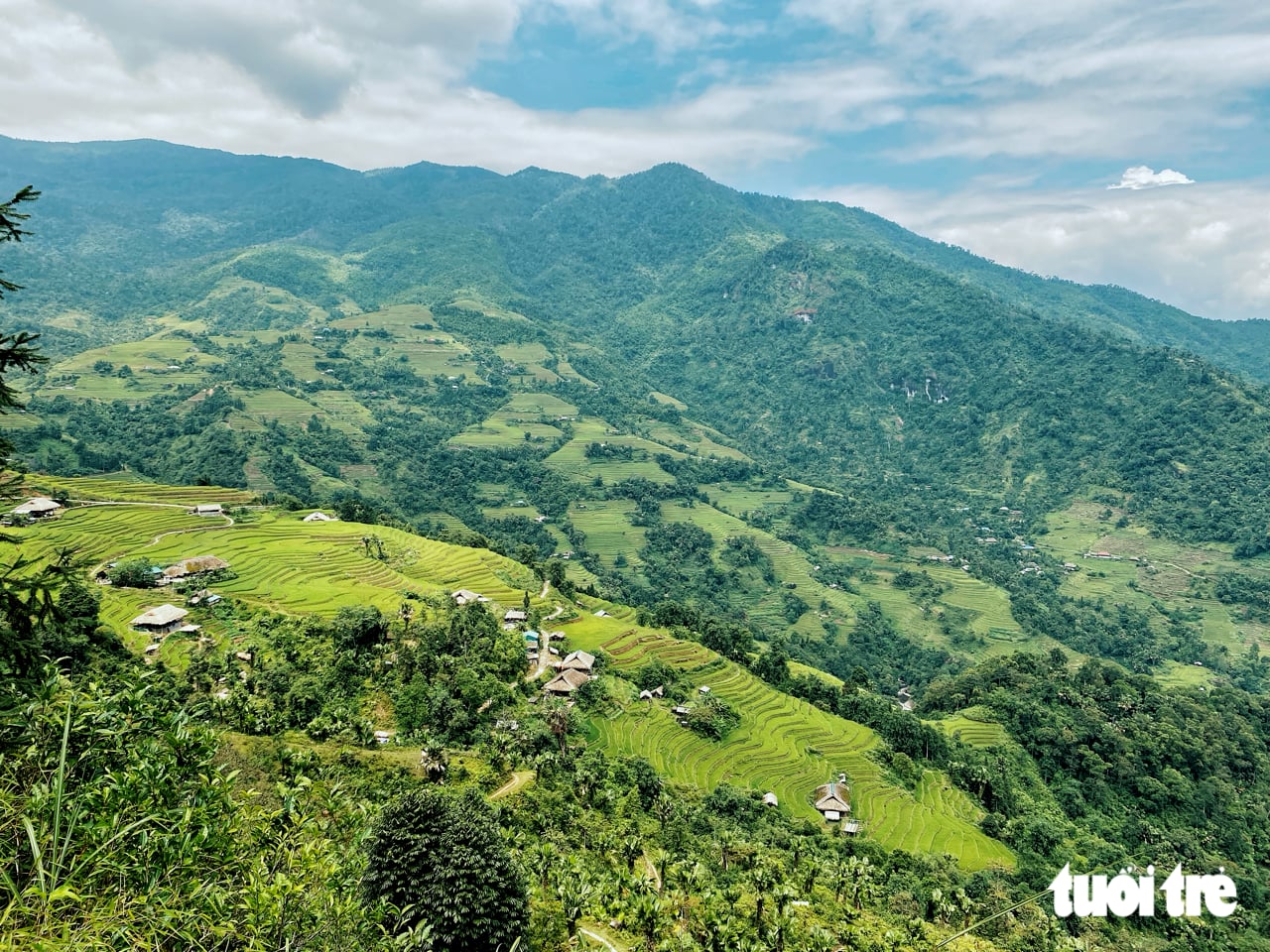
Residents of Xa Phin Village live in harmony with nature. Photo: Nguyen Hien / Tuoi Tre
What makes the terraced fields in Xa Phin particularly special is their close connection with local life.
Stilt houses with palm-leaf roofs tucked among the rice fields, along with houses scattered across the slopes, add to the appeal of the landscape.
There are several spots in Xa Phin where visitors can take in panoramic views of the terraced fields.
The first is about 1km from the village gate, along the road into the village.
For a higher vantage point, visitors can pass through the village and continue on foot through the locals’ Shan Tuyet tea hills.
By mid-September, the terraced fields begin to change color as the ripening rice gradually turns golden, signaling the arrival of the harvest season.
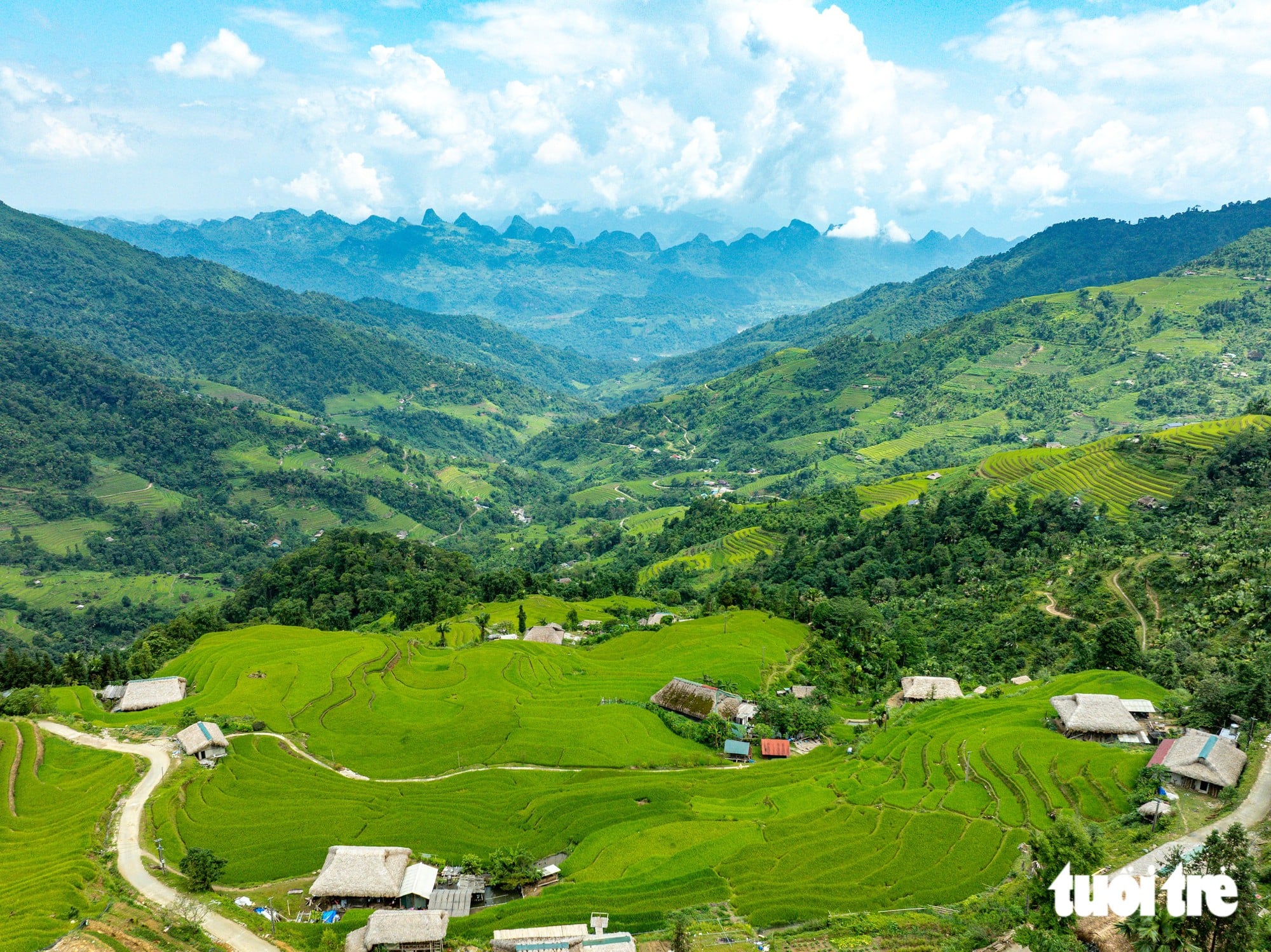
The terraced fields in Xa Phin are at their most beautiful in late September. Photo: Nam Tran / Tuoi Tre
Preserving moss-covered houses
Located more than 1,000 meters above sea level, Xa Phin enjoys a cool climate year-round, along with high humidity that allows the roofs of its houses to become covered in distinctive green moss.
For generations, local residents have preserved their traditional homes.
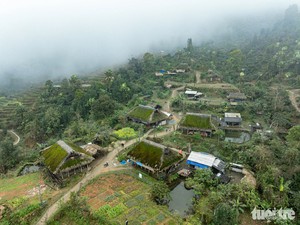
Seen from above, the moss-covered roofs almost look like camouflage, blending the village into the surrounding mountains and forests.

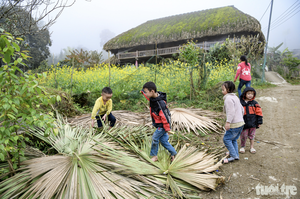
Residents of Xa Phin continue to preserve traditional palm-leaf roofs. Photo: Nam Tran / Tuoi Tre
Residents of Xa Phin continue to preserve traditional palm-leaf roofs. Photo: Nam Tran / Tuoi Tre
All the stilt houses in Xa Phin are traditionally roofed with palm leaves.
The more moss a roof has, the older the house is.
According to local residents, it takes seven to eight years for a roof to become fully covered in moss, while some roofs in the village have been in place for 30 years.
The palm-leaf roofs of Dao stilt houses are thick and made from multiple layers. Each roof requires between 8,000 and 10,000 palm leaves.
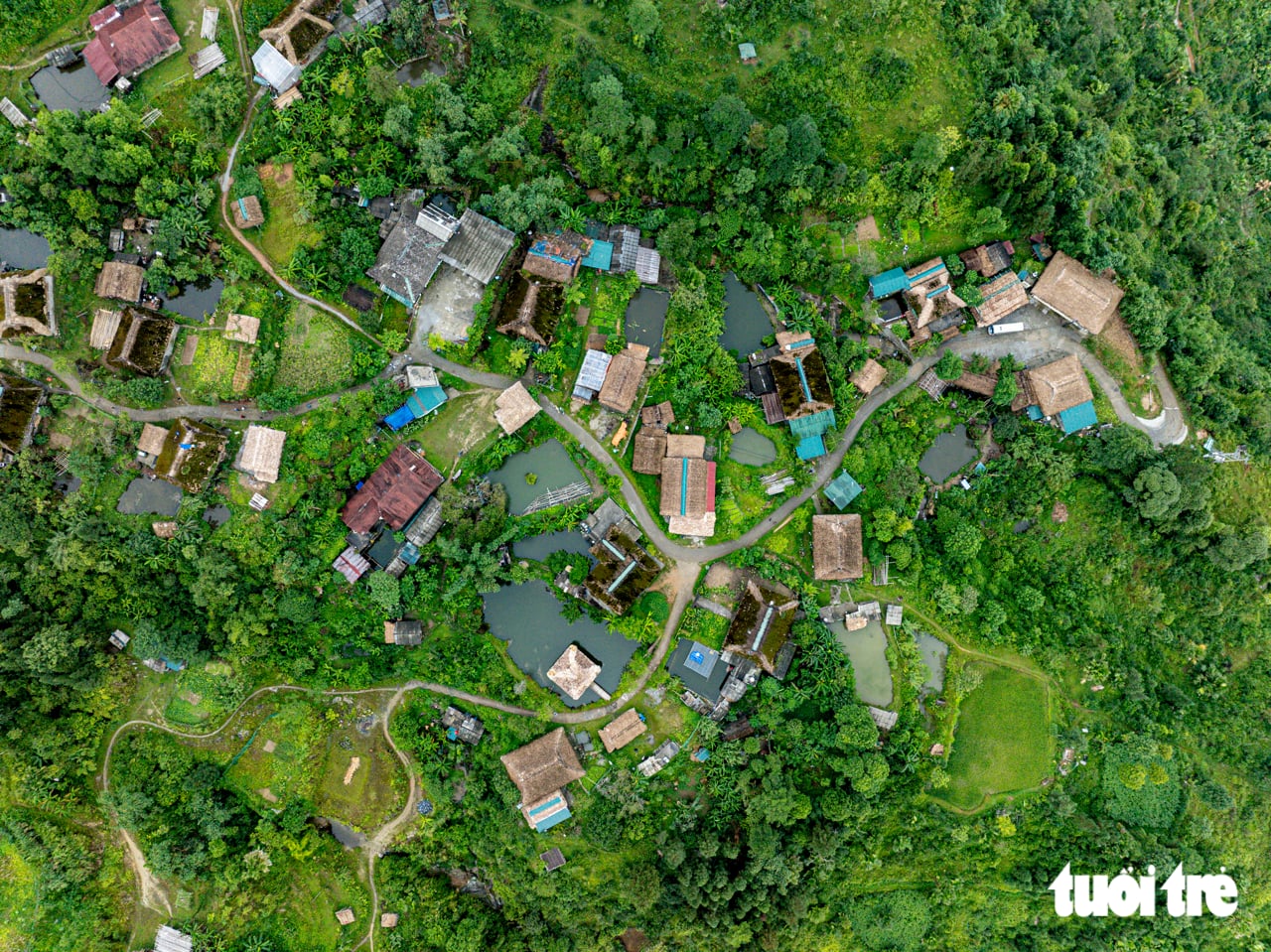
A panoramic view of Xa Phin Village. Photo: Nam Tran / Tuoi Tre
While roofs in many other mountain villages have gradually been replaced with tiles or corrugated metal sheets, residents of Xa Phin continue to value their traditional palm-leaf roofs.
Many new houses have been built in the village this year, but they are still roofed using the traditional method.
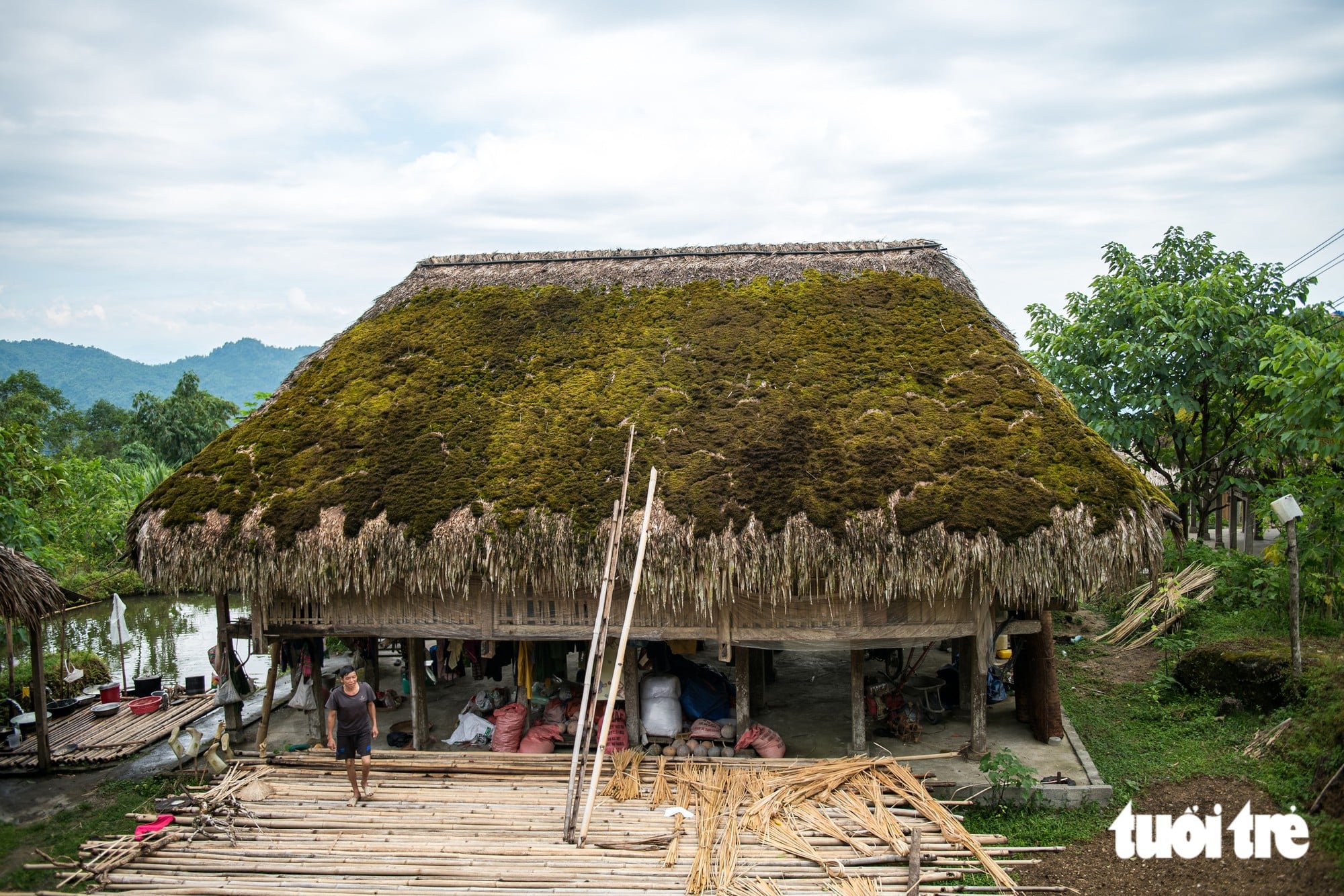
A 15-year-old palm-leaf roof belonging to the family of Ban Van Phan in Xa Phin Village. Photo: Nam Tran / Tuoi Tre
Getting to Xa Phin
To reach Xa Phin, visitors can travel from Ha Giang, a tourism hub in Tuyen Quang, along National Highway 2 to Phuong Tien Market, then turn onto a small road on the left leading up into the mountains.
The road follows Suu Stream and gradually climbs higher.
The 11km stretch from Phuong Tien Market to Xa Phin Village is relatively difficult, with many rough and deteriorated sections.
Visitors are advised to drive slowly and stay alert when navigating steep stretches and narrow bends.
As the road climbs higher, the landscapes of Tay Con Linh gradually unfold, with one mountain slope after another stretching into the distance.
Amid the green forests, terraced rice fields and moss-covered Dao houses create a distinctive landscape of Xa Phin Village.



Max: 1500 characters
There are no comments yet. Be the first to comment.