


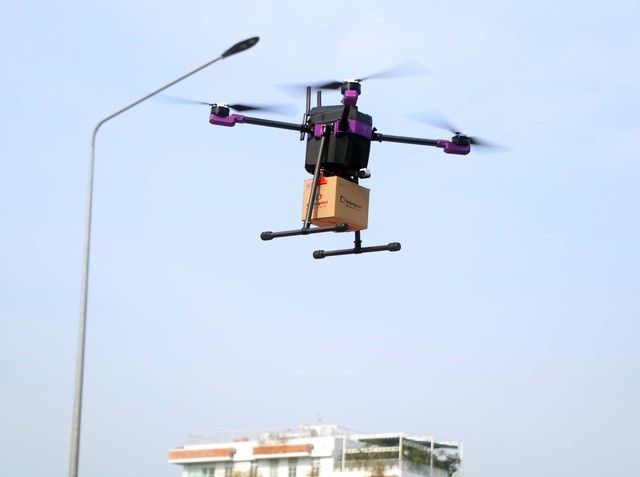
A UAV delivers a smartphone package during a test flight at the Saigon Hi-Tech Park in Ho Chi Minh City, January 5, 2026. Photo: Trong Nhan / Tuoi Tre
The trial was organized by the Ho Chi Minh City Department of Science and Technology in coordination with the Saigon Hi-Tech Park Management Board and a group of technology companies including Saolatek, Real-time Robotics Vietnam, and Di Dong Viet.
During the test session, two consecutive drone delivery scenarios were conducted to verify autonomous operation and real-time monitoring capabilities.
In the first scenario, a UAV developed by Saolatek carried a package containing an iPhone 17 and completed a flight of approximately 200 meters within the designated test zone.
The drone took off, navigated, and landed fully autonomously based on a pre-programmed route.
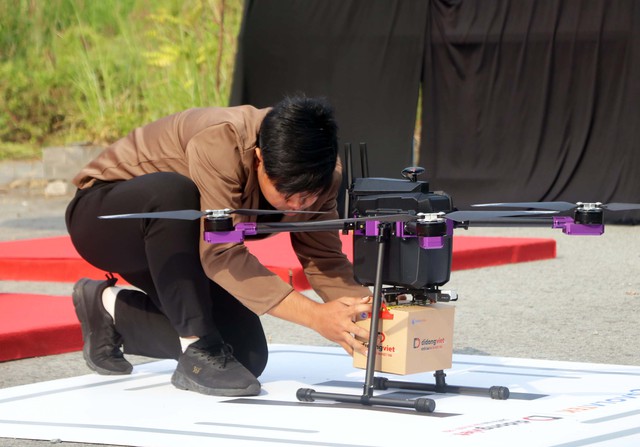
A package is prepared before a UAV takes off during a test flight at the Saigon Hi-Tech Park in Ho Chi Minh City, January 5, 2026. Photo: Trong Nhan / Tuoi Tre
According to Tran Anh Tuan, founder and CEO of Saolatek, all coordinates and flight parameters were displayed online in real time, while images from a 5G camera mounted on the UAV were transmitted live to a monitoring center.
After landing precisely at the delivery point and completing the drop-off, the drone returned to a nearby landing area close to its take-off location.
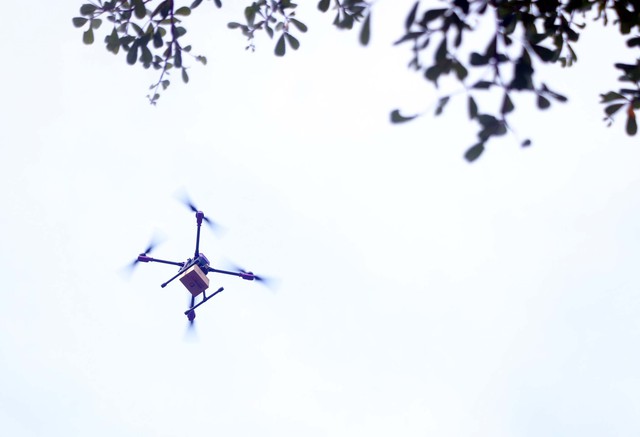
The first test flight covers a distance of about 200 meters at the Saigon Hi-Tech Park in Ho Chi Minh City, January 5, 2026. Photo: Trong Nhan / Tuoi Tre
The second scenario, conducted by Real-time Robotics Vietnam, involved a more complex multi-point delivery mission with a total route exceeding 400 meters.
Luong Viet Quoc, founder of Real-time Robotics Vietnam, said the UAV carried three separate packages, including phone components, a first-aid kit, and three cups of coffee, on a single flight.
The drone delivered each item to different locations in a predetermined sequence before safely returning to its original take-off point.
According to the organizers, the two scenarios were designed to assess automation levels, navigation accuracy, remote monitoring capability, and operational stability when transporting different types of goods.
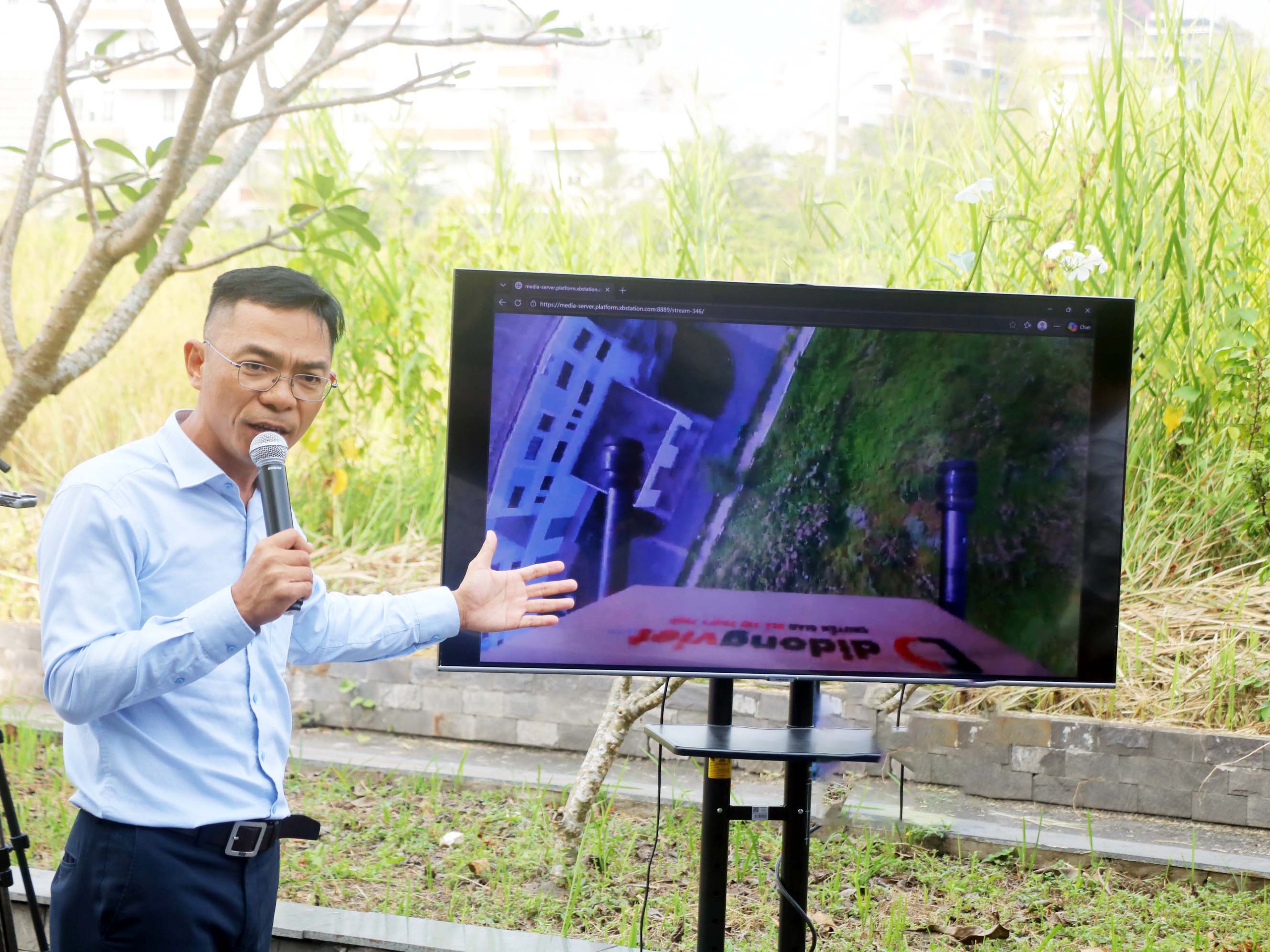
Customers can observe the flight via a live 5G camera feed. Photo: Trong Nhan / Tuoi Tre
Pham Huynh Quang Hieu, deputy director of the city’s Department of Science and Technology, said the program is expected to open the way for a new technology ‘sandbox’ in urban logistics.
The trial focuses on evaluating UAV applications for short-distance delivery, safety standards, operational stability, and the efficiency of domestically developed technologies.
The program also assesses coordination among state management agencies, tech firms, postal and logistics operators, and retail businesses under real-world operating conditions.
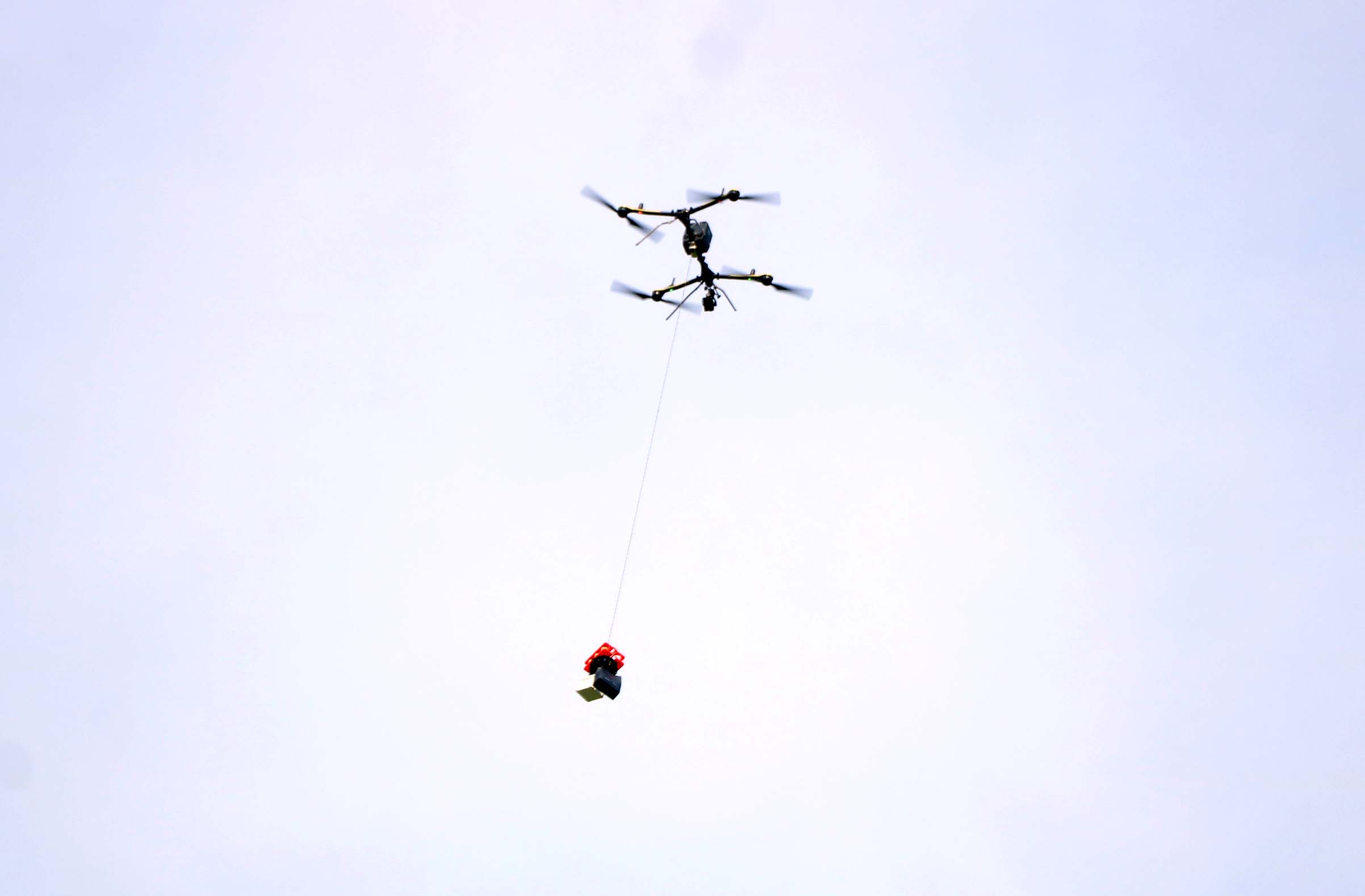
The second UAV flight carries three types of goods to three delivery points at the Saigon Hi-Tech Park in Ho Chi Minh City, January 5, 2026. Photo: Trong Nhan / Tuoi Tre
Hieu described the UAV delivery trial at the Saigon Hi-Tech Park as a strategic step toward standardizing controlled operations for unmanned aircraft.
Results from the pilot will serve as a basis for advising the Ho Chi Minh City People’s Committee on future policy development.
Further trials involving longer distances, such as routes from Can Gio to Vung Tau, are planned.
The program was conducted under Resolution 20/2024 of the Ho Chi Minh City People’s Council on controlled testing of new UAV technologies, contributing to the city’s goal of becoming a leading national hub for innovation, science, and technology, Hieu added.
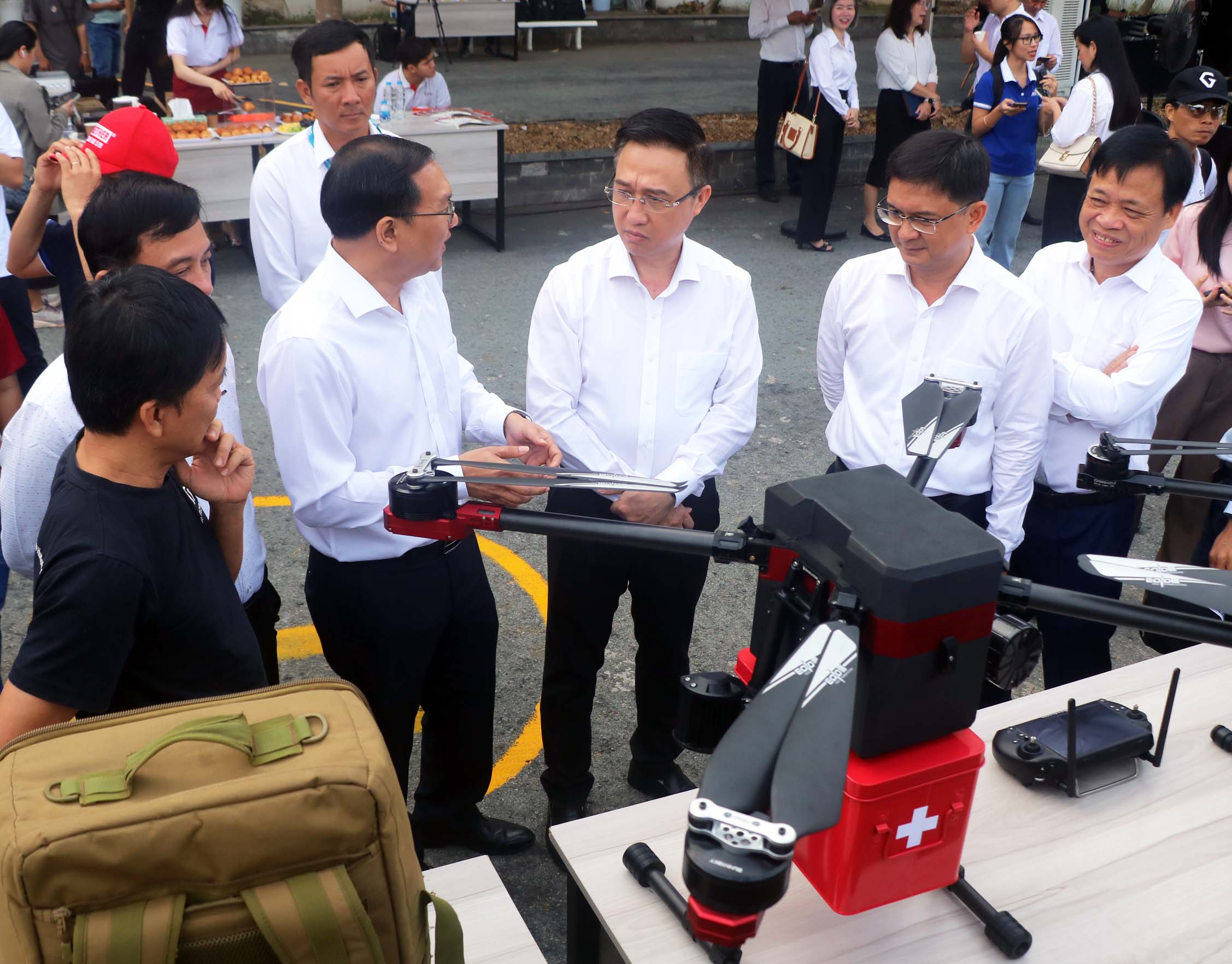
Dang Minh Thong, deputy secretary of the Ho Chi Minh City Party Committee, and Nguyen Manh Cuong, vice-chairman of the municipal People’s Committee, examine unmanned aerial vehicles at a test event at the Saigon Hi-Tech Park in Ho Chi Minh City, January 5, 2026. Photo: Trong Nhan / Tuoi Tre









Max: 1500 characters
There are no comments yet. Be the first to comment.