


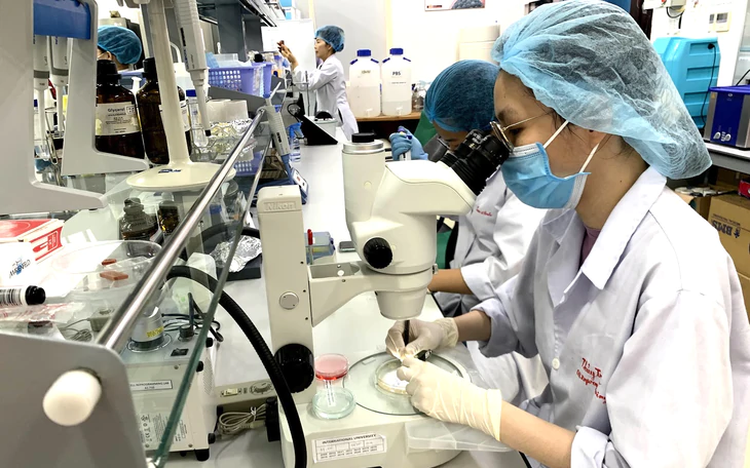
Under new regulations issued by Vietnam’s Ministry of Education and Training, research staff, like teaching assistants, must meet general ethical standards and be capable of supporting lecturers and guiding students in practical sessions, experiments, and other research activities at higher education institutions. Photo: Tran Huynh / Tuoi Tre
Under a circular recently issued by the ministry, teaching assistants are one of three groups whose competency standards and duties are specifically defined, alongside research staff and teaching support personnel.
Requirements for university teaching assistants
Under the new regulations, teaching assistants must hold a university degree or higher relevant to their job position, field or assigned specialization, and meet the requirements for supporting lecturers in teaching activities.
They must have a firm grasp of the fundamental knowledge of the courses assigned to them, as well as general knowledge of their academic discipline.
They are also required to understand and properly implement the objectives, plans, and content of courses or training programs, and keep abreast of practical developments and trends in education and research in their fields, both in Vietnam and abroad.
The circular also requires teaching assistants to be capable of guiding and supporting learners, organizing and coordinating teaching activities as requested by lecturers, and using teaching equipment and facilities effectively and safely.
Notably, the ability to apply information technology and AI, as well as foreign-language proficiency, is included in the competency standards for teaching assistants.
Supporting teaching, guiding students
Teaching assistants are responsible for helping lecturers prepare course materials, learning resources, and other conditions needed for teaching.
They also guide students in their studies, practical sessions, experiments, internships, and other learning activities as assigned.
They are also expected to assist with discussions, tutoring, examinations, and student assessments within the scope of their assigned duties.
Teaching assistants must pursue further training to improve their professional knowledge, skills and teaching methods, and participate in practical activities to enhance the quality of education and scientific research.
Higher education support staff work 40 hours per week, with schedules arranged flexibly according to their professional duties.
Overtime must remain within the limits prescribed by labor laws, and overtime pay is provided in accordance with regulations.
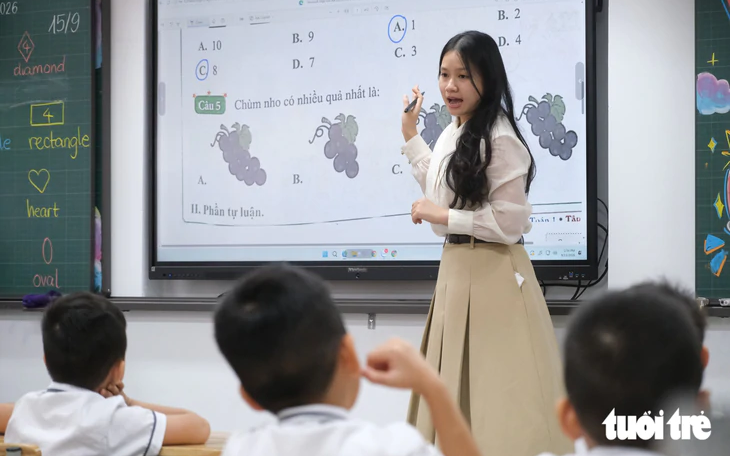
Existing teaching assistants to retain allowances
The circular stipulates that teaching assistants appointed before January 1, 2026 will retain their existing allowances through December 31, 2026.
Universities are responsible for reviewing and adjusting their salary grades and allowances in line with their job positions and applicable regulations.
Higher education support staff who were recruited or signed employment contracts before the circular takes effect but do not yet fully meet the new standards and requirements may continue working.
Training and professional development to help them meet the requirements of their positions will be conducted in accordance with the law and the regulations of their higher education institutions.
By specifying standards, duties and working conditions, the circular provides a basis for universities to assign, employ, train and develop teaching assistants in line with professional requirements and educational needs.
According to the Ministry of Education and Training, compared with a management approach based solely on job titles or general work assignments, more clearly defined standards and duties for each position will help universities establish specific requirements for different groups of staff.
This is expected to reduce cases in which employees are assigned duties that do not match their professional capabilities, while improving professionalism in education and research activities.


Max: 1500 characters
There are no comments yet. Be the first to comment.