


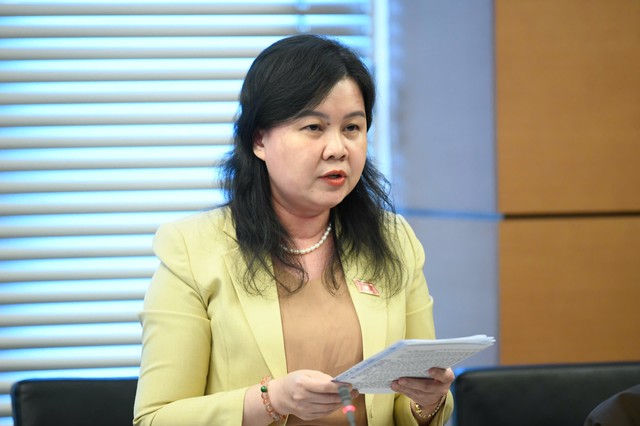
Nguyen Phuong Thuy, vice-chairwoman of Vietnam’s National Assembly Committee on Legal and Judicial Affairs. Photo: Gia Han
The discussion was part of the first extraordinary session of the country’s 16th NA, which is being chaired by NA Chairman Tran Thanh Man and held in Hanoi from August 3 to 24 this year.
During earlier group discussions, many lawmakers agreed that the law is urgently needed to institutionalize Party policies, especially Politburo Resolution 09 on Ho Chi Minh City’s development.
Strategic and groundbreaking law
Lawmaker Le Hoang Hai of Dong Nai City said the draft law would have strategic significance by creating a stronger legal framework to unlock resources and improve urban governance.
Regarding obligations for strategic investors, the draft requires them to support vocational training costs for workers affected by projects, prioritize local workers, and fulfill commitments on technology application and transfer, ‘if any.’
Hai argued that the phrase ‘if any’ weakens the obligation.
“When we call for investment, strategic investors receive many preferential policies,” he said.
“I propose removing the phrase ‘if any’ and clearly establishing mandatory criteria for strategic investors in technology-related fields, including technology-transfer plans.”
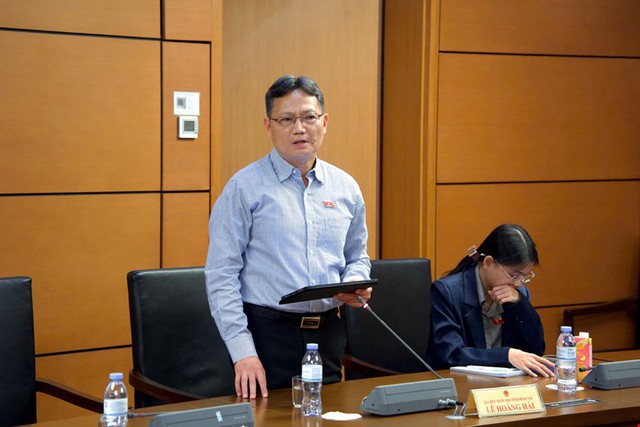
Lawmaker Le Hoang Hai of Dong Nai City, southern Vietnam. Photo: Gia Han
Nguyen Phuong Thuy, vice-chairwoman of the NA Committee on Legal and Judicial Affairs, said the draft law represents more than a package of new policies. It marks a shift in the country’s approach to urban governance and development.
She described it as a continuation of the 2026 Capital Law, moving from a management-oriented approach toward one focused on creating conditions for development.
Lawmaker Nguyen Thi Tuyen from Hanoi said the law would create new momentum for localities with strong urban development potential and provide a legal framework for special urban development policies.
Under Article 2, Ho Chi Minh City would be classified as a special urban area and receive the full package of mechanisms and policies designed to promote the development of special urban areas.
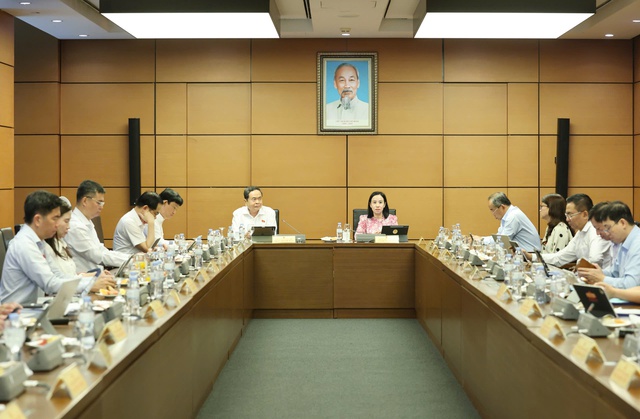
Tran Thanh Man, chairman of Vietnam’s law-making National Assembly, attends discussions about the Law on Urban Development, August 7, 2026. Photo: Quang Phuc
The draft law also identifies a group of ‘other cities,’ including Hai Phong, Can Tho, Da Nang, and Hue, as well as Quang Ninh and Bac Ninh in the future.
Cities that have not yet been recognized as special urban areas could receive development mechanisms under the law and, with approval from competent authorities, could implement such mechanisms.
“If a city’s development needs and governance capacity meet the requirements and the competent authority gives approval, it can adopt special-city mechanisms,” Tuyen said.
Lawmaker Tran The Anh of Ninh Binh Province, northern Vietnam supported provisions on managing underground, low-altitude, and high-altitude spaces, calling them major development resources.
Anh urged clearer rules on revenue collection and transparency in exploiting these spaces.
Lawmakers seek stronger financial mechanisms
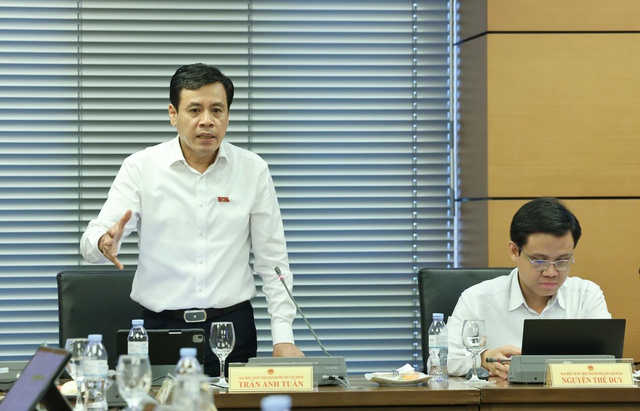
Lawmaker Tran Anh Tuan speaks during a National Assembly group discussion Photo: Quang Phuc
Lawmaker Tran Anh Tuan of Ho Chi Minh City said greater decentralization to municipal and provincial People’s Councils and People’s Committees was appropriate, but financial mechanisms must remain consistent with national fiscal discipline.
As for the Vietnam International Financial Center in Ho Chi Minh City, he said it should serve as the country’s international financial hub, attracting international capital and channeling resources to industries and localities.
“Organizations, businesses, and local administrations that need to mobilize resources for local or business development should have the right to participate in this market,” he said.
Tuan supported allowing city-level People’s Councils to regulate the issuance of domestic and international bonds and securities, while stressing that such borrowing must remain within the national public-debt ceiling and receive the Ministry of Finance’s feedback.
He also proposed giving city People’s Committees authority to decide on increases in the charter capital of state-owned enterprises operating in priority sectors, rather than requiring approval from higher-level authorities.
Lawmaker Duong Minh Tuan from Ho Chi Minh City said Article 23 provides mechanisms for mobilizing capital through the Vietnam International Financial Center but does not clearly specify how that capital would be directed toward projects.
“Mobilizing capital, connecting capital, and getting capital to the right businesses and projects” would determine whether the financial center could operate effectively, he said.








Max: 1500 characters
There are no comments yet. Be the first to comment.