


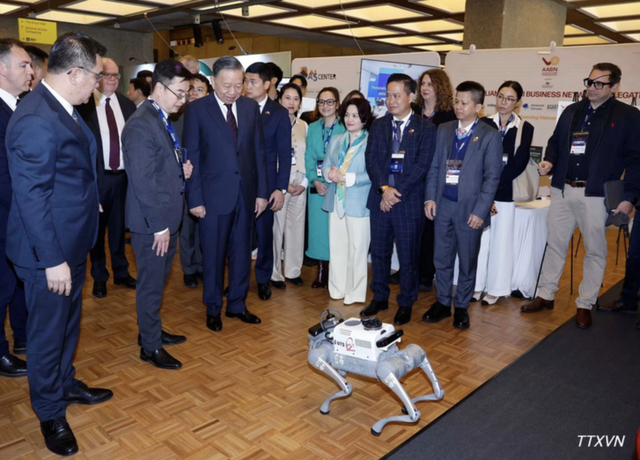
Vietnam's Party General Secretary and President To Lam visits the exhibition showcasing achievements in science, technology, innovation, investment, and education cooperation between Vietnam and Australia. Photo: Vietnam News Agency
Speaking to Tuoi Tre (Youth) online newspaper, Thompson-Whiteside, general director of Royal Melbourne Institute of Technology (RMIT) Vietnam, said conditions are increasingly favorable for Vietnam and Australia to expand cooperation beyond education into research, innovation, and skills development.
Vietnam-Australia relations have never been better positioned to advance cooperation in education, research, innovation, and skills development, he said.
Both sides look forward to continuing to work with partners in both countries to turn their shared vision into tangible outcomes, he added.
RMIT University was among the educational institutions taking part in the Vietnam-Australia Tech Connect Forum, held on Monday at the University of Technology Sydney in Australia.
From lab to practice
According to Thompson-Whiteside, the shift from research to innovation and the application of research findings in the real world is both natural and necessary.
Research creates knowledge, but innovation creates impact, he remarked, adding that countries that have successfully moved up the value chain tend to be those that can turn research findings into products, services, business models, policies, and technologies.
Australia's innovation ecosystem offers several lessons for Vietnam, he said, the most important being stronger links among universities, businesses, government agencies, and the start-up community.
He said some of the most notable results emerge when business challenges help shape research priorities from the outset.
Investment in human capital is also critical. Vietnam's goals in digital transformation, advanced manufacturing, and sustainable development will require more highly skilled researchers, innovators, and technology specialists.
Vietnam already has many of the ingredients needed to succeed: a dynamic economy, a strong entrepreneurial spirit, a clear development vision, and a young, talented population, Thompson-Whiteside said.
Vietnam should strengthen connections among universities, research institutes, businesses, and government agencies to help bring promising ideas from the laboratory into real-world applications, he suggested.
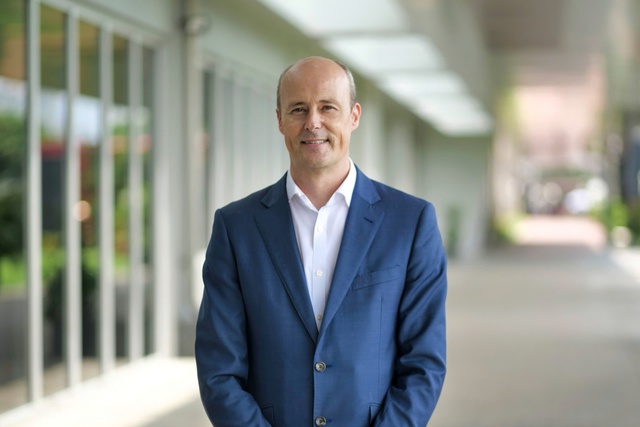
Professor Scott Thompson-Whiteside, general director of RMIT Vietnam
Education lays groundwork for innovation
Professor Thompson-Whiteside said education remains a key pillar of Vietnam-Australia relations, as bilateral cooperation expands into research and innovation.
Vietnam is pursuing ambitious goals in digital transformation, green growth and becoming a high-income country, creating greater demand for research that can address domestic challenges by drawing on global knowledge.
Regarding the Australia-Vietnam Science, Technology and Innovation Cooperation Initiative (AVSTICI), Thompson-Whiteside said RMIT welcomes the initiative and is looking for opportunities to contribute through partnerships among researchers, businesses, and government agencies.
Priority areas such as renewable energy, the sustainable ocean economy, recycling and waste management align with challenges shared by both countries.
More than 28,500 RMIT Vietnam alumni working across business, technology, the creative industries, and the public sector also form a network that connects expertise and creates opportunities for cooperation between the two countries.
"We would like to see more partnerships among universities, businesses, and government agencies to address real-world challenges and develop new technologies and solutions," Thompson-Whiteside said.
Vietnam, Australia strengthen joint research, innovation
On Monday, Vietnam's Party General Secretary and State President To Lam attended and addressed the Vietnam-Australia Tech Connect Forum on science, technology, innovation, education, and human resource development at the University of Technology Sydney.
The top Vietnamese leader said developing science, technology, innovation, and a highly skilled workforce is no longer a choice but essential to Vietnam's ambition of becoming a developed, high-income country by 2045.
He said Australia is a key partner with complementary strengths, calling for greater cooperation in developing highly skilled talent, particularly engineers, scientists, technology experts, and innovation managers.
The two countries should strengthen links among education, research and businesses, while establishing bilateral mechanisms and annual forums to facilitate policy dialogue, share expertise, and connect government, universities, and businesses, he added.








Max: 1500 characters
There are no comments yet. Be the first to comment.