


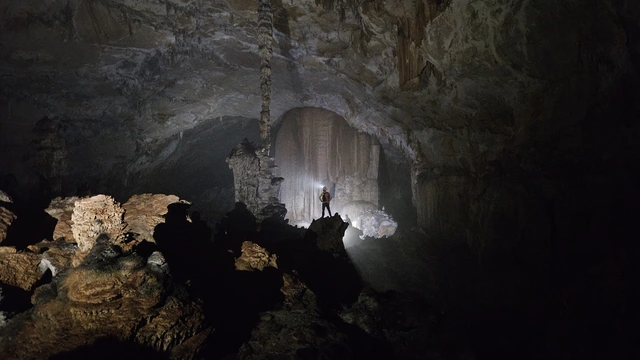
The expedition, conducted from March 21 to April 11 by 10 members of the British Cave Research Association with local support teams, surveyed 29 caves in total, including 26 new ones and three previously known caves, mapping a combined length of 13.6 km, the park said.
Among the findings, Thien Cung cave measured 4,206 meters, while Nuoc Lan cave reached 2,721 meters, and Ma Dom cave 1,257 meters.
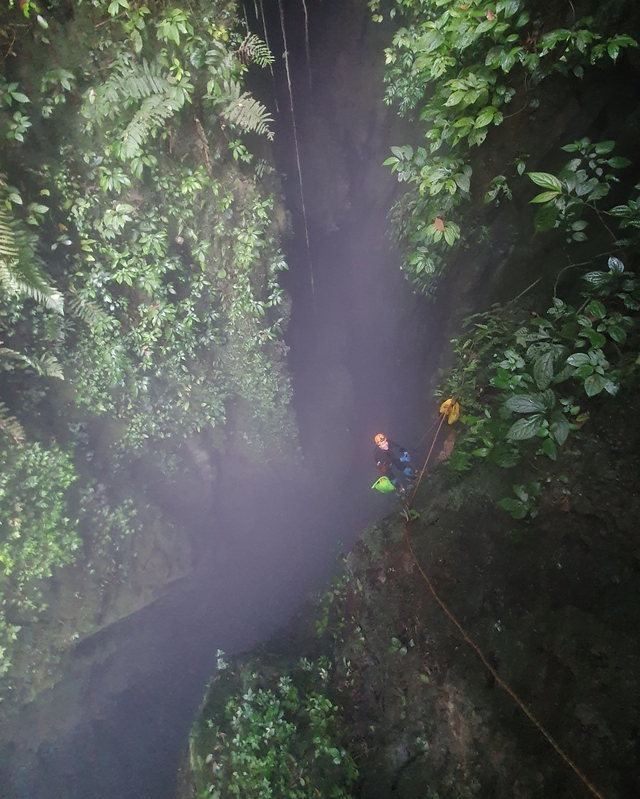
The entrance to Cha Ngeo Cave, which is difficult to access and required more than a day to reach during a 2026 survey in Phong Nha-Ke Bang National Park, central Vietnam. Photo taken by a survey team.
Howard Limbert, who led the team, said the caves are spread across the park and often required one to two days to access.
One cave, Cha Ngheo, was among the most difficult to reach, with a descent of about 350 meters requiring ropes and drilling, and is not suitable for tourism, he said.
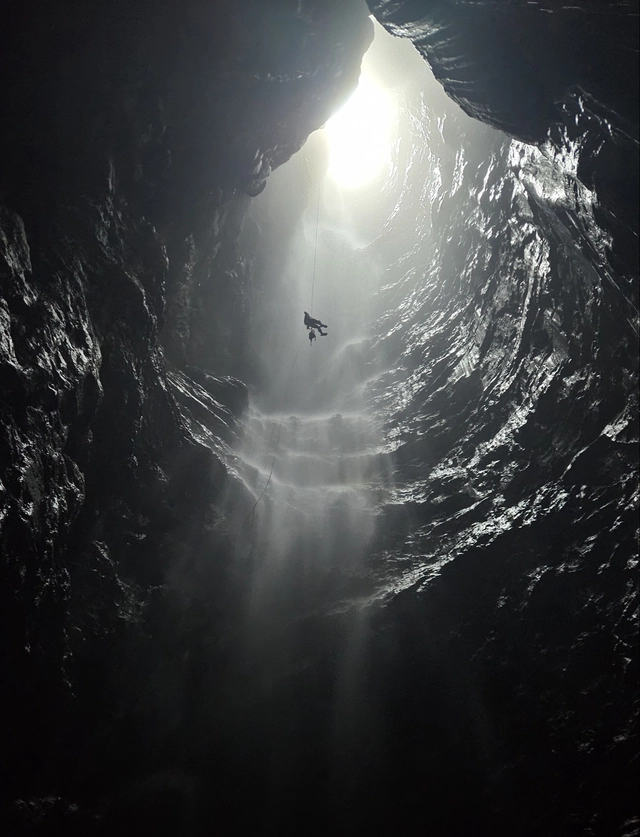
Survey team members explore Cha Ngeo Cave, where only about 350 meters of depth has been examined so far, in Phong Nha-Ke Bang National Park, central Vietnam, 2026. Photo taken by a survey team
The team also recorded an underground waterfall about 350 meters deep, though parts of the cave system remain unexplored.
Some caves, including Mo Ro cave, could be developed for tourism, although sections require swimming, the park said.
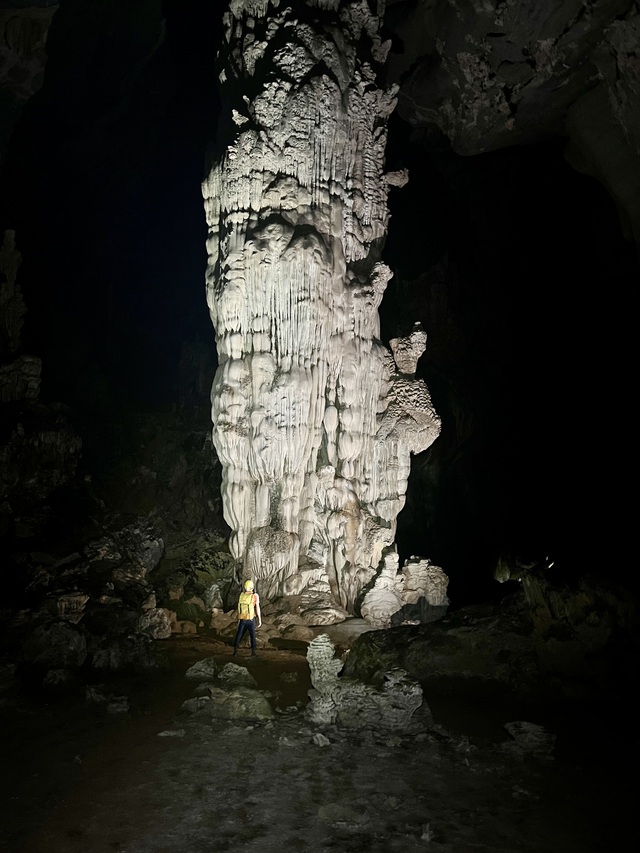
A wide chamber inside Thien Cung Cave, the longest cave discovered during the 2026 expedition, is seen in Phong Nha-Ke Bang National Park, central Vietnam. Photo taken by a survey team.
The findings highlight a complex karst system with vertical shafts and large horizontal caves, some containing underground rivers and waterfalls.
Park director Pham Hong Thai said any tourism development would prioritize conservation and involve local communities.
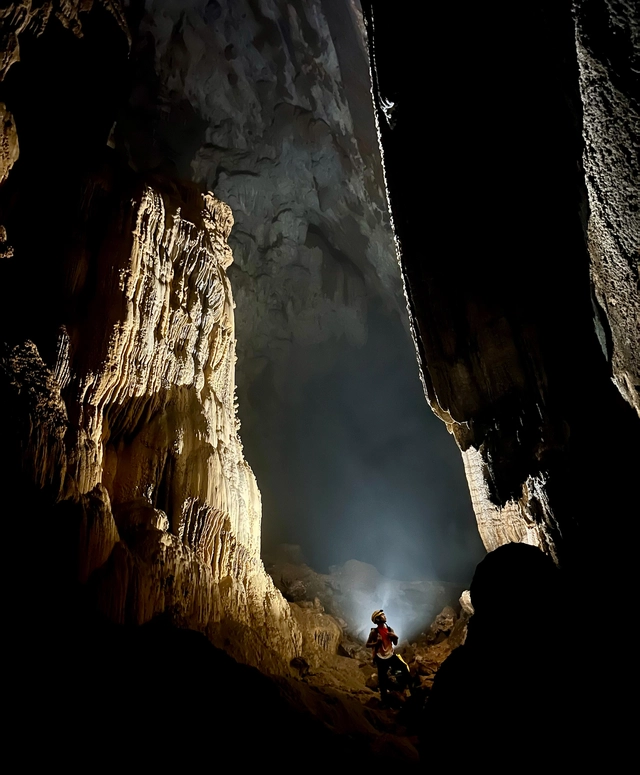
Stalactites and rock formations are seen inside Thien Cung Cave, which researchers say has potential for tourism development, in Phong Nha-Ke Bang National Park, central Vietnam, 2026. Photo taken by a survey team.
Phong Nha–Ke Bang National Park is known as the 'kingdom of caves,' with more than 425 caves discovered, around 50 of which have been opened for tourism.
Among these caves, Son Doong Cave is the largest and most prominent, featuring an underground river system.
Several other caves in the park also show evidence of water flow.
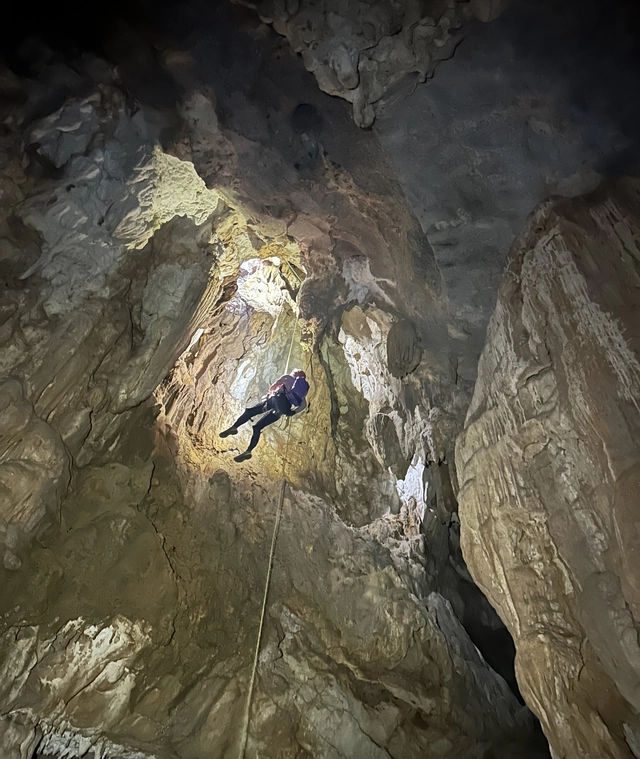
Chac Den Cave is seen during a 2026 survey expedition in Phong Nha-Ke Bang National Park, centrl Vietnam. Photo taken by a survey team.
Phong Nha-Ke Bang National Park was first inscribed as a UNESCO World Natural Heritage Site in 2003 under criteria related to geology and geomorphology.
On July 3, 2015, the site was extended to include biodiversity and ecosystem values.
Meanwhile, Son Doong was officially recognized by Guinness World Records as the world's largest natural cave in 2013.
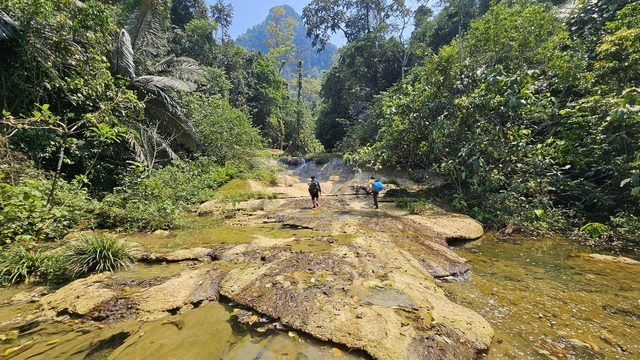
A trail leading to Mo Ro Cave winds through forested terrain in Phong Nha-Ke Bang National Park, central Vietnam, during a 2026 survey expedition. Photo taken by a survey team.
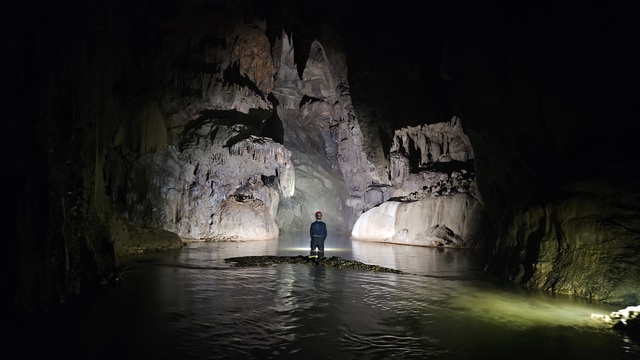
Survey team members navigate sections of Mo Ro Cave, where about 66 percent of the route requires swimming, in Phong Nha-Ke Bang National Park, central Vietnam, 2026. Photo taken by a survey team.
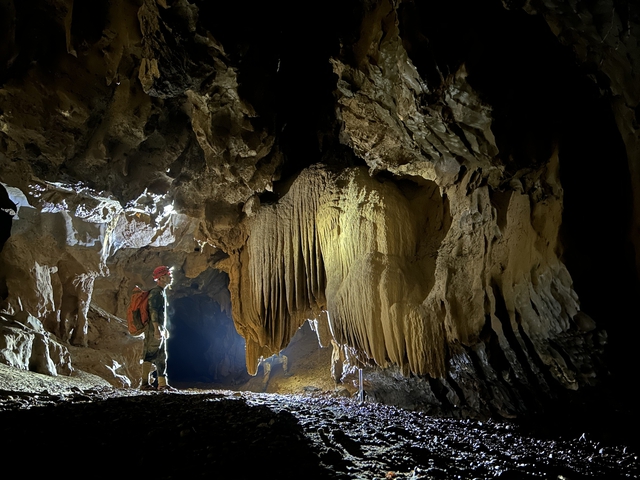
Nuoc Lan Cave, measuring 2,721 meters in length, is seen during a 2026 survey expedition in Phong Nha-Ke Bang National Park, central Vietnam. Photo taken by a survey team.









Max: 1500 characters
There are no comments yet. Be the first to comment.