


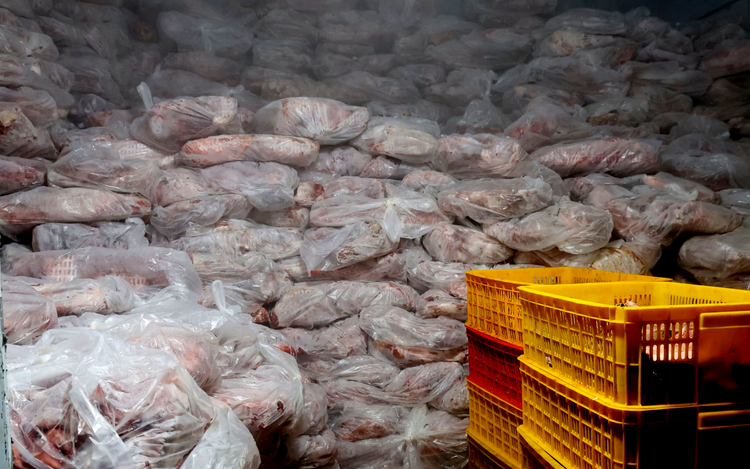
This illustrative image shows bags of buffalo meat, India’s best-performing agricultural export product.
By volume, Vietnam and Malaysia were the world's two largest importers of Indian buffalo meat in 2025, with each importing around 300,000 metric tons, amid India's push to boost exports of the product, according to Beef Central.
India's buffalo meat exports rose 25.6 percent year on year in fiscal 2025-26, making buffalo meat the country's best-performing agricultural export, Indian Express reported.
India is on track to export more than $6 billion worth of buffalo meat in fiscal 2026-27, an Indian trade official said.
With $933.9 million in imports, Vietnam led India's buffalo meat export markets by value in fiscal 2025-26.
Egypt ranked second at $725 million, followed by Malaysia at $654.1 million, the report said.
The average export value of Indian buffalo meat has increased in recent years, rising from $2,700-3,000 per metric ton in fiscal 2023-24 to $3,236 in fiscal 2024-25 and $3,591 in fiscal 2025-26.
The average export value reached $4,392 per metric ton in the second quarter of 2026.
The price gap between Indian buffalo meat and Brazilian beef has also narrowed to about $500-700 per metric ton.
Indian authorities and exporters have sought to improve the product's image and value by meeting stricter international standards for quality and food safety.
Indian Express said buffalo meat exports are allowed only from processing plants registered with India's Agricultural and Processed Food Products Export Development Authority, which requires compliance with safety, hygiene, and infrastructure standards.
Buffalo meat found mislabeled as beef
Buffalo meat is generally cheaper than beef, making it vulnerable to fraudulent relabeling.
In Vietnam, police in Hanoi uncovered a case in late 2025 involving a group that processed imported frozen buffalo meat from India to make it look like premium Japanese Wagyu beef.
The group allegedly injected by-products and solutions into the meat to create fat marbling before selling it as high-end beef.
A 2014 investigation by Swedish food safety authorities found that about 25-30 metric tons of beef tenderloin mixed with buffalo meat may have been sold or marketed as imported Italian beef at supermarkets and other outlets.
A study issued in 2017 also found that replacing beef with buffalo meat, or vice versa, was relatively common in global markets. In Malaysia, 71 percent of curry meat dish samples labeled as beef were found to contain buffalo meat.
Another Malaysian study found buffalo DNA in 40 of the 58 product samples labeled as beef.
In the U.S., news outlet The Western Producer reported that some companies had marketed water buffalo meat as bison.
The similarity in appearance and taste between buffalo meat and beef makes such fraud difficult to detect, particularly after the meat has been ground, mixed or heavily processed.
Although buffalo and beef are considered to have relatively similar nutritional value, buffalo meat remains less popular with Vietnamese consumers, with some finding it tougher and prone to a fishy smell if not properly prepared or if they are unaccustomed to it, according to a survey by Tuoi Tre (Youth) online newspaper.
- REFERENCE MORE
- REFERENCE MORE
- REFERENCE MORE









Max: 1500 characters
There are no comments yet. Be the first to comment.