


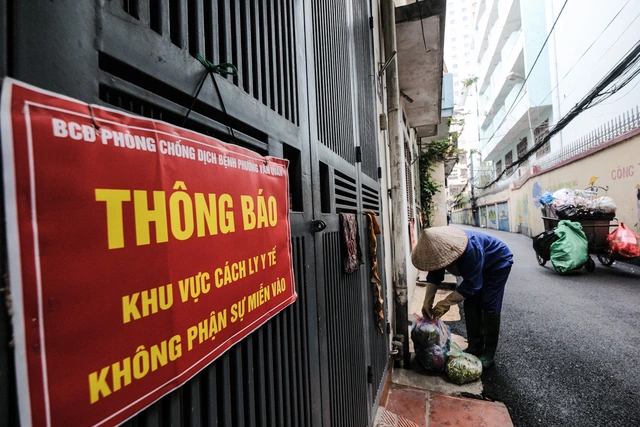
Residents undergo home medical isolation in Hanoi, Vietnam, February 2022. Photo: Nam Tran / Tuoi Tre
The draft, guiding the implementation of parts of the Law on Disease Prevention, lists diphtheria, pertussis, measles, rubella, anthrax, meningococcal meningitis, hand-foot-and-mouth disease, chickenpox, and mumps as subject to compulsory isolation.
It allows the health minister to designate additional Group B infectious diseases for isolation depending on the situation.
The proposal applies isolation measures to four groups: confirmed cases, suspected cases, carriers, and people exposed to infectious agents.
Isolation may take place at home or a place of residence, at medical facilities or at border gates, with decisions made by commune-level authorities, hospital directors, or border officials.
Authorities would be permitted to requisition facilities such as schools, dormitories, military or police barracks, hotels, factories, and apartment buildings for isolation when necessary.
Isolation periods would follow guidance issued by the health minister or recommendations from the World Health Organization.
The draft sets strict timelines, requiring commune-level health authorities to compile isolation lists within three hours of detection, followed by a decision by the local People’s Committee chair within one hour, and implementation within the next three hours.
At medical facilities and border gates, each step in the process must be completed within one hour.
The proposal also introduces a temporary containment measure allowing authorities to require suspected cases to remain at a location for up to three hours pending a formal decision.
Individuals who fail to comply with isolation orders could face compulsory enforcement with the involvement of local police.
The draft says the state budget would cover isolation-related costs in line with the Ministry of Finance’s regulations.








Max: 1500 characters
There are no comments yet. Be the first to comment.