


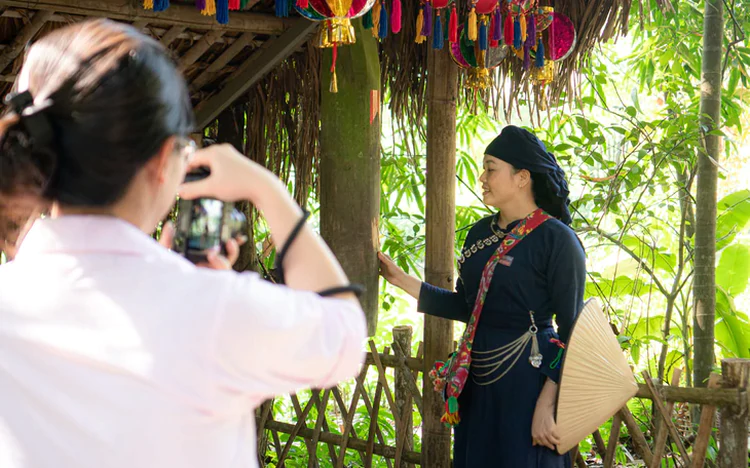
A tourist takes photos of a woman in Thai Hai Village in northern Vietnam. Photo: M. Phuc / Tuoi Tre
The results of the 2026 best rural tourism destination in Vietnam contest have been announced, recognizing villages that preserve their cultural identity while developing community-based tourism.
The five destinations are Thai Hai Village in Thai Nguyen Province, Quynh Son Village in Lang Son Province and Na Tong Hamlet in Tuyen Quang Province in the north, Con Chim (Bird Islet) in Vinh Long Province in the south, and Tan Hoa Village in Quang Tri Province in the north-central region.
Thai Hai Village
Thai Hai Village is known for its philosophy of “sharing one pot of rice and one purse.” It was also the first destination in Vietnam to be named one of the world’s best tourism villages.
The village is home to the Tay ethnic community, whose residents preserve their traditional stilt houses and communal way of life while introducing visitors to their distinctive culture.
Con Chim community tourism site
Con Chim is a community-based tourism destination that reflects the characteristic garden-and-river lifestyle of southern Vietnam.
In 2019, residents of Con Chim began developing community-based tourism in harmony with nature. The model allows them to maintain their agricultural livelihoods while welcoming visitors to experience life on the islet.
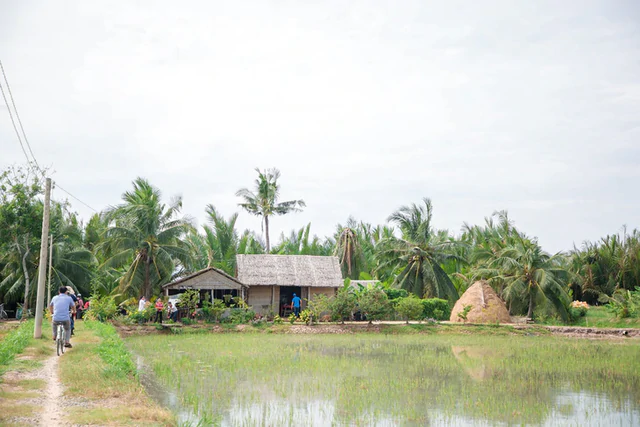
Con Chim (Bird Islet) in Vinh Long Province, southern Vietnam. Photo: Nguyen Thanh Tuan
Tan Hoa Village
Tan Hoa Village has developed a one-of-a-kind tourism model, turning a flood-prone area into a village recognized as one of the world's best tourism villages.
In the past, residents had to endure floods every rainy season, with their homes submerged. They therefore developed floating houses to adapt to rising floodwaters.
These floating houses have gradually become a defining feature of Tan Hoa. The model has opened up opportunities for climate-adaptive tourism, created livelihoods for local residents, strengthened disaster preparedness and supported sustainable tourism development.
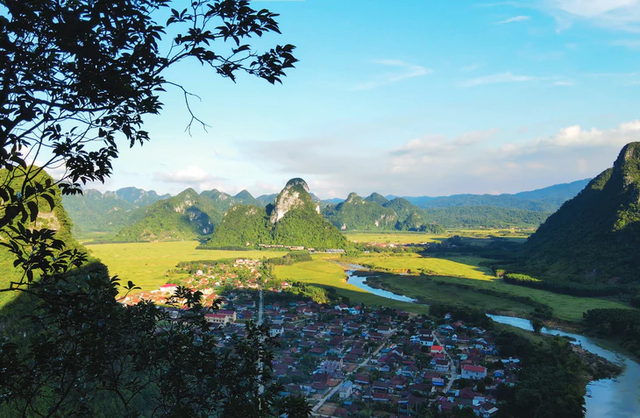
Tan Hoa Village in Quang Tri Province, north-central Vietnam. Photo: Hoang Trung
Quynh Son Village
Quynh Son Village gained wider recognition after being named one of the world’s best tourism villages in 2025.
The village is distinctive for its hundreds of stilt houses, all facing the same direction in the Bac Son Valley.
Beyond its characteristic northeastern landscape, the destination offers visitors opportunities to learn about local culture, sample traditional food and experience the daily life of the Tay ethnic community.
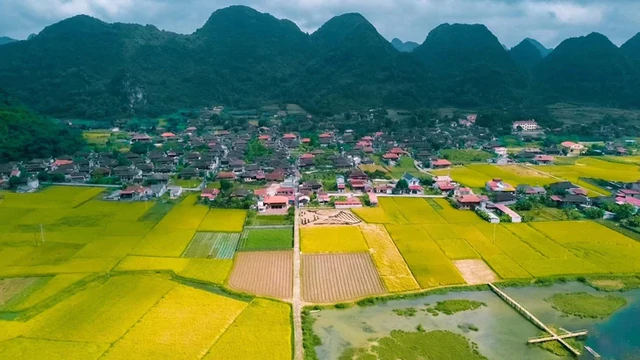
Quynh Son Village in northern Vietnam, where hundreds of stilt houses all face the same direction. Photo: Chu Duc Giang
Na Tong Hamlet
Na Tong Cultural Tourism Village lies along the banks of the Na Hang-Lam Binh ecological lake. It has emerged as a tourist destination in recent years thanks to its mountainous scenery and well-preserved Tay stilt houses.
Residents began developing tourism in 2016 through homestay services. The hamlet now has 15 homestays serving visitors.

In central Vietnam, commune leader puts world's best tourism village on digital map, foreign tourists give it 'perfect score'
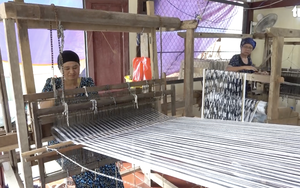
Video: Explore a century-old brocade weaving tradition in this Cham village in Vietnam’s Mekong Delta
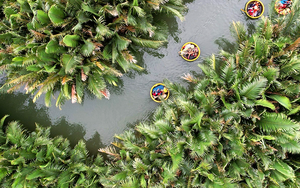
World’s most beautiful village: Hoi An's new tour targets high-end travelers
In addition to the five destinations named Vietnam's best rural tourism destinations for 2026, the public selected three other destinations: Tra Su cajuput forest in An Giang Province, southern Vietnam, Hung Lo community cultural tourism site in Phu Tho Province and Long Coc tea hill tourism site in Phu Tho Province, both in the north.
The 2026 best rural tourism destination in Vietnam contest was jointly organized by the Ministry of Agriculture and Environment and the Ministry of Culture, Sports and Tourism to honor outstanding village tourism models and rural destinations that promote agricultural values, culture, landscapes and local knowledge.
The initiative aims to build a network of high-quality rural destinations that preserve local identity, are environmentally friendly and bring practical benefits to communities.
It also seeks to create jobs, raise residents' incomes and build a brand for rural tourism in Vietnam.


Max: 1500 characters
There are no comments yet. Be the first to comment.