


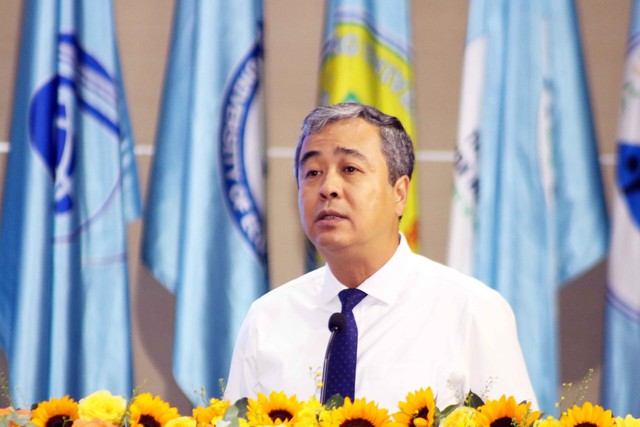
Ngo Dong Hai, deputy head of Vietnam’s Central Commission for Communication and Mass Mobilization. Photo: Trong Nhan / Tuoi Tre
At a scientific conference held in Ho Chi Minh City on Wednesday, officials and researchers discussed how Vietnam could strengthen policies to attract highly qualified talent for national development.
Speaking at the event, Ngo Dong Hai, deputy head of the Central Commission for Communication and Mass Mobilization, said many countries have aggressively introduced talent visa policies to attract scientists, innovators, entrepreneurs, and skilled workers, creating intense global competition for intellectual resources.
He said Vietnam is also studying improvements to its talent visa framework to attract international specialists and overseas Vietnamese experts, acknowledging that current policies remain fragmented and lack competitiveness.
According to Hai, challenges include the absence of special mechanisms for residency, employment, finance, and long-term living conditions for foreign experts.
He added that Vietnam’s work environment and remuneration packages are not yet internationally competitive, while the country also lacks large-scale innovation hubs and concentrated talent clusters.
Hai suggested Vietnam study successful models from countries such as Singapore, China, and South Korea to learn from their approaches to talent attraction and ecosystem building.
He advised that Vietnam should shift from a mindset of simply 'attracting' talent to actively 'competing' for talent through more flexible international visa mechanisms, innovation zones, stronger roles for businesses in innovation ecosystems, and globally competitive incentive policies.
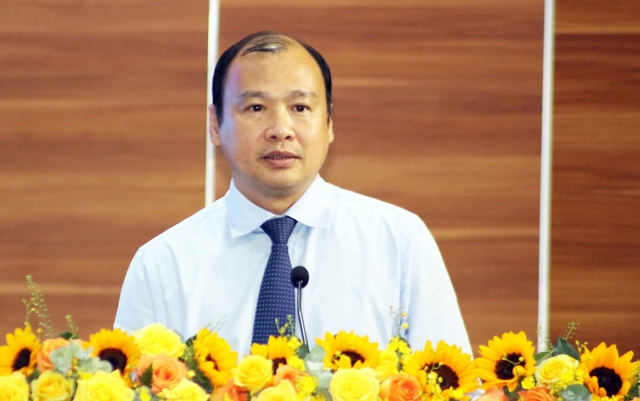
Le Hai Binh, deputy director of the Ho Chi Minh National Academy of Politics. Photo: Trong Nhan / Tuoi Tre
Le Hai Binh, deputy director of the Ho Chi Minh National Academy of Politics, said Vietnam has introduced various policies to improve human resources and use talent effectively, but many obstacles remain.
“Current incentives are not strong enough to retain domestic talent, let alone attract international experts,” he added.
Meanwhile, Nguyen Thi Thanh Mai, director of Vietnam National University-Ho Chi Minh City, said talent visas should be viewed as a strategic tool in global competition for skilled workers.
She added that countries are moving beyond simply training workers to managing 'talent flows,' including attracting, retaining, and maximizing talent in a globally competitive environment.
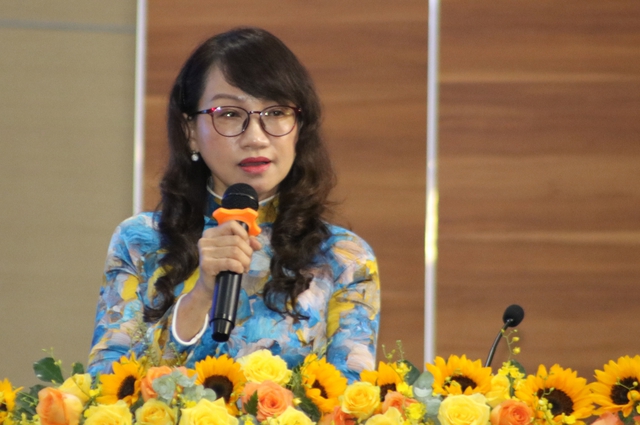
Nguyen Thi Thanh Mai, director of Vietnam National University-Ho Chi Minh City. Photo: Trong Nhan / Tuoi Tre
Vietnam National University-Ho Chi Minh City aims to become one of Asia’s top 100 universities and is implementing initiatives such as the VNU350 program, visiting professor programs, cross-border research groups, and partnerships with leading international universities and institutes.
Mai said policies such as flexible visas, strong academic environments, modern infrastructure, competitive compensation, research ecosystems, and quality of life would directly affect Vietnam’s ability to attract and retain talent long term.








Max: 1500 characters
There are no comments yet. Be the first to comment.