


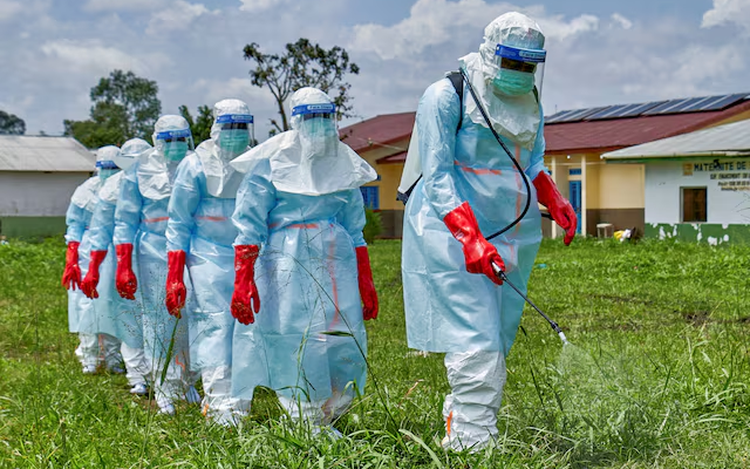
Red Cross workers walk in a formation as they disinfect Rwampara general hospital before handling the body of a person who died of Ebola, as aid agencies intensify efforts to contain a new Ebola outbreak involving the Bundibugyo strain, in Rwampara outside Bunia, Ituri Province, Democratic Republic of Congo, May 21, 2026. Photo: Reuters
In an urgent dispacth released on Sunday, the Ministry of Health's Department of Medical Service Administration instructed hospitals and local health departments nationwide to proactively implement Ebola prevention measures and closely monitor individuals who have arrived from affected regions within the past 21 days.
According to the World Health Organization (WHO), between May 5 and May 20, DRC and Uganda recorded about 600 suspected Ebola cases, including 139 deaths.
More than 50 of these cases have been confirmed as infections with the Bundibugyo strain, one of six known Ebola virus strains.
On May 17, the WHO declared the outbreak linked to the Bundibugyo strain in DRC and Uganda a public health emergency of international concern, underscoring the risk of cross-border transmission.
Ebola virus disease is a severe and often fatal illness in humans, typically characterized by hemorrhagic symptoms and multi-organ failure, with a case fatality rate that can reach up to 90 percent, according to the department.
In response to the evolving outbreak, the department has instructed hospitals to strengthen infection control measures, enhance screening and triage procedures, strictly isolate suspected or confirmed cases, and improve monitoring of travelers returning from affected countries.
Hospitals have also been told to regularly update staff and the public on the global situation, while ensuring accurate communication to avoid unnecessary public panic.
Health officials insisted on early detection, coordinated laboratory testing, and timely treatment, in line with technical guidelines issued by the health ministry.
The department also called for a review of protective equipment supplies for healthcare workers, isolation capacity, and overall diagnostic and treatment readiness to ensure facilities are prepared in the event of imported cases.
The disease is transmitted through direct contact with tissue, blood, and bodily fluids from infected animals or humans and may develop into outbreaks.
The virus can be transmitted from person to person through direct contact with blood, feces, urine, saliva, and semen via broken skin or mucous membranes.
The incubation period ranges from two to 21 days.
Common symptoms include fever, fatigue, headache, muscle pain, sore throat, vomiting, diarrhea, abdominal pain and rash, while some patients may also develop bleeding.
Authorities advise people to avoid contact with individuals suspected of having Ebola, as well as their bodily fluids and any contaminated belongings.
Health officials said anyone who develops symptoms after returning from affected regions should seek immediate medical attention and provide their travel and contact history to ensure timely diagnosis and response.








Max: 1500 characters
There are no comments yet. Be the first to comment.