


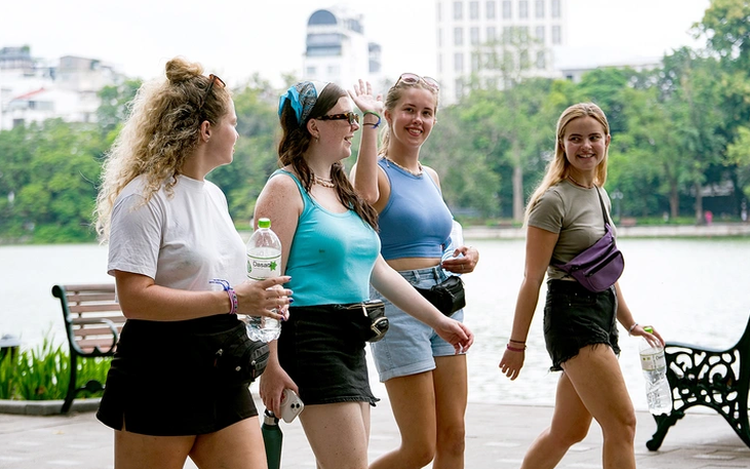
International tourists visit Hanoi. Photo: Nam Tran / Tuoi Tre
On behalf of the Politburo, Party General Secretary and State President To Lam has signed the issuance of Resolution No. 26 on developing Vietnam’s tourism industry into a spearhead sector.
Accordingly, the Politburo demands continued research into policies that would facilitate tourists’ entry into and exit from the country.
Relevant agencies are urged to expand bilateral visa exemptions and introduce preferential visa policies for visitor segments with high potential to contribute to tourism development.
Notably, the Politburo hints at studying controlled pilot mechanisms to attract long-stay visitors, remote workers, and international capital into tourism and resort development.
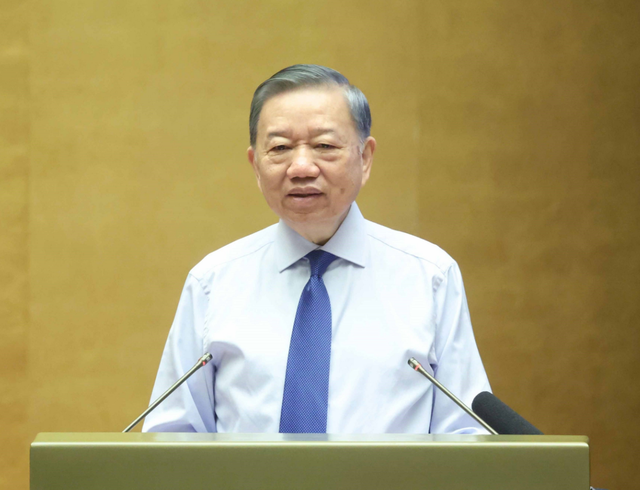
Vietnam’s Party General Secretary and State President To Lam. Photo: Danh Khang / Tuoi Tre
Efforts to create breakthroughs in tourism
The Politburo has outlined a series of measures to create breakthroughs in tourism development.
In terms of institutional reform, it orders the development of breakthrough mechanisms and policies for new tourism models, including the sharing economy, digital-platform businesses, the night-time economy, riverside and coastal economies, and integrated tourism, entertainment, cultural and sports complexes.
It is vital to improve regulations on value-added tax refunds at major shopping malls, tourism centers, and eligible shopping sites to promote shopping tourism and increase tourist spending, according to the Politburo.
In addition, the Politburo requires support policies on investment, land, finance, tax, fee, premises for high-quality tourism projects linked to healthcare, conferences, seminars, exhibitions, events, sports, shopping centers, and nighttime entertainment.
Such projects would be prioritized at national tourism areas and major tourism centers.
As per the resolution, pilot programs to address urgent issues need to be implemented immediately to create breakthroughs in tourism development when no existing legal provisions apply, or when implementation requires rules different from current regulations.

To develop synchronized infrastructure and establish highly competitive tourism hubs, the Politburo has urged the development of high-quality beach and island resort tourism centers capable of competing internationally.
Vietnam is also expected to develop multi-service tourism hubs combining tourism, shopping, cuisine and entertainment, with attractions operating throughout the day and night.
The Politburo also mentioned developing professional, internationally standardized outlet centers offering branded goods at preferential prices at major tourism centers, national tourism areas, international border gates, airports and seaports.
Strongly branded tourism groups and corporations are expected to receive investment and develop modern management capabilities and international competitiveness.
They would play a leading role in international travel services, destination management, domestic tourism platforms, integrated travel platforms, high-end tourism and the night-time economy.
Hanoi, Ho Chi Minh City, Da Nang to lead growth
The Politburo emphasizes that turning tourism into a genuinely leading economic sector would create a new growth driver for the country and contribute to the goal of achieving double-digit economic growth.
Vietnamese tourism is also expected to strengthen its regional and international competitiveness and generate strong spillover effects across other sectors.
The industry is intended to drive economic growth, innovation and sustainable development, and help promote the image of Vietnam and its people while enhancing the country’s position, reputation and soft power.
By 2030, tourism is targeted to contribute directly 10-12 percent of GDP and maintain Vietnam’s position among Southeast Asia’s leading destinations in terms of scale and growth.
Vietnam aims to welcome 45-50 million international tourists and serve 160 million domestic travelers by 2030, with a focus on high-spending and long-stay visitors.
Total tourism revenue is projected to reach US$80-90 billion.
The resolution sets out plans to strongly develop three tourism growth poles – Hanoi, Ho Chi Minh City and Da Nang – alongside 10 key tourism centers and 20 national tourism areas.
The country also aims to develop 15 strongly branded tourism groups and corporations with international competitiveness and supply some 1.5 million tourism accommodation rooms.
The tourism industry is expected to generate about 2.3 million direct jobs and 3.5 million indirect jobs.
By 2045, Vietnam looks to have a modern and sustainable tourism industry that firmly establishes itself as an economic growth engine.
Tourism is projected to contribute directly 14-15 percent of GDP, placing Vietnam among the world’s top 30 countries in tourism competitiveness.
Vietnam will become an attractive, high-quality and world-class destination with a distinctive cultural identity, welcoming 70 million international tourists by 2045.
In 2025, over 21 million foreign tourists visited Vietnam.








Max: 1500 characters
There are no comments yet. Be the first to comment.