


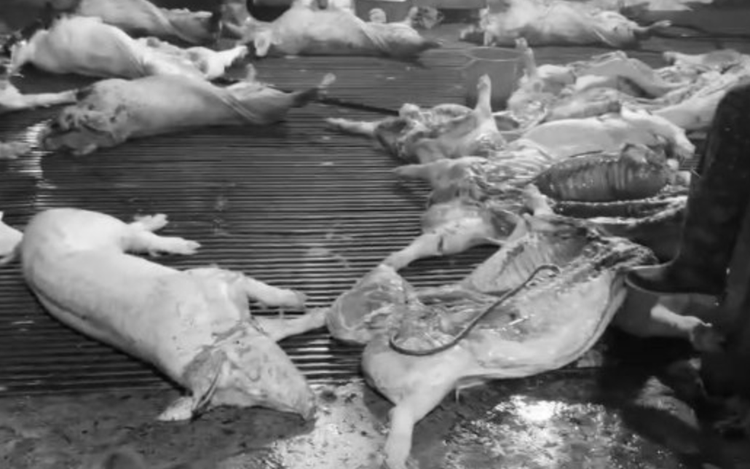
Diseased pigs slaughtered for consumption in Hanoi. Photo: Supplied
The chief of government instructed the Ministry of Agriculture and Environment to lead a coordinated effort with other ministries, departments, and local authorities to inspect slaughterhouse activities across the country.
The directive emphasizes the need to strengthen discipline and restore order in the enforcement of regulations governing animal slaughter and veterinary hygiene.
The order came after police uncovered several serious violations in recent months, including large-scale networks engaged in collecting, transporting, slaughtering, and distributing meat from diseased pigs.
These violations not only heighten the risk of disease transmission and threaten public health, but also erode administrative discipline and weaken state management in the veterinary sector.
To address these shortcomings, provincial and municipal administrations have been urged to intensify inspections and monitoring of slaughterhouses.
Harsh sanctions must be imposed on those involved in the illegal transport and sale of animal products that fail to meet veterinary hygiene and food safety standards.
Local authorities are also required to take firm action against any organizations or individuals who attempt to legitimize substandard slaughter facilities.
Enhanced oversight will extend to animal transportation, collection points, transit hubs, and wholesale markets.
The directive further calls for strengthened veterinary quarantine procedures at both domestic checkpoints and border crossings, alongside stricter enforcement within slaughterhouses.
The Ministry of Public Security has been tasked with intensifying investigations and imposing severe penalties on serious violations that contribute to disease outbreaks and food safety breaches.
Meanwhile, the Ministry of Health will step up food safety inspections, particularly in institutional kitchens such as those in schools, where oversight has reportedly been lax.

On Sunday, Hanoi police announced the prosecution of eight suspects, including several quarantine officials, linked to a ring trafficking diseased pork.
Since early 2026, the group had distributed some 3,600 infected pigs, equivalent to nearly 300 metric tons of meat, into wholesale markets and local vendors.
Some of the contaminated products were allegedly supplied to a food company that provided meals to schools in the capital, raising serious concerns about student health.








Max: 1500 characters
There are no comments yet. Be the first to comment.