


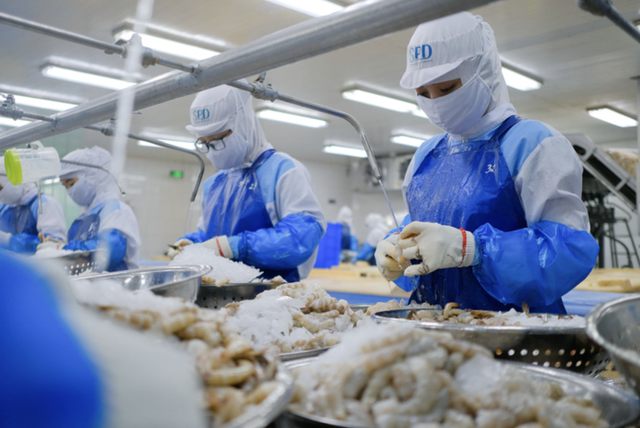
Workers process seafood for export. Photo: C. Quoc / Tuoi Tre
Besides product quality and traceability, seafood exporters must increasingly meet requirements covering animal welfare, environmental protection and sustainable production.
The Directorate of Fisheries and Fisheries Surveillance said animal welfare regulations are becoming more common worldwide.
The European Union, UK, Australia, New Zealand and other countries have introduced rules covering the treatment of fish and some crustaceans during farming, transportation and slaughter.
Stunning required before slaughter
New technologies designed to improve aquatic animal welfare, reduce environmental impacts and support sustainable aquaculture were showcased at Vietfish 2026, the Vietnam International Fisheries Exhibition in Ho Chi Minh City.
Filip Fleischer, a representative of Norway-based Optimar AS, introduced stunning systems designed for different aquatic species, covering shrimp and tra fish (pangasius), before slaughter.
"Proper stunning before slaughter can also help improve product quality," he said.
The Aquaculture Stewardship Council (ASC) plans to introduce new standards in May 2028 that place greater emphasis on aquatic animal health and welfare. The standards are expected to include stunning requirements for the slaughter of covered species.
Speaking to Tuoi Tre (Youth) online newspaper, Tran Dinh Luan, director of the Directorate of Fisheries and Fisheries Surveillance under the Ministry of Agriculture and Environment, said import markets are increasingly assessing seafood products based on animal welfare, environmental protection, ecosystem conservation and natural resource management.
"These requirements mean businesses must control the entire production process, from farming and harvesting to processing, while ensuring traceability and social responsibility,"
"We cannot overlook any technological process or stage if we want our products to meet the requirements of import markets," Luan said.
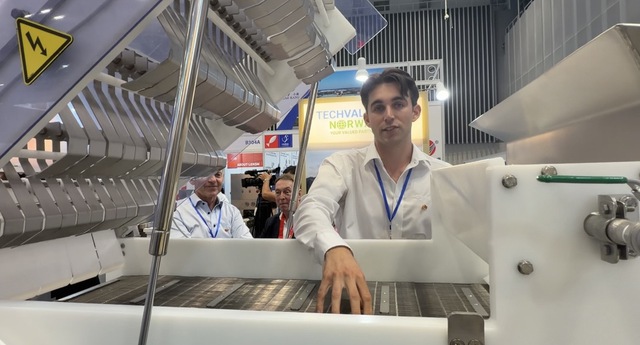
Filip Fleischer, a representative of Norway-based Optimar AS, introduces stunning technology for shrimp and fish before slaughter. Photo: Nghi Vu / Tuoi Tre
Vietnam seeks deeper seafood trade ties
Vietfish 2026, organized by the Vietnam Association of Seafood Exporters and Producers (VASEP), is being held at the Saigon Exhibition and Convention Center (SECC) from Wednesday to Firday.
The exhibition features more than 335 companies and 568 booths from 18 countries and territories, with national pavilions from Indonesia, Norway and South Korea.
Kim Won Seok, a representative of the South Korean seafood pavilion, said 10 South Korean companies were selected to promote trade and business cooperation in Vietnam this year.
The companies are showcasing seafood products, particularly seaweed, which has gained popularity among Vietnamese consumers.
South Korean companies are also seeking Vietnamese suppliers of shrimp and octopus, Kim said.
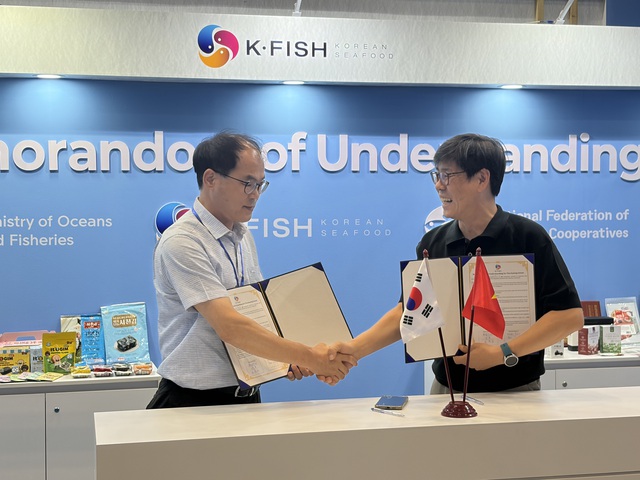
Businesses sign cooperation agreements at the South Korean pavilion at Vietfish 2026. Photo: Nghi Vu / Tuoi Tre
Melissa Brown, U.S. consul general in Ho Chi Minh City, praised Vietnam's aquaculture industry for its competitiveness and technical expertise.
The U.S. supplies high-quality soybean meal and other aquaculture feed ingredients to Vietnamese producers, while Vietnam exports seafood to the U.S., she said.
Vietnamese consumers also buy U.S. seafood products, including lobster, salmon, cod and crab.
U.S. seafood exports to Vietnam rose 77 percent in 2025 to US$114 million, according to the exhibition.
Vietfish 2026 is expected to attract more than 13,000 domestic and international visitors.








Max: 1500 characters
There are no comments yet. Be the first to comment.