


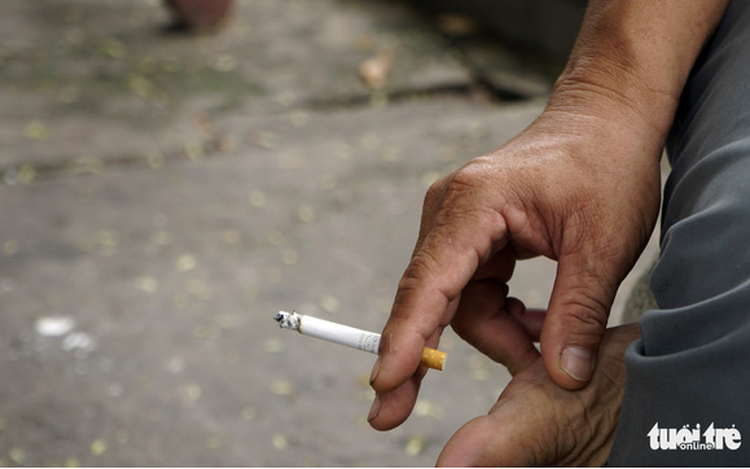
Vietnam has proposed a roadmap to ban indoor smoking in hotels, bars and karaoke venues. Photo: Tuoi Tre
The proposal is included in a draft decree detailing and guiding the implementation of the Law on Prevention and Control of Tobacco Harms, which is being drafted by the Ministry of Health.
Under the draft, the Ministry of Health would coordinate with other ministries, agencies and local authorities to monitor and assess compliance with smoking bans at indoor venues that still have designated smoking areas, Voice of Vietnam (VOV) reported.
Based on these assessments, the ministry would propose that the government convert such venues into completely smoke-free indoor spaces.
The draft identifies the venues to be prioritized for conversion and sets out a roadmap based on their priority levels.
Public transport, including watercraft and trains, would be addressed first, followed by airport isolation areas.
The next group would include hotels, tourist accommodation establishments, bars, karaoke venues and dance clubs.
This means venues that currently provide designated smoking areas could eventually be required to eliminate them and enforce a complete indoor smoking ban.
However, the transition would not take place simultaneously at all venues. Instead, it would follow a suitable roadmap for each period to ensure feasibility.
The draft sets out several conditions for consideration, including consistency with the state's policies on tobacco harm prevention and control; the need to prevent and reduce tobacco-related health risks; public awareness of the harms of tobacco and their health impacts; a small number of smokers using designated smoking areas; a feasible implementation roadmap; and consistency with regional and global trends.
When proposing a transition, the relevant authorities would have to prepare an assessment of the implementation of existing smoking restrictions, specify the venues covered and the roadmap for each group, and forecast the impacts of the proposed regulations.
Expanding smoke-free areas aims to reduce the exposure of nonsmokers to secondhand smoke in public places.
Between 2010 and 2024, the rate of exposure to tobacco smoke fell from 73.1 percent to 44.9 percent at home, from 55.9 percent to 22.4 percent at workplaces, and from 34.4 percent to 22.9 percent on public transport, news site VnExpress reported, citing the Ministry of Health.
Despite these significant declines, exposure to secondhand smoke remains high, particularly at home and in workplaces.
Draft proposes larger health warnings on tobacco packaging
The draft decree also proposes an increase in the area allocated to health warnings on tobacco packaging, according to local media.
Under the proposal, the Ministry of Health would work with the Ministry of Industry and Trade and relevant agencies to monitor and assess the implementation of current regulations, providing a basis for proposing that the government enlarge health warnings on tobacco packaging.
Any increase would need to be appropriate for the relevant period and meet requirements for preventing and reducing tobacco-related health risks while ensuring the effective management of tobacco production and trading.
The draft also stipulates that changes should improve the impact of health warnings on tobacco packaging and align with regional and global trends in such warnings.
When proposing an increase, the relevant authorities would have to assess the implementation of existing regulations, determine the specific increase, forecast its impacts, and gather feedback from affected organizations and individuals.
New tobacco products proposed for inclusion in ban
The draft continues to refine regulations prohibiting e-cigarettes and heated tobacco products, along with their components and related materials.
Nicotine pouches and shisha would also be added to the categories of prohibited products.
The addition of these products aims to address legal gaps as the market continues to see the emergence of different forms of tobacco use.
Nevertheless, implementing a comprehensive smoking ban in Vietnam will not be easy, as tobacco products remain relatively cheap and widely available.
Despite three increases in special consumption tax between 2013 and 2025, tobacco taxes account for only around 36 percent of the retail price of cigarettes in Vietnam, significantly lower than in many other countries in the region.
The Ministry of Health said the tax adjustments were too modest to significantly reduce tobacco consumption, leaving cigarettes increasingly affordable and easy for much of the population to access.
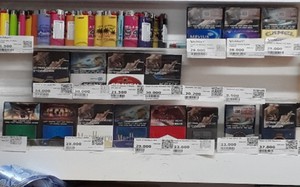
Meanwhile, their widespread availability at shops and street-side stalls makes them easy to buy.
These factors could make it harder to reduce smoking, even as authorities expand smoke-free areas and tighten regulations.








Max: 1500 characters
There are no comments yet. Be the first to comment.