


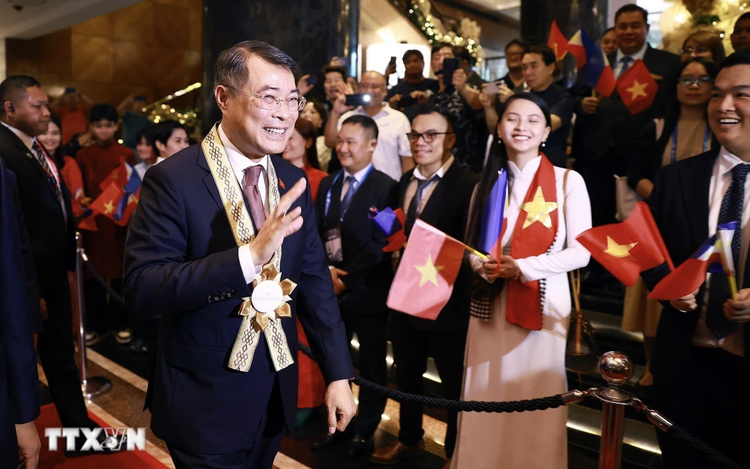
Vietnamese embassy staff and representatives of the Vietnamese community in the Philippines welcome Prime Minister Le Minh Hung on November 14, 2026. Photo: Vietnam News Agency
Speaking to Tuoi Tre (Youth) online newspaper, domestic and regional experts said the summit comes at a pivotal moment, presenting ASEAN with the dual challenge of responding effectively to mounting pressures while capitalizing on emerging opportunities.
Challenges facing ASEAN
ASEAN enjoys a significant advantage: both its member states and external partners attach considerable importance to the bloc’s role and share the goal of promoting regional peace, cooperation, and prosperity, said former Deputy Minister of Foreign Affairs Pham Quang Vinh, who previously served as Vietnam’s Senior Officials’ Meeting (SOM) leader to ASEAN.
Nevertheless, he noted that while the ASEAN Community Vision 2045 sets ambitious expectations, the bloc still faces substantial challenges in translating its aspirations into reality.
Therefore, ASEAN and its partners will need to focus on at least four key priorities.
The first is maintaining a peaceful and stable regional environment while navigating major-power competition without being drawn into rivalries.
This will require continued dialogue and confidence-building efforts on issues such as the East Vietnam Sea, Myanmar, and tensions between Thailand and Cambodia.
The second priority is economic connectivity, a key focus of the Philippines' ASEAN chairmanship.
Particular attention will be given to energy and food security, supply chains, and innovation.
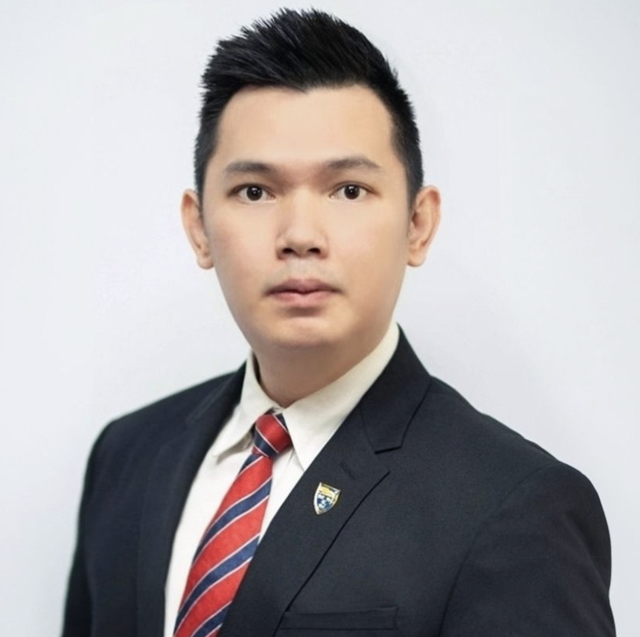
Collins Chong Yew Keat, a Malaysian foreign affairs, security and strategy analyst at the University of Malaya in Malaysia. Photo: Supplied
"The world is facing profound fragmentation,” Vinh said.
“ASEAN must find ways not only to strengthen its resilience but also to ensure that supply chains remain sustainable and resilient in the face of disruptions.”
The third priority, also one of the pillars of the Philippines' chairmanship, is putting people at the center of ASEAN's development.
This includes human resource development, people-to-people connectivity, migrant workers' rights, and the protection of citizens abroad – issues that have long been high on the Philippines' agenda.
Finally, ASEAN must boost its institutional capacity and reinforce its central role in regional affairs.
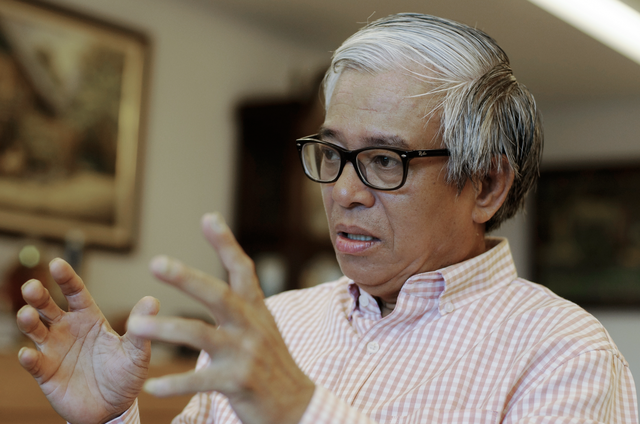
Former Deputy Minister of Foreign Affairs Pham Quang Vinh, who previously served as Vietnam’s Senior Officials’ Meeting (SOM) leader to ASEAN. Photo: Thanh Pham
Turning unity into collective strength
Collins Chong Yew Keat, a Malaysian foreign affairs, security and strategy analyst at the University of Malaya in Malaysia, said ASEAN must address a fundamental paradox: translating its unity and diplomatic centrality into strategic capacity and meaningful collective bargaining power.
Traditional approaches such as neutrality and consensus have given ASEAN diplomatic flexibility.
However, they can also make it difficult for the bloc to respond swiftly when urgent action is required.
"ASEAN's greatest challenge is not a lack of agreements or declarations, but its failure to translate diplomatic commitments into binding collective action," he said.
The summit must demonstrate ASEAN's ability to move beyond being a forum that brings stakeholders together and become an effective strategic actor capable of shaping, instead of merely reacting to, the changing regional order.
He also stressed that ASEAN's centrality must be earned through collective capabilities and its ability to protect shared interests, rather than simply asserted through official declarations.
Vietnam's strategic value
According to the Malaysian analyst, PM Hung's visit demonstrates Vietnam's emergence as an influential economic and strategic force within ASEAN.
More importantly, Vietnam can help maintain a balance of power among major regional players without compromising its independent foreign policy.
"Vietnam's strategic value lies not only in its economic momentum but also in its ability to translate growing national capabilities into regional influence, strategic stability, and stronger bargaining power for ASEAN," he said.
"Vietnam can serve as a key bridge between major powers while encouraging ASEAN to develop greater internal strength and strategic independence."
Strengthening ASEAN's internal capabilities is also central to the message Vietnam is expected to deliver at the summit, according to former Deputy Minister Vinh.
"Vietnam's biggest message is that as it enters a new era, it regards ASEAN as an extremely important organization and a top priority in its foreign policy,” Vinh said.
“Vietnam will certainly call for ASEAN to strengthen its self-reliance, proactively shape an environment of peace, cooperation and development, and work toward the goals of ASEAN Community Vision 2045.”
Proactiveness, a constructive approach and a strong sense of responsibility would be central themes in Vietnam's message, he emphasized.
Vietnam also hopes to see ASEAN become a stronger, more resilient and cohesive community that advances cooperation and development while maintaining its central role in the region.
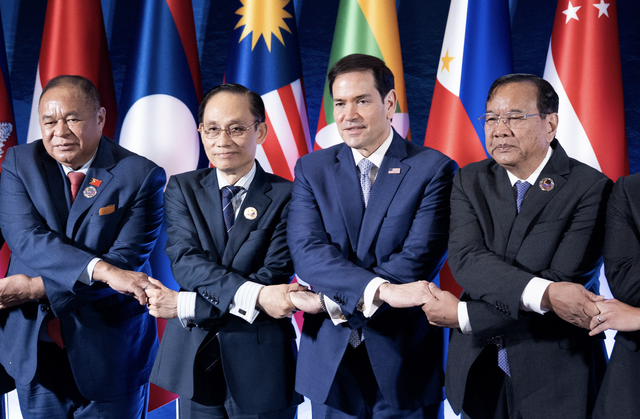
Vietnamese Minister of Foreign Affairs Le Hoai Trung (second from left) and U.S. Secretary of State Marco Rubio (third from left) join their ASEAN counterparts in an ASEAN-style handshake photo on July 22, 2026. Photo: AFP
Vietnam's key priorities
Vinh outlined several specific priorities Vietnam could promote at the ASEAN+1 and ASEAN+3 summits, as well as the East Asia Summit (EAS).
The first is resilience.
Even when crises disrupt energy supplies, food security or supply chains, ASEAN and its partners must preserve stability and ensure reliable cooperation.
The second is innovation, which ASEAN has identified as a major new engine of growth.
Vinh noted that Southeast Asia is well positioned to capitalize on opportunities arising from the semiconductor industry, artificial intelligence (AI), and AI infrastructure.
These developments must go hand in hand with digital and green transformations – areas in which ASEAN needs stronger cooperation with Japan, South Korea, China, the United States, Australia, and India.
However, engaging with this diverse group of partners also presents a major challenge: ASEAN must maintain relations with all major powers despite growing strategic competition among them.
Vinh affirmed that Vietnam would continue to promote ASEAN unity, preserve the bloc's centrality, and avoid being drawn into geopolitical rivalries.
The two experts shared a common assessment: ASEAN needs to become stronger from within, and Vietnam can play a meaningful role in advancing that goal.
DEFA: Building foundations of regional digital economy
One of the major highlights of the 49th ASEAN Summit is the official signing of the ASEAN Digital Economy Framework Agreement (DEFA).
The Malaysian expert described the agreement as a significant breakthrough that could reduce digital fragmentation, improve cross-border connectivity, and strengthen the region's competitiveness in an increasingly technology-driven global economy.
DEFA will provide a stronger foundation for digital trade, cross-border payments, data governance, technological innovation, and regional digital supply chains, he said.
However, he cautioned that substantial disparities remain among ASEAN member states in terms of technology, infrastructure, and levels of development.
The bloc's members also remain heavily dependent on China and the United States, while failing to fully leverage their combined economic weight.
This has become particularly evident in recent tariff negotiations with Washington, where individual countries have tended to prioritize bilateral agreements.
He said DEFA could significantly improve regional economic connectivity.
However, achieving meaningful integration will require more than a framework agreement.
ASEAN must also strengthen its internal economic capabilities, promote regulatory convergence and develop greater collective bargaining power.


Max: 1500 characters
There are no comments yet. Be the first to comment.