


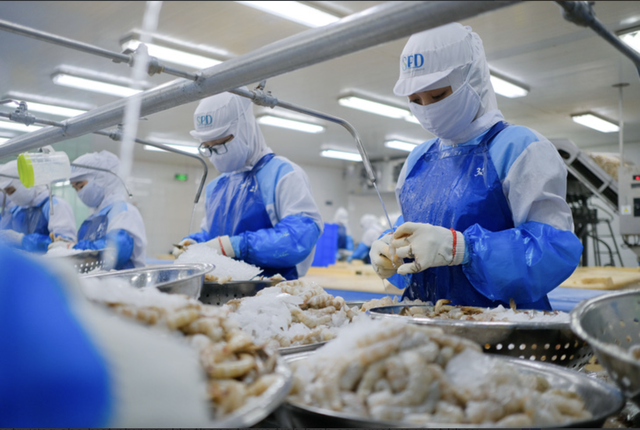
Workers process seafood at a facility in Vietnam. Photo: C.Quoc / Tuoi Tre
The Ministry of Agriculture and Environment said shrimp and pangasius prices are expected to remain high through year-end, and Vietnam's seafood exports could reach $12 billion this year, according to its report on agricultural, forestry, and seafood production and exports in October and the first 10 months of the year.
Large whiteleg shrimp likely to command premium prices through year-end
Aquaculture continued to expand steadily in October, with pangasius and brackish-water shrimp farming maintaining solid growth, according to the ministry.
Aquaculture output was estimated at more than 655,000 metric tons in October, up six percent from a year earlier.
Production in the first 10 months of the year totaled nearly 5.52 million metric tons, also marking a six-percent year-on-year increase.
In October, whiteleg shrimp prices in Mekong Delta provinces continued to rise, although at a slower pace than in September.
In Ca Mau Province, farmed whiteleg shrimp raised in lined ponds and weighing 20 shrimp per kilogram sold for VND175,000-VND180,000 ($6.80-7.00) per kilogram in the first half of October, up $0.12 from September.
The price of 30-count shrimp reached VND140,000-VND145,000 ($5.44-5.64) per kilogram, up $0.33, while 50-count shrimp sold for VND109,000-VND114,000 ($4.24-4.43) per kilogram, an increase of $0.27.
Smaller shrimp weighing 70 per kilogram fetched VND101,000-VND106,000 ($3.93-4.12), up $0.23. Meanwhile, prices of raw black tiger shrimp remained stable.
In the pangasius market, raw fish prices in the Mekong Delta remained high and stable, extending gains recorded since late September as supplies of export-standard fish from farms were tight.
White-flesh pangasius weighing 0.7-1 kilogram per fish was purchased at VND32,000-VND34,000 ($1.24-1.32) per kilogram, unchanged from late September.
Raw pangasius prices are expected to remain above VND30,000 ($1.17) per kilogram in November, supported by improving international demand, allowing farmers to maintain profits and reinvest in their year-end production cycles, the ministry said.
Meanwhile, the shrimp market is expected to remain influenced by global demand during the year-end holiday season.
"Prices of large-sized whiteleg shrimp are likely to remain high or edge up slightly, while prices of medium- and small-sized shrimp are projected to remain relatively stable amid steady supplies," the ministry said.
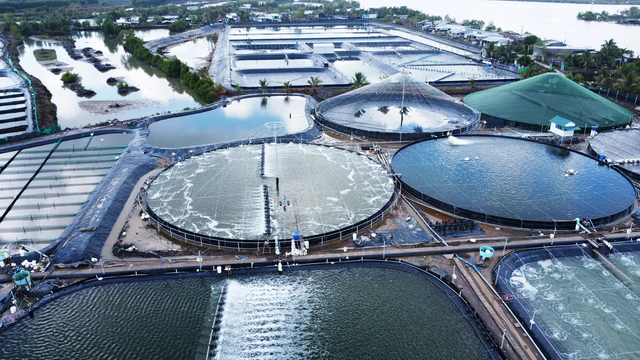
A shrimp farm in Ca Mau Province, southern Vietnam. Photo: Thanh Huyen / Tuoi Tre
China emerges as growth driver
The ministry reported that seafood exports reached an estimated $1.34 billion in October, bringing total export revenue in the first 10 months to more than $10.4 billion, up nearly 12 percent from the same period in 2025.
With seafood exports exceeding $10.4 billion in January-October, Vietnam is well positioned to reach, or even surpass, its $12 billion target for 2026, as the industry needs to generate only about $800 million in monthly exports over the final two months, well below October's export value.
China, the United States, and Japan remained Vietnam's three largest seafood export markets. Shipments to China surged more than 34 percent year on year, while exports to the United States and Japan rose 0.5 and 1.5 percent, respectively.
Le Hang, deputy secretary-general of the Vietnam Association of Seafood Exporters and Producers, said fish products continued to drive export growth in October.
Exports of other fish products reached $309 million, up 55 percent and adding nearly $110 million to export revenue.
Pangasius shipments exceeded $249 million, rising nearly 15 percent, while tuna exports increased more than 13 percent and squid and octopus shipments grew nearly 15 percent.
Meanwhile, shrimp exports neared $474 million in October, down almost five percent. Whiteleg shrimp exports fell more than eight percent to nearly $307 million.
In the first 10 months, whiteleg shrimp exports reached $2.6 billion, up just four percent.
Exports of green lobster reached nearly $915 million, up 31 percent, contributing more than $216 million, or about 62 percent of the total increase in shrimp export revenue.
This indicates that the nine-percent growth in overall shrimp exports was driven substantially by lobster, while whiteleg shrimp, the industry's main farmed and processed product, recorded slower growth.
According to Hang, this trend reflects broader developments in the global shrimp market.
In the first eight months of the year, shrimp import volumes fell 0.7 percent in the United States and 2.3 percent in the European Union, while China's imports rose more than 25 percent.
Demand growth remained uneven across markets, while Ecuador's shrimp exports increased nearly 20 percent over the same period.
As a result, Vietnam's shrimp exporters are unlikely to benefit from a broad-based recovery in import demand across major markets to boost shipments in the final months of the year, she said.
To achieve the $12 billion export target, the seafood industry plans to step up technology use, strengthen disease control, and organize production in line with market demand.
These measures are expected to reduce risks and improve economic returns for farmers.
The industry will also strengthen links among farmers, fishermen, and seafood processors to improve its ability to fulfill export orders.




Max: 1500 characters
There are no comments yet. Be the first to comment.