


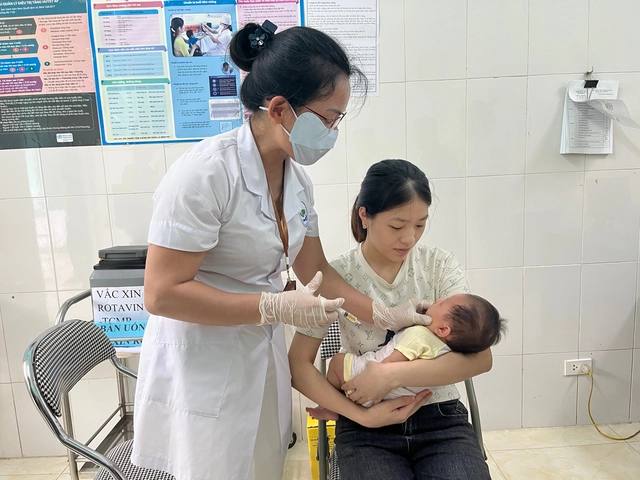
A child receives the Rotavirus vaccine against viral diarrhea during a free immunization program in former Yen Bai Province (now part of Lao Cai Province in northern Vietnam), one of the first localities to provide the vaccine under the national expanded program on immunization. Photo: Tuoi Tre
The HPV vaccine is used to prevent cervical cancer in women and several cancers in men caused by the human papillomavirus.
From 2026 to 2028, the Ministry of Health will pilot the program in four provinces, including Tuyen Quang, Quang Ngai, Dak Lak, and Vinh Long.
The National Institute of Hygiene and Epidemiology is currently estimating vaccine demand and compiling data on the number of eligible children to prepare for the roll-out
Health officials said expanding vaccination to other age groups or including boys remains under study and will be considered after evaluating results from the pilot phase in the four selected provinces.
The HPV vaccine is one of four new vaccines scheduled for inclusion in the national immunization program during the 2024-30 period.
The others are shots against rotavirus diarrhea, pneumococcal disease, and seasonal influenza.
Among them, the rotavirus vaccine began limited implementation in late 2024 and is expected to be expanded nationwide by 2026.
Public health experts said that many countries have sharply reduced HPV infections and cervical cancer cases through widespread vaccination combined with early screening.
Australia is frequently cited as a leading example, with coverage reaching 85.9 percent among girls and 83.4 percent among boys receiving at least one HPV dose before age 15.
As a result, Australia is projected to eliminate cervical cancer by 2035.
Several European countries that introduced HPV vaccination early have also reported significant declines in precancerous cervical lesions and sharp reductions in community infection rates of HPV types 16 and 18, the two strains most strongly linked to cervical cancer.
In Vietnam, HPV vaccines have been available since before 2010, but the uptake has remained low because the vaccines were offered mainly through private services at a relatively high cost.
A 2021 study found that only 12 percent of women and girls aged 15-29 in the country had been vaccinated.
Health authorities said including the HPV vaccine in the free national program will significantly expand access and help Vietnam move toward eliminating HPV-related diseases, particularly cervical cancer.
This mirrors earlier successes achieved through vaccination against diseases such as neonatal tetanus, polio, measles, and whooping cough.
The Ministry of Health added that the newly passed Law on Disease Prevention 2025 introduces updated immunization regulations, including requirements to review vaccination histories during school health checks, ensure equity in access, and distinguish between mandatory and voluntary vaccinations.
A nationwide health communication campaign themed ‘Immunization for Everyone’ is also underway.
Under the Health Ministry’s 2026-28 immunization plan, Vietnam will provide free vaccines against 13 infectious diseases for children and pregnant women, including hepatitis B, tuberculosis, diphtheria, whooping cough, tetanus, polio, measles, rubella, Japanese encephalitis B, rotavirus diarrhea, pneumococcal disease, and cervical cancer caused by HPV.










Max: 1500 characters
There are no comments yet. Be the first to comment.