


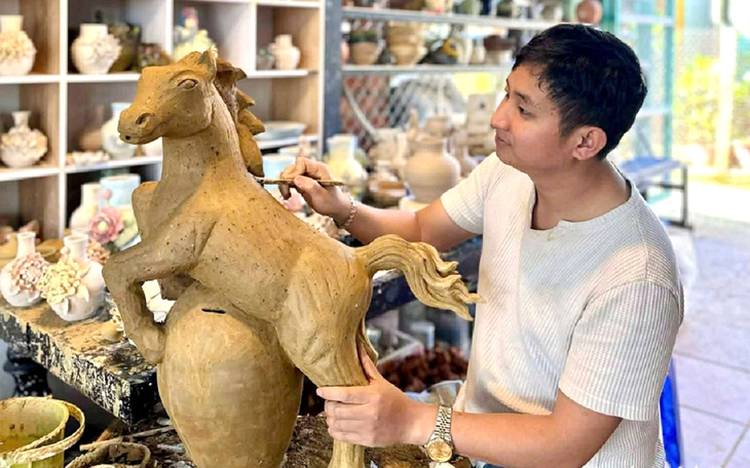
Nguyen Viet Lam stands next to a horse-shaped ceramic sculpture displayed at the entrance of Thanh Ha pottery village ahead of the Lunar New Year 2026 in Hoi An, Da Nang City, central Vietnam. Photo: Thanh Nguyen
To produce the glazed pottery seen today, Lam, a passionate artisan, spent nearly five years quietly researching and experimenting, enduring repeated failures along the way.
Bring back traditional ceramic glaze of Thanh Ha pottery
Thanh Ha is one of the oldest traditional pottery villages in the ancient town of Hoi An, with origins dating back to the 16th century.
Due to the rise of Hoi An as a major port, the craft flourished in the 16th and 17th centuries, when local ceramics were traded widely and even used for royal tribute.
The village is best known for everyday earthenware items such as bowls, jars, and decorative figures, shaped by a combination of clay, fire, and river water.
However, traditional ceramic glazing techniques, which require greater labor and cost, gradually fell out of use as artisans shifted to simpler unglazed products.
As a result, centuries-old glazing knowledge slowly faded, a loss that deeply troubled Lam.
The early years of his glazing experiments were marked by intense pressure.
Producing ceramic glazed pottery to a workable standard required investing in an electric kiln capable of reaching temperatures of around 1,300 degrees Celsius.
Each firing was costly, making it impractical to fire only a few pieces, while firing in large batches risked losing an entire kiln load if the glaze failed.
During that period, every step, from drying the clay and forming the base to shaping the final product, had to be done with extreme care, as even a minor mistake could ruin a full firing, Lam said.
“Unglazed pottery can be made in just a few steps, but glazing requires eight or nine stages, not to mention longer firing times and much higher temperatures,” he said.
After repeated failures and constant adjustments, Lam eventually developed a glaze formula suited to Thanh Ha’s clay.
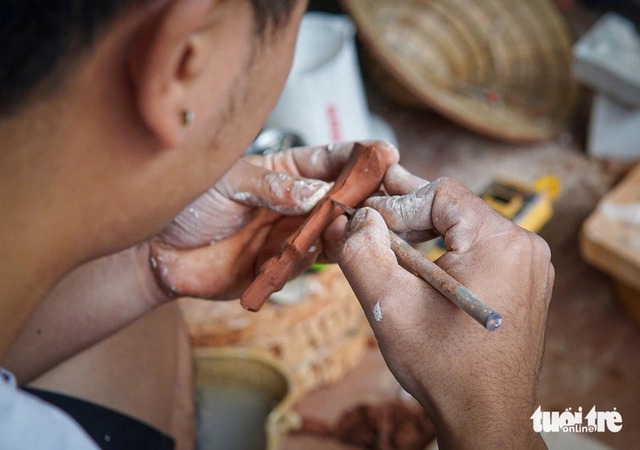
Nguyen Viet Lam works to revive a pottery glaze dating back more than 500 years in Thanh Ha pottery village in Hoi An, Da Nang City, central Vietnam. Photo: Thanh Nguyen
The glaze is made entirely from natural materials such as ash and limestone, though variations in temperature and processing mean no two kiln firings produce exactly the same color.
The result, he said, is a distinctive finish that industrial glazes struggle to replicate.
When producing unglazed earthenware, Lam’s workshop can fire four to five kilns a month, with thousands of items in each load.
Glazed pottery, however, limits output to one or two firings a month, with around 150 pieces per kiln.
The trade-off is higher value, as glazed products command stronger demand in the market.
Traditional glazed pottery requires a high level of skill and precision, he said, as even a minor flaw, from improperly kneaded clay to insufficient drying or an underdeveloped glaze, can cause pieces to crack, burst or lose their finish under extreme firing temperatures.
Playful horse mascot to welcome new year
These days, Lam is busy shaping horse mascots from blocks of clay ahead of the Lunar New Year 2026.
Holding up a plump, gentle-looking horse, he said the piece belongs to a new line of 'loc ma' glazed pottery products being introduced for the holiday season.
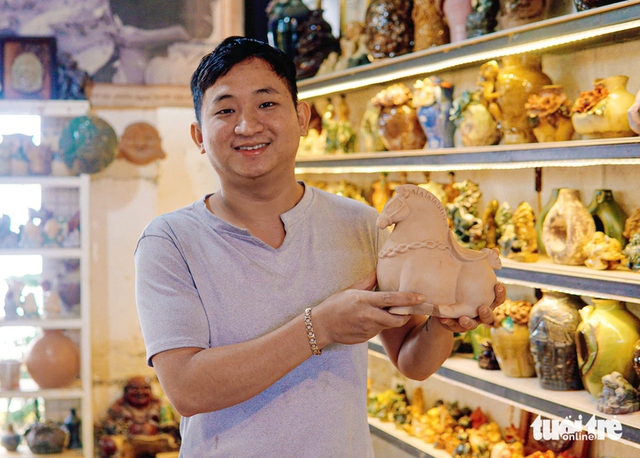
Keeping the flame alive at Thanh Ha pottery village. Photo: Thanh Nguyen
Traditionally depicted with a rounded body and short legs, the horse symbolizes prosperity and good fortune, he said, recalling the mounts once ridden by officials returning home in honor.
The figures can be displayed in homes or used as coin banks at the start of the year.
Lam said he is also developing other horse designs carrying different meanings.
One version, inspired by the idea of success, features a slimmer body with the front legs raised as if in mid-gallop, while the hind legs remain firmly grounded.
Each completed piece measures about 30 centimeters in height and length.
Creating the form, he said, is the most challenging step, requiring the artisan to capture fluid movement while maintaining a sense of strength and presence.
Due to their size, the horses are made in separate parts before being carefully assembled into a finished figure.
Each glazed ceramic horse takes between 50 and 60 hours to complete, involving multiple stages such as clay mixing, shaping, drying, glazing, and high-temperature firing.
Prices range from VND500,000 (US$19.3) to several million dong, depending on size, posture, and glaze color.
As the Lunar New Year approaches, orders have surged, prompting Lam’s workshop to increase production.
Beyond private sales, some of the horse mascots have been selected for public display, including large-scale pieces being crafted for decorative spaces in Hoi An.
Local authorities said several pairs of ceramic horse mascots will be installed along the road leading to Thanh Ha pottery village, adding to the festive atmosphere and attracting visitors during the holiday.
Taking traditional pottery beyond Vietnam
The successful revival of glazed pottery has not only helped preserve the cultural heritage of Thanh Ha pottery village but also opened new development pathways for local ceramic products.
From household items and decorative pieces to collectible and feng shui objects, glazed pottery has become increasingly diverse, meeting rising market demand and attracting strong interest from international visitors, a shift that is creating opportunities for Thanh Ha pottery to reach overseas markets.
Building on this success, the glazed pottery line produced by the family of Lam has been certified as a three-star One Commune One Product (OCOP) product, reinforcing the reputation of Thanh Ha pottery, a craft with a history spanning more than 500 years.








Max: 1500 characters
There are no comments yet. Be the first to comment.