



Johan Nyvene, chairman of the board of Ho Chi Minh City Securities Corporation (HSC), said Vietnamese businesses remained inadequately prepared to raise capital in international markets, including large enterprises.
He made the remarks at a discussion on the stock market and Vietnamese businesses in a new capital cycle, held as part of the Vietnam Capital Market Forum 2026.
Tuoi Tre (Youth) online newspaper and the State Securities Commission organized the forum, themed "New Capital Flows – A New Position for Vietnam's Stock Market," on Friday afternoon.
According to Nyvene, most domestic businesses have traditionally raised capital through bank loans.
Under this approach, companies generally provide historical financial statements and collateral to demonstrate their ability to repay loans.
The process can take a few months.
Companies face different requirements when conducting initial public offerings (IPOs) or private placements to foreign investors.
They must organize roadshows, meet investors, and present their business strategies, growth prospects, and projected cash flows.
The process requires direct participation from senior executives or chief financial officers.
However, many businesses lack personnel with the necessary capabilities and experience to handle these tasks.
In some cases, chairpersons of the boards or general directors do not attend meetings with investors.
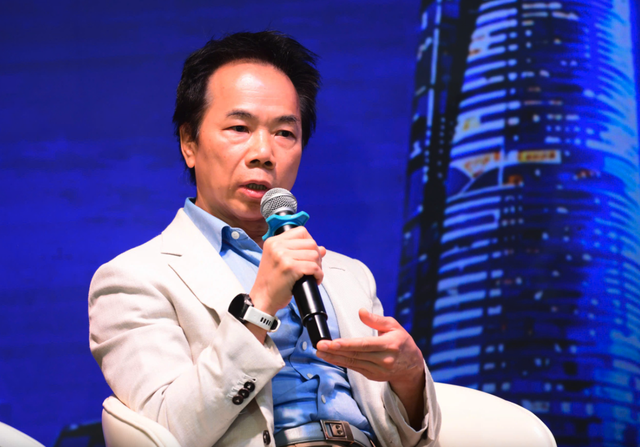
Johan Nyvene, chairman of the board of Ho Chi Minh City Securities Corporation (HSC), speaks at the Vietnam Capital Market Forum 2026. Photo: Quang Dinh / Tuoi Tre
This limits businesses' ability to establish investor confidence.
International investors require businesses to provide transparent information and explain their operations before making investment decisions.
Financial data is another challenge.
Audited financial statements alone do not ensure that businesses can meet the requirements of in-depth due diligence.
Investors may request detailed information about revenue structures, revenue sources, customer groups, the proportions of new and existing customers, and businesses' ability to retain customers over the long term.
When companies report annual revenue growth, investors also seek information about their prospects over the following two years.
They want to know which customer groups generate revenue and how much comes from long-term customers, returning customers, and new customers.
"Many businesses have yet to develop sufficiently comprehensive data systems and explanations to answer these questions.
This makes it difficult to convince international investors, even when business performance is positive," Nyvene said.
Businesses must also account for the costs of preparing to raise capital in international markets.
International fundraising requires long-term preparation
According to Nyvene, raising capital through bank loans generally involves limited spending on consultancy services and document preparation.
By contrast, share offerings and fundraising from international investment institutions require financial advisers, legal advisers, international auditors, and underwriters.
International auditing firms such as PwC and leading consultancy firms help businesses review and standardize information to meet foreign investors' requirements.
Preparation costs for a transaction can reach several million U.S. dollars, depending on its scale and nature.
"Many Vietnamese businesses do not have long-term plans for raising capital internationally and usually only look for fundraising options when their financial needs become urgent," Nyvene said.
Businesses often consider international fundraising or bond issuance only when bank interest rates rise sharply.
However, standardizing data, completing financial documents, and building teams capable of working with investors require time.
"Businesses need to proactively invest in preparation well in advance, rather than turning to international capital markets only when bank credit becomes expensive or difficult to access," Nyvene said.

Khuong Tien Hung, head of the Securities Offering Management Division at the State Securities Commission of Vietnam, speaks at the forum. Photo: Quang Dinh / Tuoi Tre
Khuong Tien Hung, head of the Securities Offering Management Division at the State Securities Commission of Vietnam, said the commission had introduced and completed several policy mechanisms since 2024, including the Securities Law and related decrees and regulations.
He highlighted Article 111a, which provides for the simultaneous registration of shares for listing and an initial public offering by a joint-stock company.
Previously, businesses had to complete their initial public offerings (IPOs) before starting listing procedures because the two processes were governed by separate mechanisms overseen by different agencies.
Under the new regulation, businesses can conduct both procedures simultaneously.
The two agencies review the same documents at the same time and coordinate information exchanges.
Once an IPO is completed, a business can proceed directly with listing without undergoing another review of the procedures.
Hung said the period between an IPO and listing had been reduced from three to six months to one month.
From 2021 to 2024, 16 IPO transactions raised a total of VND6.5 trillion (approximately US$247 million).
From late 2025 to October, 2026, 10 organizations conducted IPOs, raising VND60 trillion (approximately $2.28 billion), nine times the amount raised in the preceding four years combined.
The commission will continue reviewing regulatory obstacles and upgrading technological infrastructure, Hung said.
The commission also plans to process all procedures entirely through online public services to reduce processing times.
The commission will supervise how businesses use funds raised through share offerings, he added.
Hung also said more foreign-invested enterprises were expected to register for listing, adding new securities to the market.
He said the commission would work with businesses and that investment capital would flow to companies with sound fundamentals, proper capital allocation, efficient operations, and transparent information disclosure.
Vietnamese businesses need to change their approach to international capital

Nguyen Do Hoa, director of the United Kingdom Export Finance Agency (UKEF) in Vietnam, Laos, and Cambodia, speaks at the forum. Photo: Quang Dinh / Tuoi Tre
Nguyen Do Hoa, director of the United Kingdom Export Finance Agency (UKEF) in Vietnam, Laos, and Cambodia, said Vietnamese businesses needed to change their approach to raising capital from international markets.
According to Hoa, businesses should assess whether foreign funding suits their needs and the characteristics of their operations or projects, rather than focusing only on whether its interest rates are high or low.
Businesses seeking funding from international financial institutions need to ensure operational transparency and demonstrate the feasibility of their investment projects, he said.
Vietnamese businesses have traditionally relied heavily on bank credit.
To access other funding sources, they need to prepare for environmental, social, and governance (ESG) requirements, develop long-term plans, and produce cash flow projections for their projects.
"We are supporting developing markets, including Vietnam, in accessing international capital. Some of the sectors under consideration include clean energy, green infrastructure, and the North-South high-speed railway projects," Hoa said.
Higher sovereign credit ratings can reduce businesses' capital costs

Nguyen Huu Huan, PhD, vice chairman of the executive body of the Ho Chi Minh City International Financial Center, speaks at the forum. Photo: Quang Dinh / Tuoi Tre
Nguyen Huu Huan, PhD, vice chairman of the executive body of the Ho Chi Minh City International Financial Center, said sovereign credit ratings provide a basis for foreign investors to assess an economy and make investment decisions.
According to Huan, a company's credit rating cannot exceed its country's sovereign credit rating.
An improvement in Vietnam's sovereign credit rating would therefore create opportunities for domestic businesses to improve their own ratings and access international capital.
Higher credit ratings also reduce fundraising costs, Huan said.
This could encourage Vietnamese businesses to seek more funding from international markets.
He said international capital markets had attracted greater attention from Vietnamese businesses as domestic fundraising costs remained relatively high.

Phung Xuan Minh, chairman and general director of Saigon Ratings. Photo: Quang Dinh / Tuoi Tre
Phung Xuan Minh, chairman and general director of Saigon Ratings, said the company had rated nearly 600 businesses during its 10 years of operation.
Based on its assessments, Minh identified three issues related to the creditworthiness and financial risks of Vietnamese businesses.
First, most businesses are currently rated and compared within the domestic market.
Some companies may therefore receive relatively high ratings compared with other domestic businesses, but their ratings could differ under international rating systems because of the sovereign rating ceiling.
Second, credit assessments need to cover macroeconomic conditions, industries, business operations, financial performance, and development prospects.
According to Minh, many Vietnamese businesses have relatively short operating histories and periods of capital accumulation.
This limits the data available to assess their cash-generating capacity and ability to withstand different business cycles.
The COVID-19 pandemic also affected the financial health of businesses, he said.
Third, businesses face risks related to their capital structures.
Most continue to rely on bank loans with relatively short maturities, while many investment projects require longer periods for implementation and capital recovery.
This mismatch between loan maturities and investment periods can put pressure on businesses' cash flows and repayment capacity.
Criteria investment funds use when considering long-term investments
Dinh Duc Minh, senior investment director at VinaCapital, said investment funds first assess whether a company's business model is sustainable and has prospects for future development.
They also assess a company's competitive position against other market players and its advantages in maintaining that position.
Other factors include the company's strategy, management capabilities, and corporate governance quality, he said.
"We place great importance on transparency in corporate governance and information disclosure. At the same time, a company's management needs to place shareholders' interests alongside those of the business," Minh said.
However, revenue and profit growth alone do not determine whether investment funds will invest in a company, he added.
Some companies report higher profits while their cash flows do not increase proportionately.
This can result from extraordinary income or financial transactions that do not generate cash flows or provide benefits to shareholders.
Investment funds may also avoid companies because of corporate governance problems or a lack of confidence in their management.
Companies may also fail to attract investment when their share offering prices are too high, Minh said.


Max: 1500 characters
There are no comments yet. Be the first to comment.