


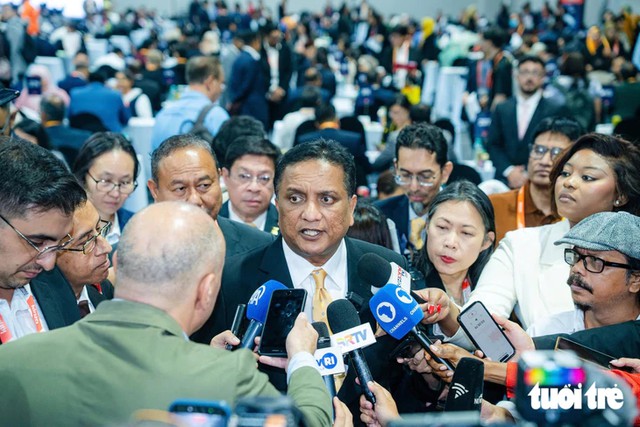
MATRADE chairman Reezal Merican speaks to the press at MIHAS 2026. Photo: Ngoc Duc / Tuoi Tre
Dozens of Vietnamese importers attended the Malaysia International Halal Showcase, or MIHAS 2026, in Kuala Lumpur this week in search of certified products for the domestic market.
In recent years, halal standards have attracted growing attention in Vietnam, not only among Muslim consumers but also among non-Muslims who associate the certification with stricter production and quality-control requirements.
Distributors begin asking for halal certification
Vietnamese distributors are increasingly asking suppliers for halal certification as consumer interest grows and businesses look to expand their customer base.
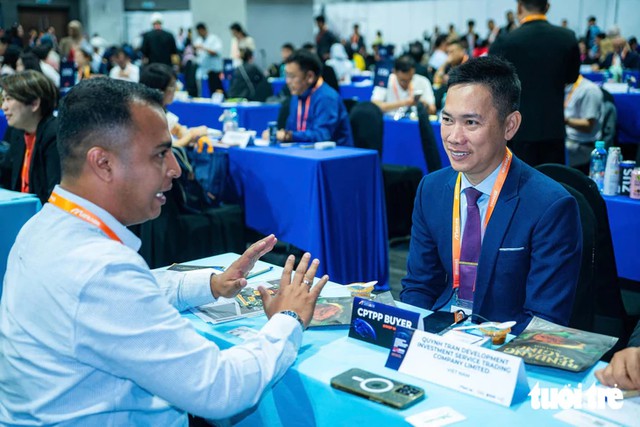
Phu Minh Khanh (R) talks with a potential Malaysian supplier at MIHAS 2026. Photo: Ngoc Duc / Tuoi Tre
Phu Minh Khanh, founder of Lao Phu Food Trading and Services JSC, told Tuoi Tre (Youth) online newspaper at MIHAS 2026 that restaurants and supermarkets supplied by his company had begun asking whether products carried halal certification.
He said certification was essential for serving Muslim customers, while it could also appeal to non-Muslims because halal products must go through a strict inspection and certification process.
Khanh cited coffee as an example, saying the beans must come from growing areas that meet relevant standards before they can receive halal certification and be exported.
“Halal certification is very difficult to obtain. Products have to meet all the required standards,” Khanh said.
“Halal-certified goods imported into Vietnam cost more, but Vietnamese consumers are now paying greater attention to health, so they are willing to accept the higher prices.”
Tran Thi Ha of Kang Foods Co. Ltd. said halal certification could push up product prices because factories and production processes often had to be adjusted to meet the requirements.
Still, certification gave businesses greater confidence when they sold their products, she said, adding that distributors had increasingly begun asking about halal.
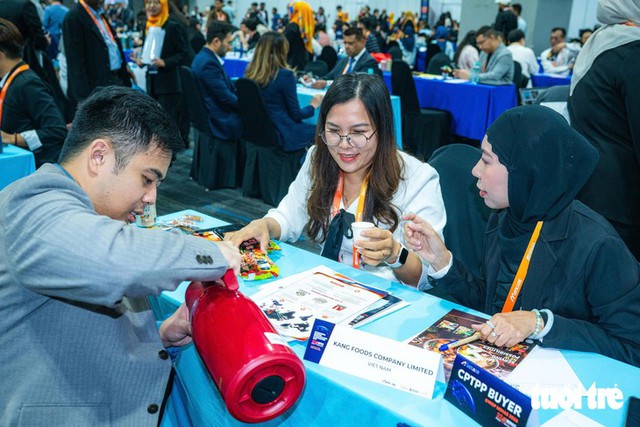
Tran Thi Ha samples noodle broth from a Malaysian instant noodle supplier. Photo: Ngoc Duc / Tuoi Tre
“I cannot say for certain whether halal-certified products sell better than non-halal ones, as it still depends on whether the product is suitable for the Vietnamese market,” Ha said.
“But the trend is clear. Factories increasingly want halal certification so they can export more and give customers more choices.”
After a morning of meetings with potential suppliers, Khanh said Malaysian food products stood out for their variety, competitive prices compared with some other markets, and halal certification.
He added that Vietnam already produced many similar products, but some lacked halal certification, limiting their ability to reach wider markets.
Malaysia seeks ‘win-win’ halal cooperation with Vietnam
Malaysia views Vietnam as a promising halal partner as both sides explore closer cooperation across trade, certification, and supply chains.
Reezal Merican, chairman of the Malaysia External Trade Development Corporation, or MATRADE, said Vietnam and Malaysia had considerable potential to deepen cooperation in the halal sector.
Speaking with Tuoi Tre at MIHAS, Merican said such cooperation could start at the government-to-government level, followed by business-to-business ties and eventually business-to-consumer engagement.
He said Vietnam already had a halal certification center cooperating with JAKIM, Malaysia’s halal certification authority.
“In Southeast Asia, Vietnam currently ranks second in export value, followed by Malaysia in third place. We have always viewed Vietnam as a ‘friendly competitor,’ but we also want to create a mutually beneficial, win-win environment for both countries,” he said.
Merican stressed that halal requirements extend beyond ingredients and food processing to cover the entire product life cycle.
For food products, ingredients must comply with halal standards, while packaging and logistics must also meet relevant requirements, he said.
“A halal container must not be mixed or contaminated,” Merican said.
“If a container carries halal goods on one trip and non-halal goods on another, questions will be raised. Under JAKIM’s certification process, all these stages are subject to strict requirements.”
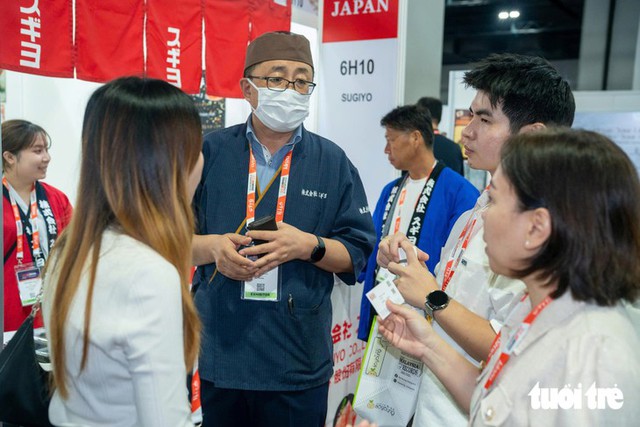
Businesses showcase products and discuss cooperation opportunities at MIHAS. Photo: Ngoc Duc / Tuoi Tre
Merican also said halal demand was not limited to countries with large Muslim populations.
He cited New Zealand as an example, saying around 70 percent of slaughterhouses there were halal-certified to serve export markets targeting a global Muslim population of around two billion.
Interest in halal is also growing across Southeast Asia, he said.
Merican noted that Malaysian Deputy Prime Minister Ahmad Zahid Hamidi, who also chairs the Malaysia Halal Development Council, had recently proposed establishing an ASEAN Halal Council.
MIHAS 2026 opens in Kuala Lumpur
The 22nd MIHAS opened on Wednesday and runs through September 26.
The Malaysian halal exhibition was recognized by Guinness World Records in 2023 as the world’s most attended halal trade show.
This year’s event covers 14 sectors, including food and beverages, pharmaceuticals, Islamic finance, modest fashion, personal care, technology, services, and Muslim-friendly tourism.
It focuses on governance models that integrate compliance standards from the design stage, as well as technology-enabled commerce.
A key feature is the International Sourcing Programme, with more than 4,000 pre-arranged B2B meetings between Malaysian exporters and 450 international buyers from 58 economies.


Max: 1500 characters
There are no comments yet. Be the first to comment.