


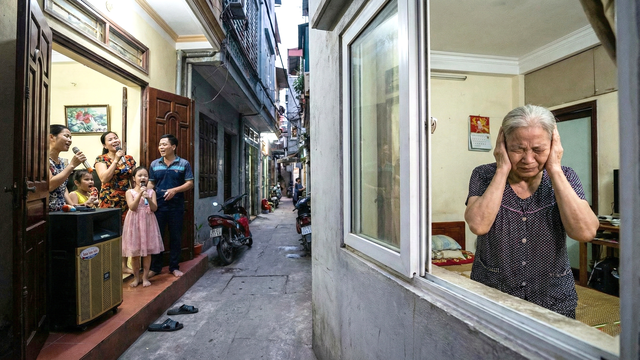
An AI-generated photo shows an old woman covering her ears due to excessive karaoke noise produced by her neighbors in a narrow alley. Photo: Tan Dat
Loud singing from oversized speakers has largely faded. Music played at private homes stays at a level just loud enough to hear, not loud enough to invade neighbors’ living rooms.
People remind one another to keep it down, warning that fines are now a real possibility.
A few households still sing, but with smaller speakers, doors closed, and gatherings moved indoors instead of spilling onto the street as before.
Even in the countryside, familiar scenes have changed.
Traditional karaoke sessions during family reunions have been paused.
In towns, people increasingly choose karaoke shops, where soundproof rooms reduce disturbance and everyone feels safer from complaints or penalties.
Much of this shift follows public discussion of Government Decree 282 on noise violations.
As per the fiat, which was issued on October 30, 2025 and took effect on December 15 the same year, the long-standing regulation that prohibited noise only after 10:00 pm has been abolished.
Instead of regulating noise by time frame, the new decree stipulates that karaoke singing or the use of portable loudspeakers can be penalized at any hour if the sound exceeds allowable limits, not just late at night as before.
After the new decree came into effect, people now seem more aware of their neighbors.
Without soundproofing, families close doors and sing quietly for themselves rather than broadcasting their voices across the block.
In an age filled with smart devices and powerful speakers, courtesy matters more than ever.
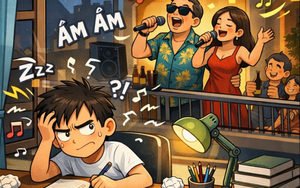
A truly civilized society cannot continue to tolerate drunken shouting or blaring music that disrupts children studying, elderly people resting, or workers trying to recover after long days.
Uncontrolled karaoke has long spilled across sidewalks, residential areas, boarding houses, apartment buildings, and even beaches, leaving many residents exhausted and frustrated.
The consumption of alcohol often makes matters worse, drowning out any polite requests to stop.
For the first time in years, many residents feel there is genuine hope for change.
On December 30, I learned that the administration of Tan Hao Commune in Vinh Long Province, southern Vietnam issued a notice calling for a temporary halt to home karaoke and informal singing venues from December 29 till 5:00 pm on January 9, so students could prepare for their first-semester exams in the 2025-26 academic year.
Commenting on the notice, some argued that with Decree 282 already in place, reminders were unnecessary, but I disagree with them.
From my rented room in Ho Chi Minh City, the notice made me feel unexpectedly optimistic.
The notice was a timely, humane reminder, not just a threat of punishment. Its value goes beyond the exam season. Long after, people will remember that notice when they reach for a microphone or turn on speakers.
This approach by the Tan Hao administration deserves to be expanded.
Quiet is not just for exam periods as children study year-round, but it is also for the sick who need rest and healthy workers that need peace to recharge.
Singing should not stop, but it should be done with respect: at appropriate times, in appropriate places, and at reasonable volumes.
Reducing noise is not about fear of fines. It is about understanding the value of silence and mutual respect.
When communities choose to lower the volume together, that is when civility truly takes root.
* This article was originally written in Vietnamese by Luu Ngoc, a reader of Tuoi Tre (Youth) newspaper. Tuoi Tre News translated and modified it for clarity.









Max: 1500 characters
There are no comments yet. Be the first to comment.