


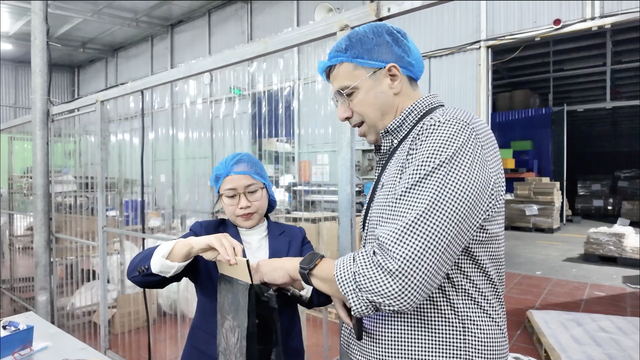
HAPBIO products are made from corn and cassava starch blended with plant-based additives such as PBAT and other materials to create biodegradable packaging. Photo: HAPBIO
HAPBIO products are designed to fully biodegrade in various environments while meeting packaging needs and helping reduce environmental waste.
Although the company was founded in 2024, research into HAPBIO’s product lines began in 2019.
Tackling the cost challenge
According to Pham Thi Hai Thanh, founder of HAPBIO and chairwoman of Haplast Group, the company has operated in the packaging export industry for 20 years, with its products reaching 90 countries.
HAPBIO products are made from corn and cassava starch blended with plant-based additives such as PBAT and other materials.
The ingredients are then processed through blowing, printing and cutting machines to produce biodegradable packaging for domestic and international customers.
The HAPBIO product line has received certifications from international organizations, including the U.S. Biodegradable Products Institute (BPI) and Austria’s OK compost HOME and OK compost INDUSTRIAL certifications for biodegradability.
These certifications have enabled the company to supply its biodegradable packaging to markets including the United States and Europe, Thanh said.
In 2025, the company exported more than 600 metric tons of products, generating US$2 million in revenue.
For 2026, it expects to export about 1,600 metric tons and generate roughly $3 million in revenue.
Thanh said raw material costs remain one of the biggest challenges in developing biodegradable packaging.
The materials, mainly starch from corn, potatoes and cassava along with other additives, remain relatively expensive, driving up production costs.
Biodegradable packaging currently costs twice as much, and in some cases 2.5 times as much, as conventional plastic packaging, posing a challenge for HAPBIO as it expands its market.
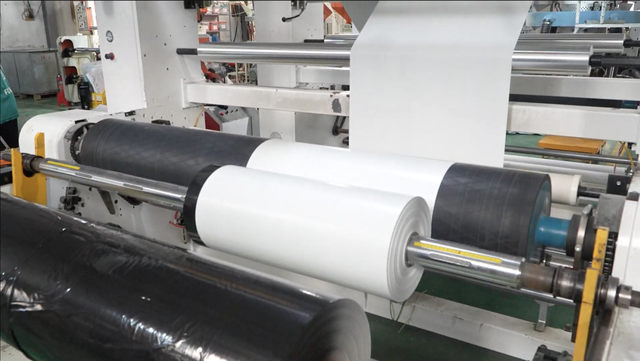
The materials are processed through blowing, printing, and cutting machines to produce biodegradable packaging products. Photo: HAPBIO
Expanding markets, scaling up production
However, Thanh said HAPBIO has an advantage in the customer base inherited from Haplast Group after its 20 years of operations.
HAPBIO’s customers are already using its biodegradable packaging products, with demand continuing to grow.
They are also willing to pay for larger monthly orders, she said.
“In the early stages, we faced challenges related to costs, pricing, and research needed to develop products that meet the standards required for certification by international organizations,” Thanh said.
Despite these challenges, HAPBIO has remained focused on developing biodegradable packaging for domestic and international customers and partners, with an emphasis on safety and environmental sustainability.
Looking ahead, HAPBIO plans to develop more biodegradable packaging products for different applications, while expanding production capacity and lowering costs to make the products more widely accessible.
“We aim to reduce the price of HAPBIO’s biodegradable packaging by 20 to 30 percent, meet about 30 percent of demand in the Vietnamese market and supply products to more than 100 countries worldwide,” Thanh said.
The company is targeting annual production of 5,000 to 10,000 metric tons, which it expects will help increase supply, lower prices and make biodegradable packaging more accessible to customers.
- REFERENCE MORE
Tuoi Tre Startup Award 2026
The seventh Tuoi Tre Startup Award, organized by Tuoi Tre (Youth) online newspaper and the Ho Chi Minh City Youth Federation in collaboration with the International Innovation Alliance (InnoEx), features three fields: fintech and the digital economy; infrastructure, transportation and logistics; and social welfare and sustainable development.
Each field will have a Top 10, with all finalists given the opportunity to pitch their projects.
This year also marks the introduction of a student award to encourage ideas developed in schools and laboratories to reach the market.
Applications are open from August 12 to September 30, 2026.
A preliminary panel will select 30 standout startups, with the final round and awards ceremony scheduled for October









Max: 1500 characters
There are no comments yet. Be the first to comment.