


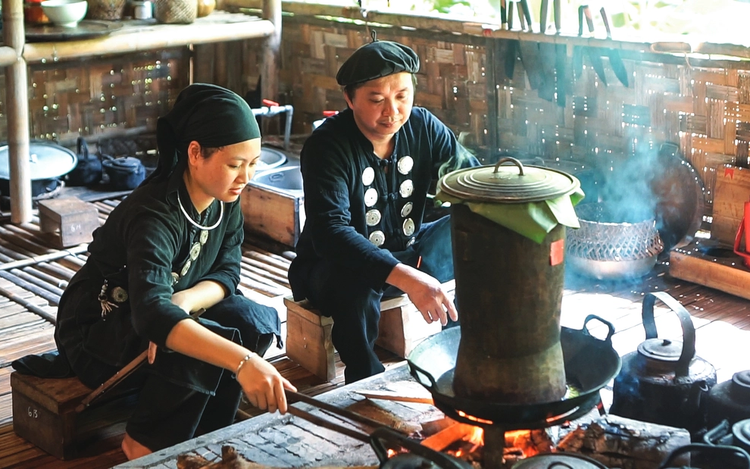
Maintaining the kitchen fire in a stilt house in Vietnam. Photo: Nguyen Hien / Tuoi Tre
John Miller, an American tourist who visited Vietnam in March, described one village he explored as resembling an ink-wash painting.
He spent thousands of U.S. dollars on guided activities such as harvesting vegetables, herding ducks, and riding buffalo, later returning with friends to experience another village.
According to the Vietnam National Authority of Tourism, around 300 villages and hamlets across the country are engaged in community-based tourism, with more than 5,000 homestays in operation.
This model has become one of the fastest-growing tourism segments in Vietnam.
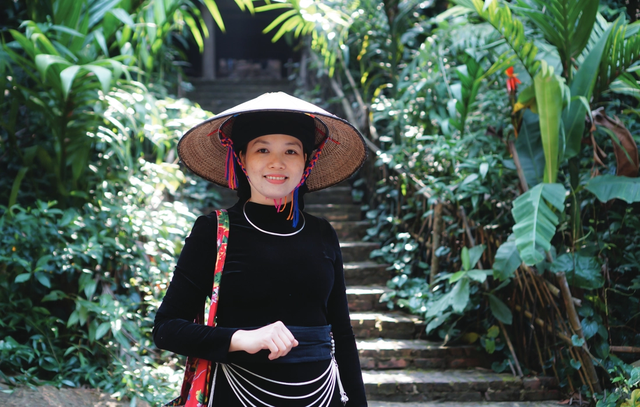
Le Thi Nga, deputy head of Thai Hai Village in Thai Nguyen Province, northern Vietnam, in traditional Tay attire. Photo: Nguyen Hien / Tuoi Tre
Between 2022 and 2025, five Vietnamese villages were honored as the best tourism villages in the world.
These include Thai Hai in Thai Nguyen Province, northern Vietnam, in 2022; Tan Hoa in Quang Tri Province, north-central Vietnam, in 2023; Tra Que in Da Nang City, central Vietnam, in 2024; Lo Lo Chai in Tuyen Quang Province, northern Vietnam, in 2025; and Quynh Son in Lang Son Province, also in the northern region, in 2025.
For local residents, it would have been unimaginable that their daily routines, family meals, and cultural practices could one day become tourism products valued in U.S. dollars.
Storytellers of villages
In Thai Hai Village, the sound of a wooden gong echoes through the air, signaling the arrival of distinguished guests.
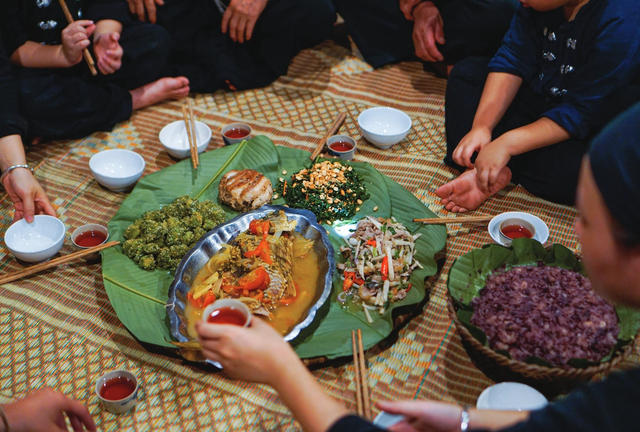
A typical meal of residents in Thai Hai Village, Thai Nguyen Province, northern Vietnam. Photo: Nguyen Hien / Tuoi Tre
Le Thi Nga, the village’s deputy head, greets visitors with a smile, explaining that the gong represents a warm welcome.
Shaded by green trees, the village features traditional stilt houses, many 60–70 years old, where multi-generational Tay families live. Tay is an ethnic minority group in Vietnam.
Two decades ago, the area was barren land. Nguyen Thanh Hai, now the village's head, saw traditional houses being replaced by concrete ones and feared cultural traditions such as Then singing and Tinh lute playing would disappear.
She relocated 30 traditional stilt houses from Dinh Hoa to rebuild the village, preserving their original Tay architecture.
Today, Thai Hai maintains its cultural heritage through tea production, herbal medicine, traditional music, and communal living.
What sets it apart is its collective lifestyle: about 200 residents share resources, wear traditional indigo clothing, and contribute all income to a common fund that supports the entire community.
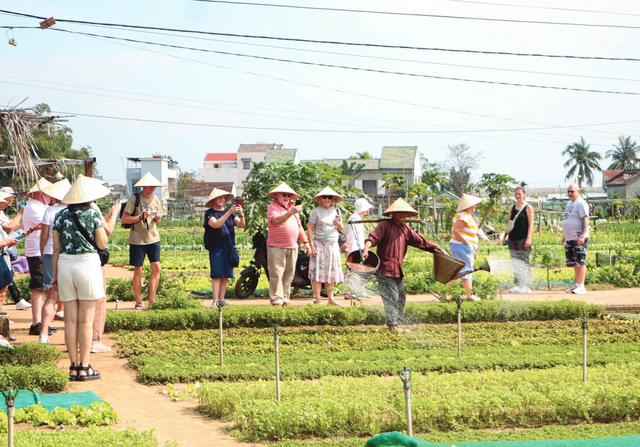
Agricultural experiences attract international tourists in Tra Que Village, Da Nang City, central Vietnam. Photo: Thanh Nguyen / Tuoi Tre
Juliana Alves Noronha, a Brazilian visitor who spent two weeks in Thai Hai, described the experience as extraordinary, saying the village felt like one large family that welcomed outsiders as members.
Following Thai Hai’s model, other villages such as Tan Hoa, Tra Que, Lo Lo Chai, and Quynh Son have also gained international recognition. They impress visitors thanks to their local residents who preserve cultural heritage, create experiences, and tell their own unique stories.
Pham Ha, CEO of Lux Group, a local travel firm, said that people are the core value of village tourism, deeming authenticity, natural daily life, and genuine human connection to be essential elements.
Similarly, Nguyen Chau A, CEO of Oxalis, another travel company, noted that local communities play a decisive role in shaping a destination’s identity.
Tan Hoa, once known as a flood-prone area, transformed after a devastating flood in 2010.
Residents developed floating houses, creating a 'weather-adaptive tourism village.' These structures later became unique accommodations as Oxalis developed Tu Lan cave exploration tours.
The floating houses have been used as accommodations for visitors. A series of standardized homestays were later developed.
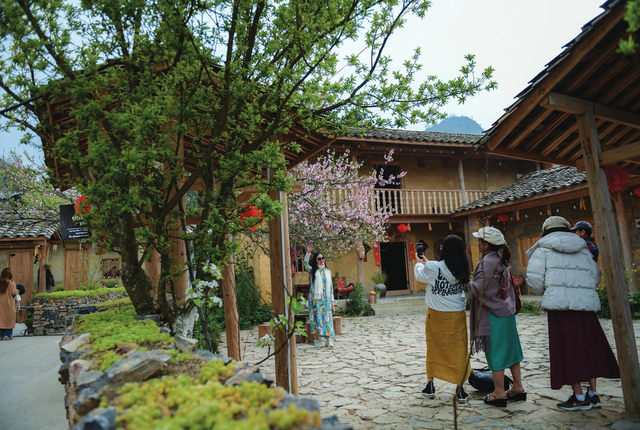
Earthen houses attract visitorsin Lo Lo Chai, Tuyen Quang Province, northern Vietnam. Photo: Nam Tran / Tuoi Tre
In Tra Que Village, farming itself has become a tourism product. Visitors can pay from tens to hundreds of U.S. dollars to experience life as local farmers, working in vegetable gardens and engaging in daily agricultural activities.
Mai Ban, a farmer in Tra Que, said he enjoys watching foreign visitors learn simple farming tasks, noting that locals simply live their daily lives while becoming storytellers of their culture.
Tourism has brought significant changes to these communities. In Tra Que, the number of visitors reached about 40,000 in 2025, mostly international tourists.
Wealthy travelers, including American millionaires Eff Grinspoon and Jon Thomas Foley, have chosen to experience farming activities there.
Tourism growth has encouraged younger generations to remain in their hometowns, combining agriculture with tourism services.
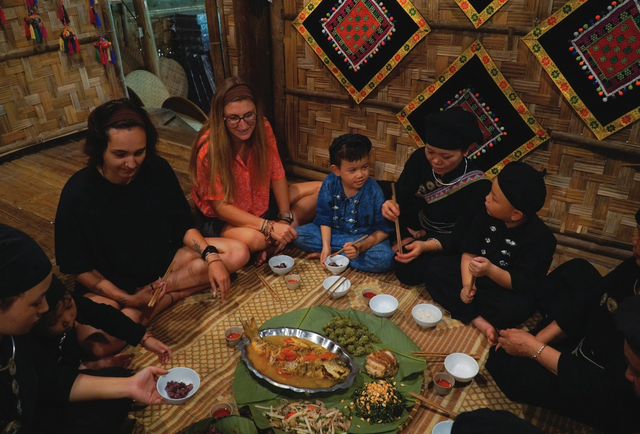
Visitors experience Tay cuisine in Thai Hai Village, Thai Nguyen Province, northern Vietnam. Photo: Nguyen Hien / Tuoi Tre
In Tan Hoa, average income rose from VND4.8 million (US$182.3) per person in 2014 to VND36–42 million ($1,366-1,594) in 2024.
Men in Tan Hoa, who in the past relied on hunting, fishing, logging, and even deforestation to make a living, now protect every tree and blade of grass and collect every piece of litter left by locals and tourists alike.
In Lo Lo Chai, once a poor village where over 90 percent of households lived in poverty, tourism has transformed livelihoods.
Village leader Sin Di Gai, who initially underestimated the value of local culture, began engaging in tourism training and later opened homestays. His family now operates three homestays, earning around VND20 million ($759) per month and creating jobs for others.
After receiving international recognition, Lo Lo Chai has seen rapid growth, welcoming about 10,000 visitors per week since October 2025 and nearly 195,000 visitors since early 2026, doubling year on year.
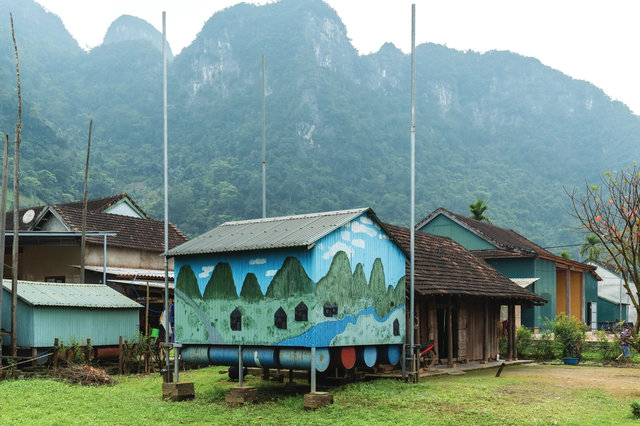
Flood-resistant floating houses turn into homestays in Tan Hoa Village, Quang Tri Province, north-central Vietnam. Photo: Hoang Trung
Meanwhile, Quynh Son has taken a slower, more sustainable approach, avoiding mass tourism while preserving its cultural identity.
Nguyen Cong Hoan, CEO of Flamingo Redtours, a travel company in Vietnam, stated that tourism strengthens community bonds and helps preserve traditions rather than eroding them.
Preserving identity for sustainable growth
Experts warn that while Vietnam has many villages with strong tourism potential, some risk overdevelopment and loss of identity.
CEO Pham Ha stressed that preservation is the key to sustainable village tourism, cautioning against rapid commercialization that replaces traditional houses and lifestyles.
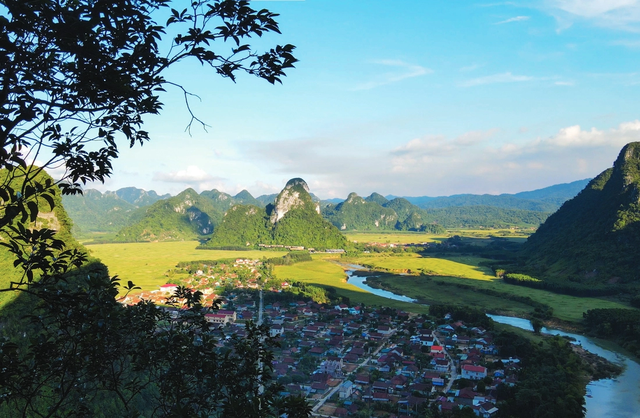
A panoramic view of Tan Hoa Village in Quang Tri Province, north-central Vietnam. Photo: Hoang Trung
Tourism should ultimately benefit both residents and visitors, ensuring local people remain at the center and find happiness in their livelihoods.
In October 2024, the Ministry of Culture, Sports, and Tourism launched a national project to develop community-based tourism sustainably, emphasizing cultural preservation, environmental protection, and social welfare.
The project also places communities at the center, ensuring equitable sharing of benefits, improving local living standards, prioritizing resources for rural and mountainous areas, and moving toward professionalization while gradually meeting regional and international standards.
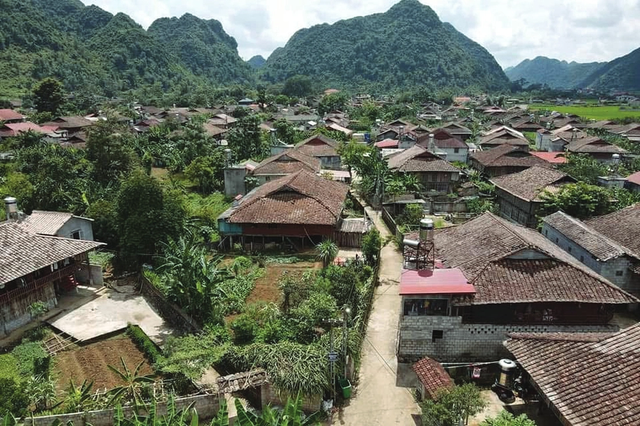
A view of Quynh Son Village in Lang Son Province, northern Vietnam, where more than 400 stilt houses face the same direction. Photo: Chu Duc Giang
The Vietnam National Authority of Tourism aims to build a global brand for Vietnamese village tourism based on sustainability, improved service quality, community participation, and international connectivity.
Deputy head of the authority Ha Van Sieu stated that the goal is not only to increase the number of recognized villages but to create a competitive network of destinations with strong identities and deep integration into the global tourism value chain.
He added that the greatest value tourism brings is not just visitor numbers, but the awareness among local communities of the cultural and natural assets they possess.








Max: 1500 characters
There are no comments yet. Be the first to comment.