



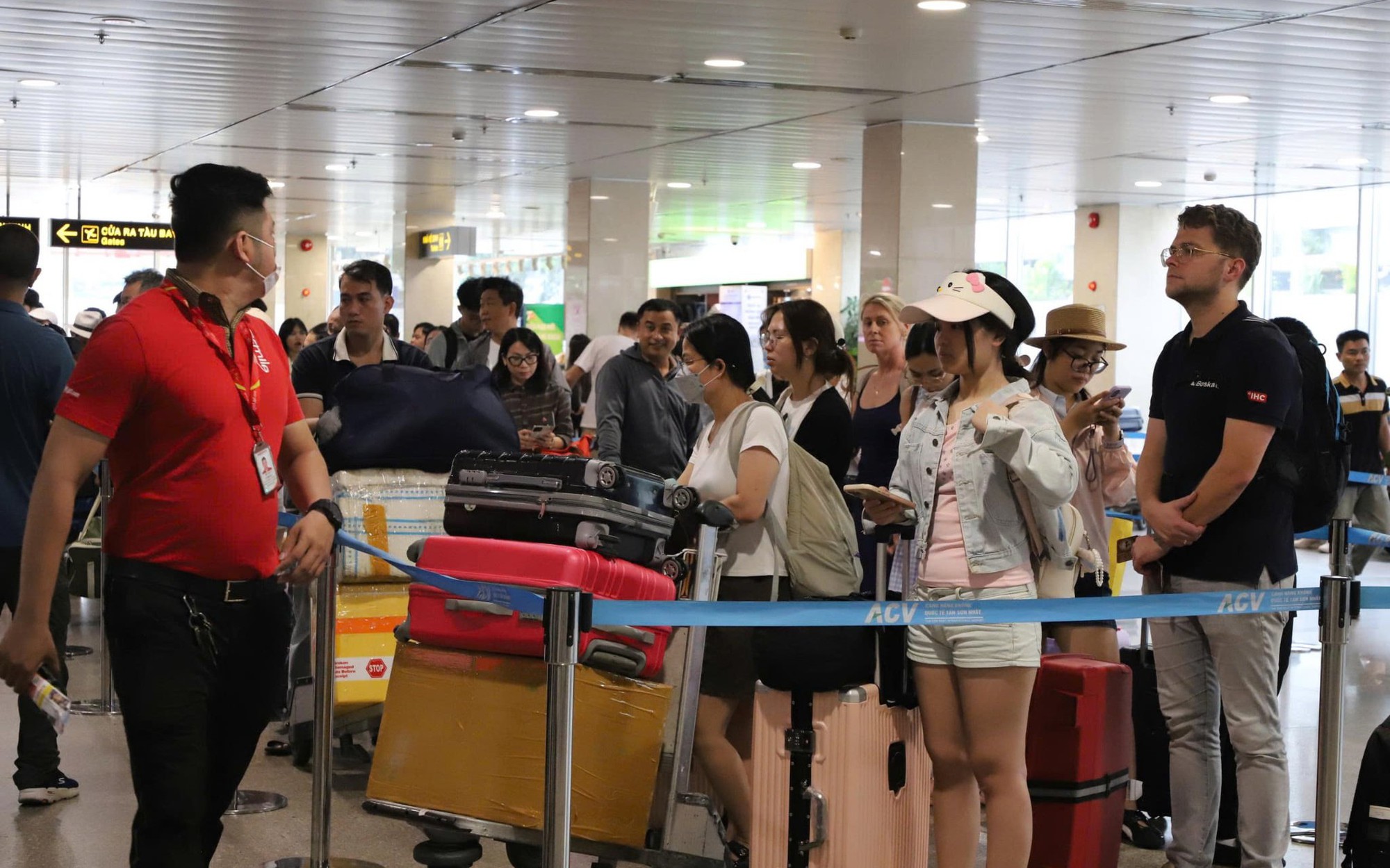
Vietnam’s Noi Bai, Tan Son Nhat and Da Nang airports ranked among the regional leaders in improved air connectivity. Photo: ACV
According to a report on the 2025 air connectivity index released on Monday by Airports Council International (ACI) Asia-Pacific and the Middle East, Noi Bai and Tan Son Nhat were included in the notable improvement category for airports handling 25 million to 40 million passengers annually.
Da Nang was recognized in the category for airports serving between five million and 15 million passengers a year.
The results demonstrate that passengers now have more flight and destination options from the three largest Vietnamese airports, according to the Airports Corporation of Vietnam (ACV), which manages and operates 22 airports.
The recognition should not, however, be interpreted as a ranking of airport size or service quality.
According to ACI, an airport's connectivity is measured by more than the number of routes it operates.
The assessment also takes into account flight frequency, aircraft capacity, the importance of destinations, the number of connections passengers need to make, and an airport's links to airlines' wider networks.
Airports with more direct flights, stable frequencies and connections to major economic hubs generally receive higher connectivity scores.
The report found that the air connectivity index across Asia-Pacific increased by 10 percent in 2025.
Including the Middle East, the increase reached 11 percent.
The Middle East alone recorded a 21-percent rise.
Of the 315 airports surveyed, 74 percent reported better connectivity than a year earlier.
Major airports continued to lead the recovery, supported by airlines adding new routes and growing demand for international travel.
However, the pace of connectivity growth in Asia-Pacific slowed from 14 percent in 2024.
ACI said the aviation market had been moving from the rapid post-pandemic recovery phase toward a period of more stable growth.
Int’l passenger traffic surpasses pre-pandemic levels
In 2025, passengers departing from airports across Asia-Pacific accounted for 91 percent of total passenger traffic.
This represented a five-percent increase from 2024 and was also five percent higher than in 2019, before the pandemic.
Passenger traffic from Asia-Pacific to other continents rose seven percent year on year and was 12 percent above 2019 levels.
ACI forecasts that passenger traffic across Asia-Pacific and the Middle East could reach 11 billion passengers over the next three decades.
Airports will therefore need not only to expand capacity but also to reduce delays and cancellations, adopt technology and improve the passenger experience.
For Vietnam, stronger connectivity at Tan Son Nhat, Noi Bai and Da Nang will give travelers more itinerary options while supporting tourism, trade and investment.








Max: 1500 characters
There are no comments yet. Be the first to comment.