


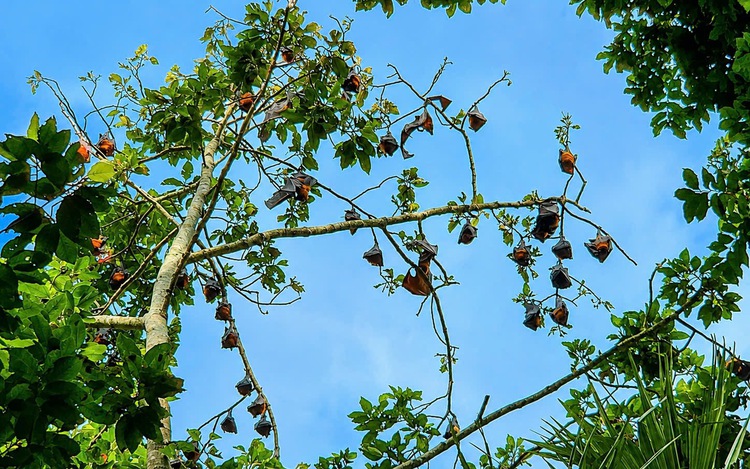
Large flying foxes hang upside down from the branches of old trees in the grounds of Doi (Bat) Pagoda in Can Tho City, southern Vietnam. Photo: Khac Tam / Tuoi Tre
Also known as Mahatup or Ma Toc Pagoda, the more than 400-year-old Khmer pagoda is located on Van Ngoc Chinh Street in Can Tho's Phu Loi Ward.
Covering around four hectares, the pagoda is famous for its distinctive Khmer architecture and the large bats that have long roosted among its trees.
Thach Chua, 75, a Phu Loi Ward resident who lives near the pagoda, said he had seen bats covering the branches of its old trees since he was a child.
"When I was in my 20s, there were tens of thousands of bats. They covered the branches of the dipterocarp and Hopea trees so densely that you could not see the leaves," Chua recalled.
At dusk, the bats would fly out to forage and return before dawn, filling the sky on their return.
But the colony has steadily dwindled.
During a visit to the pagoda on Saturday morning, Tuoi Tre (Youth) online newspaper's reporters observed that the grounds, like those of many other Khmer pagodas, are home to many dipterocarp and hopea trees, some reaching 20-30 meters in height, but visitors now have to look closely to spot bats hanging from the treetops.

The upper part of Doi (Bat) Pagoda’s roof is surrounded by dipterocarp and Hopea trees that provide roosting sites for bats in Can Tho City, southern Vietnam. Photo: Khac Tam / Tuoi Tre
Only three or four old trees had bats roosting in them at the time.
"Several years ago, there were still around 2,000 bats. Now I think there are only about 300-400 at most," Chua said.
Thanh, a visitor from Vinh Long Province, said he had brought his family to the pagoda after hearing that it was home to large numbers of bats.
"To be honest, I was very disappointed. I imagined there would be a huge number of bats, but when we arrived, we had to strain our eyes to spot just a few dozen," he said.
"At this rate, it won't be long before there are no bats left here. Then they will exist only in our memories."
The decline is not new.
In January 2024, Tuoi Tre reporters visited the pagoda and found only slightly more than 100 bats roosting high in the trees there.
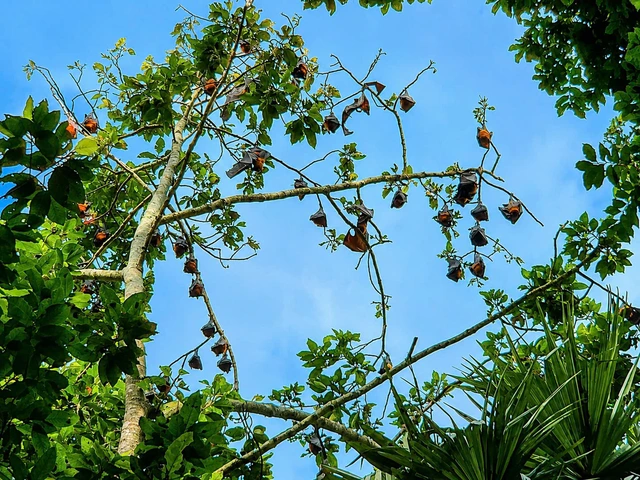
Large flying foxes at Doi (Bat) Pagoda in Can Tho City, southern Vietnam, can weigh up to 1.5 kilograms and have wingspans of around two meters. Photo: Khac Tam / Tuoi Tre
At the time, the pagoda's deputy abbot, Venerable Lam Tu Linh, said bats still occasionally returned during the rainy season but usually stayed for only one or two nights before leaving, rather than remaining and reproducing there as they had in the past.
A study cited by local agricultural authorities recorded around 1,500-2,000 bats at the pagoda in 2009.
The latest estimate shows that the colony remains far below its historical size, despite the problem having been documented for years.
A local official said hunting and changes to the bats' environment have contributed to the decline.
The bats at the pagoda are large flying foxes, weighing 0.5 to more than 1 kilogram and generally having wingspans of 1-1.5 meters.
Some can weigh up to 1.5 kilograms and have wingspans of around 2 meters.
The bats fly long distances in search of food, making them easy targets for hunters outside the pagoda grounds.
As early as 2024, Tran Trong Khiem, then deputy director of the Soc Trang Department of Agriculture and Rural Development (now the Can Tho Department of Agriculture and Environment following the national administrative restructuring in July 2025), identified hunting as the main factor behind the decline.
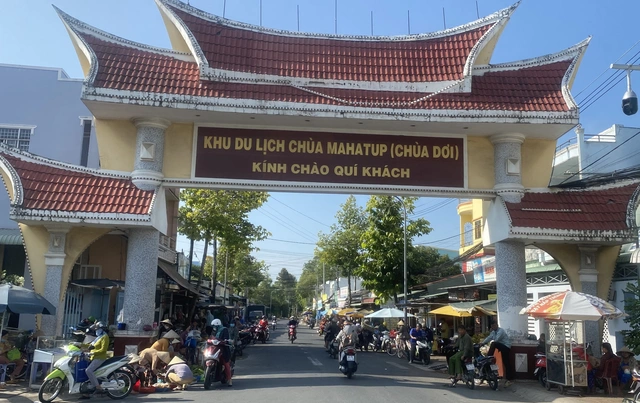
The entrance to the Doi (Bat) Pagoda tourist site in Can Tho City, southern Vietnam. Photo: Khac Tam / Tuoi Tre
He said the bats' wide-ranging foraging habits made them susceptible to being captured and sold to restaurants and eateries.
Demand for bat meat has added to the pressure, with some people seeking it because of the belief that it is nutritious or can cure illnesses.
Local authorities have urged restaurants and eateries not to buy or sell bats and warned that violators could face penalties, but officials said enforcement was difficult because of continued demand and efforts to evade inspections.
Changes in the surrounding environment may have added further pressure.
Chua recalled that the area around the pagoda was much less developed when he was young, with fewer houses and dirt roads.
Today, paved roads and dense housing have transformed the surroundings, although many of the pagoda's old trees remain.
The bats' low reproductive rate also makes the population difficult to recover after heavy losses.
Female bats give birth only once a year, producing a single offspring.
A mother bat carries and cares for her young for around three to four months before the young can fly and forage on their own.
Years after the problem was first documented, the bats have yet to return in anything close to their historical numbers.
Instead, the colony remains a fraction of its former size, while the pagoda's name still evokes the thousands of bats that once covered its trees.
For a place known for generations as Bat Pagoda, the question is becoming increasingly difficult to ignore: how long can it keep the name if the bats continue to dwindle?








Max: 1500 characters
There are no comments yet. Be the first to comment.