


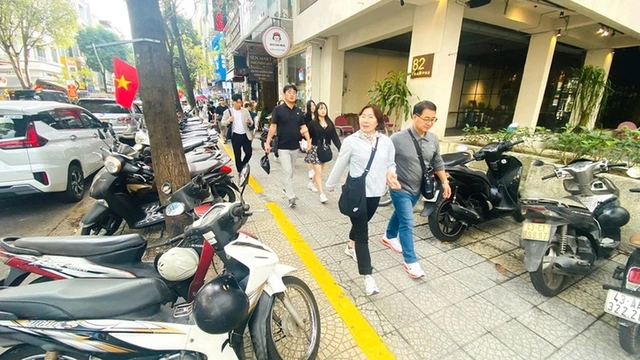
Pedestrian markings are painted on a sidewalk to block motorbike parking and keep a clear path for walkers in Da Nang City, central Vietnam. Photo: Truong Trung / Tuoi Tre
For decades, informal use of sidewalks by street vendors, parked vehicles, cafés, and market stalls has pushed pedestrians onto roadways, creating safety risks and degrading the urban environment.
Recent enforcement drives have targeted both commercial encroachments and illegal parking, with the stated aim of making streets safer, more accessible, and more orderly.
In Ho Chi Minh City, police and local officials have stepped up enforcement against illegal use of sidewalks and roadways, issuing fines, removing signage, and confiscating street vending equipment as part of a broader urban order campaign.
The effort has led to clearer promenades in several key wards, with authorities saying most violations were resolved without dispute once regulations were explained.
In Hanoi, a pilot initiative to reclaim sidewalks in central wards such as Hoan Kiem, Cua Nam, and Ba Dinh has been under way since late 2025.
Local authorities have guided vendors and businesses to move goods indoors while prioritizing pedestrian space.
Officials say the program is meant to promote a more civilized urban environment, reduce obstacles for walkers, and improve overall safety.
Support, nostalgia, and doubts
The measures have prompted mixed reactions, particularly among foreign visitors and expatriates familiar with Vietnam’s well-known sidewalk culture, where street food stalls, open air cafés, and scooters' spilling onto sidewalks has long shaped daily life.
On Reddit forums and Facebook discussions, some foreigners praised the crackdown, saying clear sidewalks are safer and more pleasant for walking, especially in congested urban areas.
Others warned that removing vendors and street seating could erode the distinctive character that draws people to Vietnam’s cities.
“I was in Hanoi just a month ago. All that clutter and stuff on the sidewalks isn’t just annoying, it’s downright dangerous,” one Reddit user wrote.
“If the people there want to clean it up, more power to them. All the same, I’m really going to miss the sheer craziness.”
Another commenter said that “bustling streets at all times of day and night are a quintessential aspect of Vietnam’s charm,” while a third cautioned against over regulation, arguing that Singapore had “lost all its charm and kampung [village] culture” after similar crackdowns.
Critics on social media have also questioned the durability of the campaigns, with some likening enforcement to “throwing a stone in a weed covered pond,” suggesting that sidewalk encroachments tend to return once patrols move on.
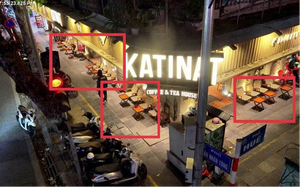
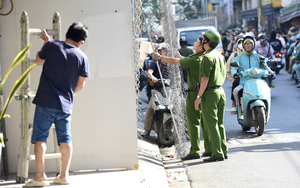
Addressing those concerns, a representative of Ho Chi Minh City’s Department of Construction said at the city’s regular socio-economic press briefing on Thursday that sidewalk conditions had improved markedly, but sustaining results would depend on continued coordination with police and stronger public awareness to prevent re-encroachment.
The official said longer-term measures include expanding transport infrastructure, building public parking facilities, and piloting digital systems to manage temporary sidewalk use more transparently.
Beyond short-term crackdowns, authorities are also working on unified policies and legal guidance following national regulatory changes that now restrict local permit regimes for sidewalk commerce.
Proponents of the campaign within Vietnam argue that reclaiming sidewalks is part of a broader push for urban civility and modernization.
They challenge the idea that sidewalk culture is inherently authentic, saying pedestrian safety and livability should outweigh nostalgia for cluttered streets.
A resident in Hanoi’s Old Quarter told local media that while moving tables indoors felt unfamiliar at first, many people welcomed the return of space for pedestrians.
The debate echoes similar discussions in cities worldwide, where informal street life collides with urban planning goals and raises questions about how authorities can preserve cultural vibrancy while enforcing rules that prioritize safety, accessibility, and long-term livability.








Max: 1500 characters
There are no comments yet. Be the first to comment.