


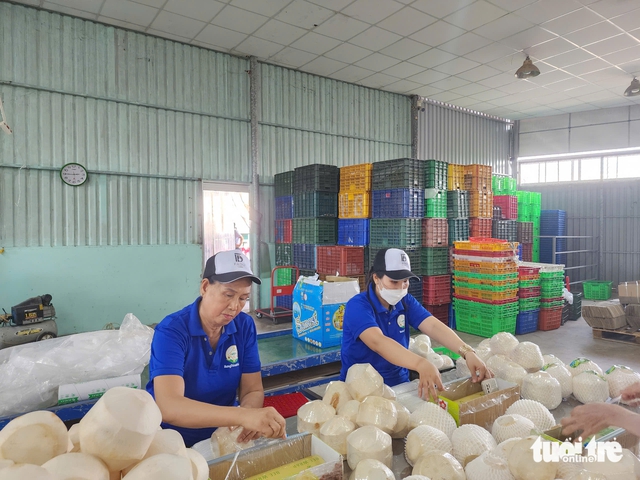
Workers process coconuts at a facility in Vietnam. Photo: Hoai Thuong / Tuoi Tre
Vietnam currently has about 202,000 hectares of coconut plantations, including 181,000 hectares in harvest, producing around 2.28 million tonnes annually, according to the Vietnam Coconut Association.
The Mekong Delta accounts for most of the output, with 178,000 hectares yielding 1.95 million tonnes.
Among Vietnam’s long-term industrial crops, coconut ranks fourth in total area, after rubber, coffee, and cashew.
In 2024, the country’s exports of coconuts and coconut-based products approached the US$1 billion mark.
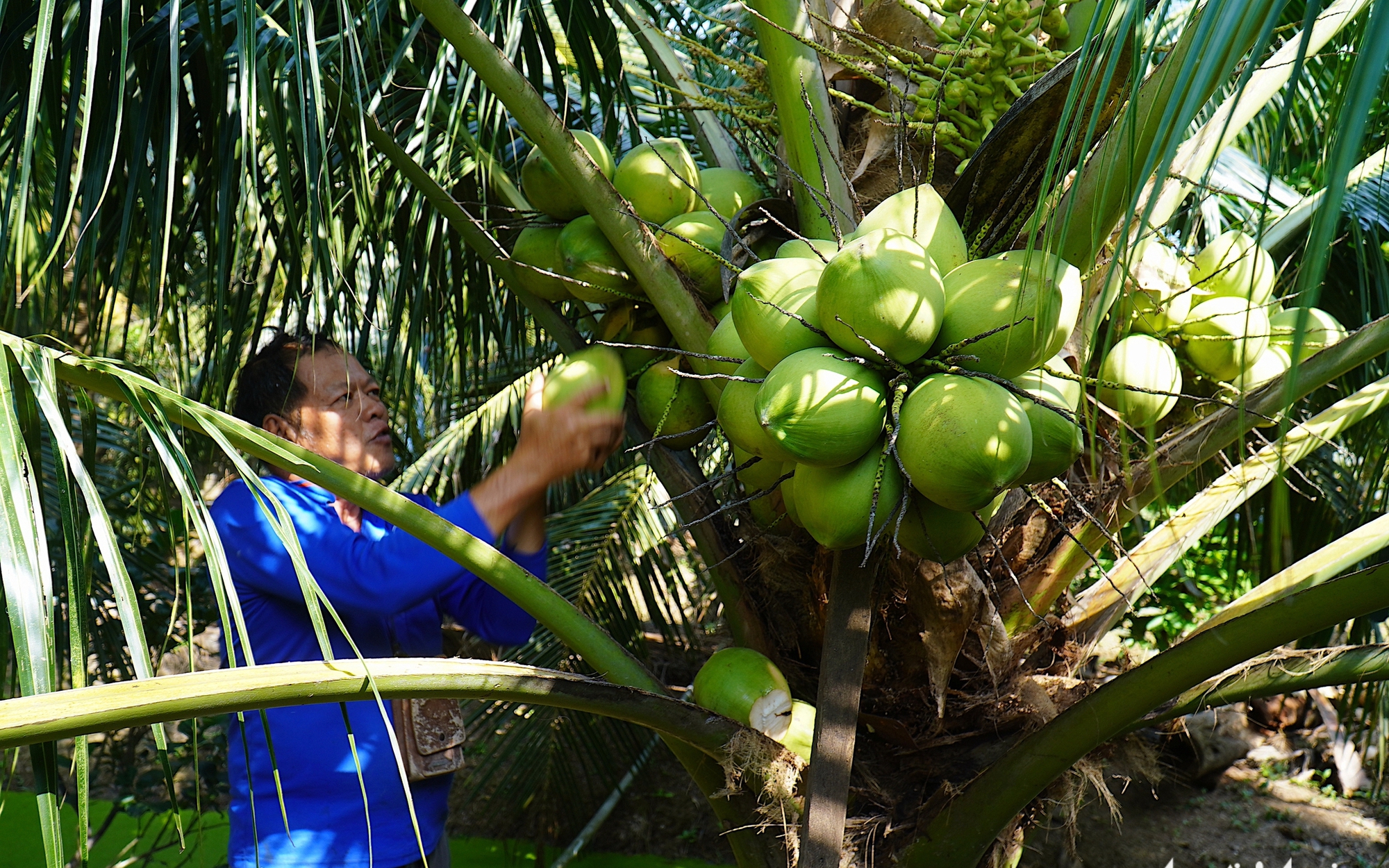
Nguyen Thi Kim Thanh, chairwoman of the Vietnam Coconut Association, said the industry must restructure toward an 'eco-friendly, circular, and low-emission' model to remain competitive in export markets that increasingly demand green and socially responsible standards.
“Global importers now prioritize products that are clean, green, and traceable,” Thanh said at a forum on coconut health management at Tra Vinh University in Vinh Long Province.
“The coconut industry must adapt quickly.”
Nguyen Quy Duong, deputy director of the Plant Production and Protection Department, said the coconut sector has already become a billion-dollar industry but still has room to grow through higher value-added production, product diversification, and technological innovation.
The forum was co-hosted by the Ministry of Agriculture and Rural Development, Tra Vinh University, the Vietnam Coconut Association, and local agricultural agencies in the Mekong Delta.








Max: 1500 characters
There are no comments yet. Be the first to comment.