


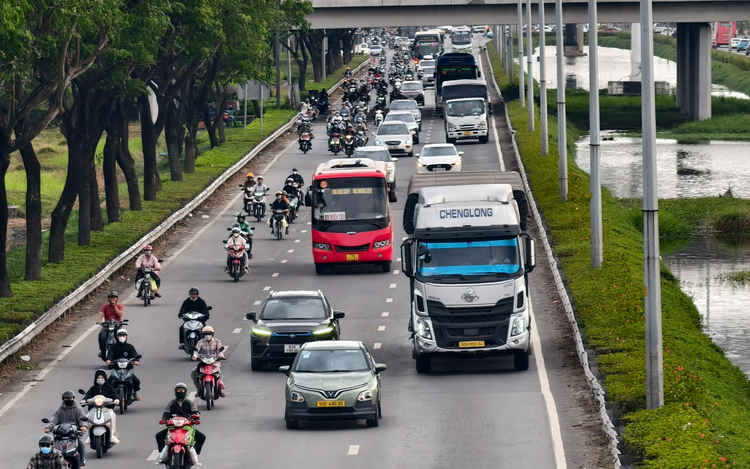
Many electric and hybrid vehicles travel on roads in Vietnam. Photo: Thy Nhung / Tuoi Tre
As the global automotive industry accelerates its transition toward electric mobility to reduce greenhouse gas emissions, a clear trend has emerged: Japanese and South Korean manufacturers are not betting everything on fully electric vehicles.
Instead, they are pursuing a multi-pathway strategy, with hybrid electric vehicles (HEVs) and plug-in hybrid electric vehicles (PHEVs) playing a central role during the transition.
Wave of hybrid launches in Vietnam
EVs have dominated Vietnam’s monthly best-selling car rankings in succession since late 2024, according to sales figures from Vietnamese EV maker VinFast and the Vietnam Automobile Manufacturers’ Association.
The rotating leadership of models such as the VinFast VF 5, VF 3 and newcomer Limo Green, each recording monthly sales of around 3,000 to 5,000 units, provides clear evidence of the growing popularity of EVs in the country.
Nevertheless, hybrid models have continued to enter the Vietnamese market in large numbers since the start of 2026.
Honda began the year by transitioning its CR-V e:HEV line-up to the new hybrid configuration.
In June, THACO introduced upgraded hybrid versions of the Kia New Sorento HEV/PHEV and Kia Sportage Hybrid.
In September, Toyota added a self-charging hybrid version of its Land Cruiser HEV (LC300).
On October 16, Hyundai stepped up its efforts to hybridize its SUV line-up with the introduction of the Hyundai Palisade Hybrid, following the earlier launch of the Hyundai Tucson Hybrid.
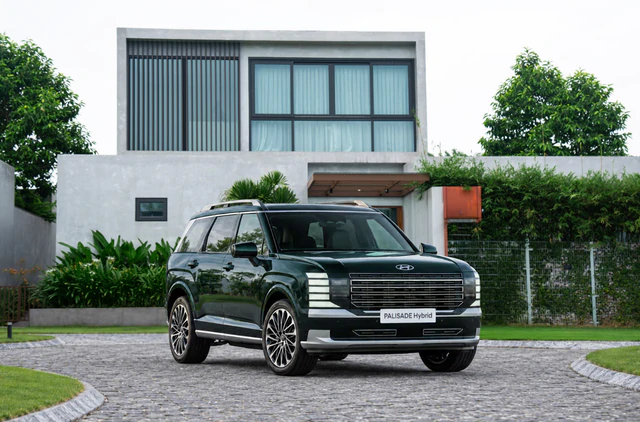
Hyundai has launched a hybrid version in Vietnam. Photo: Thy Nhung
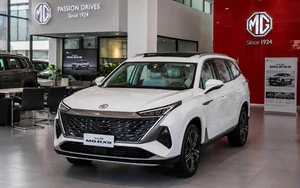
Other manufacturers, including MG and Omoda & Jaecoo, have also introduced hybrid models to Vietnam.
Even BYD, the prominent Chinese electric vehicle manufacturer, is expanding its new-energy vehicle strategy in Vietnam by introducing plug-in hybrid models, including the Sealion 6 and Seal 5.
Hyundai Thanh Cong is also gradually broadening its electrified product portfolio, with Turbo Hybrid technology emerging as one of the solutions the company is focusing on.
Why are hybrids a practical choice?
Industry experts say the surge in hybrid launches is driven by more than technological considerations or marketing strategies.
Practical factors, including charging infrastructure, climate conditions, production costs and global competition, are also shaping automakers’ decisions.
Public charging infrastructure remains limited and unevenly distributed in Vietnam and many other Asian countries, said Associate Professor Dr. Do Van Dung, president of the Ho Chi Minh City Society of Automotive Engineers.
Although major cities such as Ho Chi Minh City and Hanoi are making progress in expanding charging networks, remote areas, provincial roads and rural communities still have relatively few charging stations.
Vietnam’s tropical climate presents another challenge for BEVs.
With outdoor temperatures frequently reaching 32-38 degrees Celsius and sometimes exceeding 40 degrees Celsius during peak periods, high temperatures and humidity can increase the energy demands of vehicle air-conditioning systems.
He noted that air conditioning consumes a considerable amount of battery energy in fully electric vehicles.
Cost considerations also favor hybrid technology in certain market segments.
For some automakers that struggle to compete with Chinese manufacturers in the battery electric vehicle market, hybrids offer an opportunity to capitalize on their existing technological strengths and manufacturing capabilities rather than engage in direct price competition in the fully electric segment.
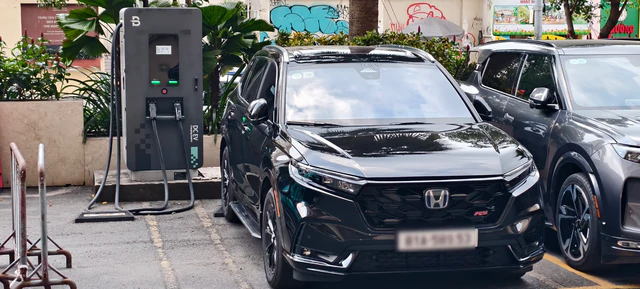
A charging station at a shopping hall in Ho Chi Minh City. Photo: Thy Nhung
Hybrids can reduce emissions immediately while allowing drivers to continue using Vietnam’s extensive existing gasoline infrastructure.
They also provide an opportunity for consumers and automotive technicians to become familiar with electrified powertrains before fully electric vehicles achieve wider adoption.
“Hybrids are not a step backward, but a ‘smart’ move on the road toward sustainable transportation,” Dung said.
He added that Vietnam could learn from this pragmatic approach to develop an intelligent, effective and equitable electrification roadmap that serves consumers across different regions.
Automotive expert Huynh Minh Chau said manufacturers’ decision to prioritize hybrid expansion rather than devote all their resources to fully electric vehicles reflected a realistic shift among traditional automakers, as well as widespread consumer concerns about charging infrastructure.
In his view, hybrids serve as a strategic bridge, helping manufacturers and consumers navigate the transition to electrified transportation while addressing infrastructure limitations, supply-chain pressures and costs.


Max: 1500 characters
There are no comments yet. Be the first to comment.