


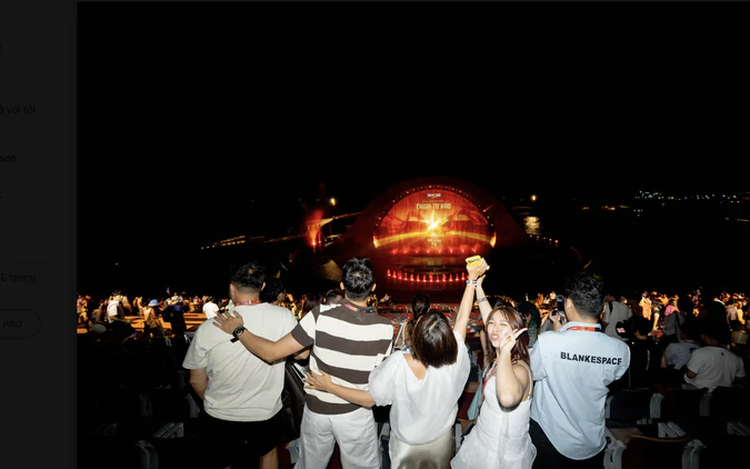
Vietnam has more reasons to attract international visitors to return through its culture, cuisine and experiences. Photo: Organizers
CS. Soong, Klook’s vice president of corporate development, spoke with Tuoi Tre (Youth) online newspaper on the occasion of Vietnam’s National Day on September 2.
Growth opportunities beyond familiar destinations
Despite geopolitical uncertainty and rising travel costs, global demand for tourism remains strong, with about 88 percent of travelers surveyed by Klook saying they expect to maintain or increase their travel frequency over the next year.
As some destinations in the Middle East become harder to access and long-haul travel to Europe becomes more expensive, Vietnam is benefiting from its proximity to major markets in the Asia-Pacific region, including China, South Korea, Taiwan, Southeast Asia and India.
Demand for trips to Vietnam on Klook increased 72 percent in the first half of 2026 from the same period last year.
“This is one of the highest growth rates across Klook’s entire destination network,” Soong said.
Vietnam’s tourism growth potential also lies in the development of its tourism ecosystem and infrastructure.
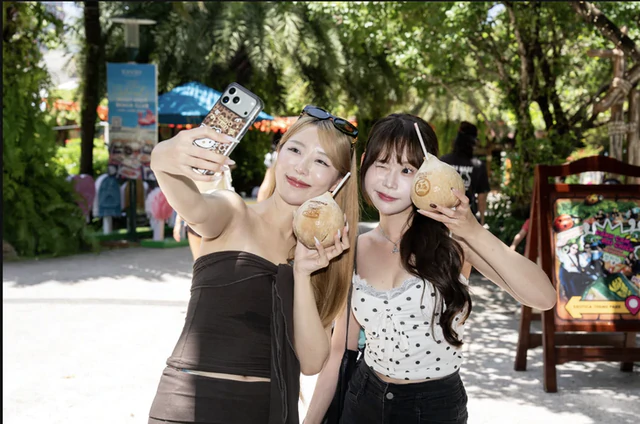
Content creators film their firsthand experiences at a destination in Vietnam. Photo: Organizers
Over the next two to five years, Soong expects continued investment in tourism infrastructure, including airports, roads, ports and accommodation facilities.
Phu Quoc Island off An Giang Province in southern Vietnam is among the destinations receiving substantial investment.
According to information Soong cited from Klook’s partners, Phu Quoc could have around 50,000 accommodation rooms by September 2027.
Along with accommodation, services on the island are expected to expand into dining, retail, MICE (meetings, incentives, conferences and exhibitions), entertainment and recreation.
Local experiences offer new competitive edge
Growth opportunities, however, extend beyond infrastructure and established destinations. Expanding the tourism map with new destinations and experiences can give travelers more reasons to explore Vietnam and return, Soong said.
“Destinations such as Ninh Binh and Sa Pa [in northern Vietnam] are also attracting more attention from travelers,” he said.
The diverse travel preferences of millennials and Gen Z travelers are creating opportunities for a wider range of tourism products in Vietnam.
While young families may choose a resort holiday in Phu Quoc, younger travelers seeking adventure may head to destinations such as Sa Pa for nature, culture and outdoor activities.
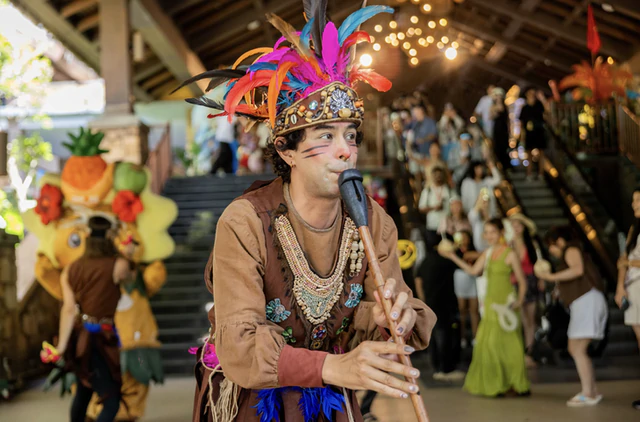
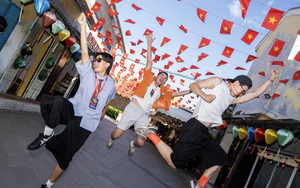
Destinations with distinctive local identities are attracting greater interest from international travelers. Photo: Organizers
As travelers’ needs change, so does the way destinations are marketed. Instead of simply asking where to go, travelers are increasingly asking what they can do there.
“Content created by social media creators is becoming one of the ways to answer that question,” Soong said.
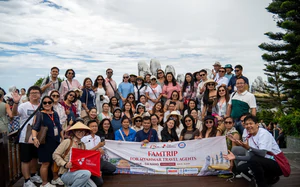
That is why Klook brought 127 selected content creators from its network of around 30,000 creators across nearly 90 countries to Vietnam during the National Day holiday.
The creators spent eight days experiencing destinations firsthand as part of Kreatorverse 2026.
Marcus Yong, Klook’s vice president of global marketing, said the company chose to bring creators directly to these destinations so they could experience them firsthand and tell stories from their own perspectives, rather than simply provide them with ready-made photos and videos for them to publish.
“The same destination, such as Phu Quoc, can be presented through different stories. Families with young children may focus on resorts, infrastructure and child-friendly facilities, while younger independent travelers may pay more attention to scenery, costs and the freedom to design their own itineraries,” he said.
This approach allows a destination to be viewed from multiple perspectives rather than being associated with a single promotional image, Yong said.
A destination can therefore be marketed not only through its scenery but also through a range of specific experiences tailored to different groups of travelers.
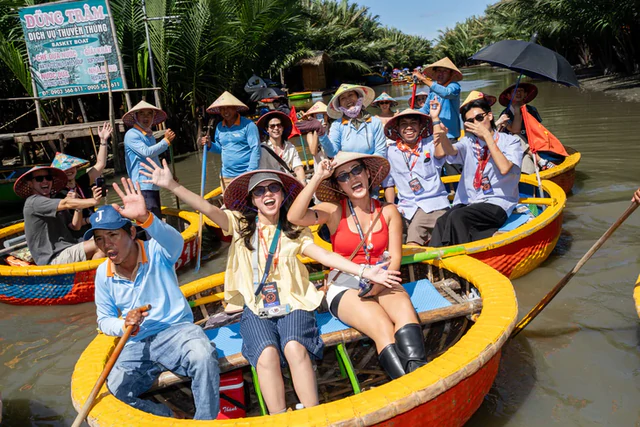
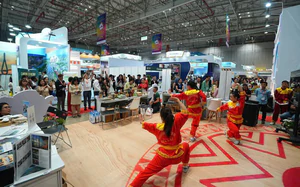
Local experiences are becoming increasingly important to international travelers. Photo: Organizers
Alongside social media, AI is playing an increasingly important role in how travelers search for destinations and plan trips.
According to Klook Travel Pulse 2026, 94 percent of Asia-Pacific travelers have used or are willing to use AI tools to research destinations, build itineraries, manage budgets and translate languages.
Technology can help destinations gain visibility more quickly, but real-world experiences remain the key to attracting and retaining visitors, according to the Klook executive.
For Vietnam, this creates opportunities for emerging destinations with distinctive identities, such as Tay Ninh, Ninh Binh and Sa Pa.
International travelers are increasingly looking not only to admire scenery but also to explore, experience and create their own stories.
Klook is one of the leading online travel service platforms in the Asia-Pacific region. In 2024, it had more than 10.7 million transacting users across more than 200 markets, according to Euromonitor.
As of September 2025, the platform offered hundreds of thousands of products in 4,200 destinations, with more than 65 million experience bookings over the previous 12 months.
During the National Day holiday, Klook, Sun Hospitality & Entertainment and Vinpearl signed a memorandum of understanding to expand their cooperation, building on previous joint campaigns promoting destinations in Vietnam.
In the next phase, the partners will step up digital marketing and leverage their networks of content creators to reach travelers in Southeast Asia, South Korea, India and mainland China.








Max: 1500 characters
There are no comments yet. Be the first to comment.