


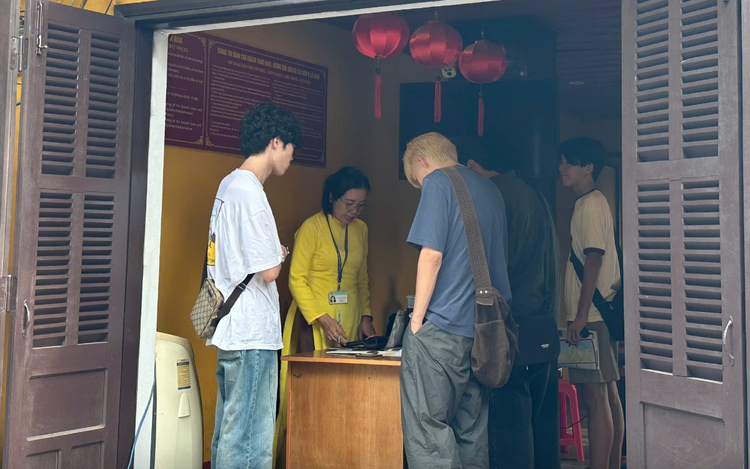
Foreign tourists buy tickets to visit Hoi An Ancient Town in Da Nang City, central Vietnam. Photo: Ba Dung / Tuoi Tre
The issue was discussed at a conference on developing Hoi An Ancient Town, a UNESCO World Cultural Heritage site, organized by the Da Nang Department of Culture, Sports and Tourism.
According to figures presented by Pham Thi Thanh Huong of the UNESCO Office in Vietnam, Hoi An received around 4.4 million visitors in 2024, when 1.78 million bought tickets, equivalent to about 40 percent.
In 2025, ticket sales fell to 1.71 million despite the increase in visitor numbers.
Huong said many visitors enjoyed the ancient town's heritage landscape without directly contributing to its preservation through ticket purchases.
Repetitive tourism products offer few reasons to return
The Da Nang Tourism Association said Hoi An had yet to fully capitalize on its heritage assets.
Existing offerings remain repetitive, focusing largely on ancient-town sightseeing, floating lanterns, basket-boat rides, lantern-making and cycling.
Meanwhile, in-depth cultural experiences, arts programs and wellness services remain limited, while nighttime tourism lacks enough high-value offerings to encourage longer stays and repeat visits.
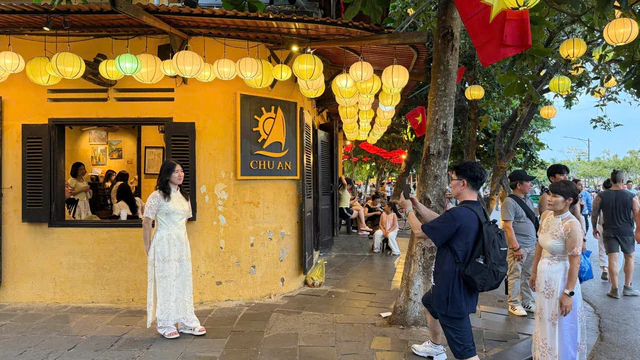
A male tourist takes a photo of a female tourist in Hoi An Ancient Town, Da Nang City, central Vietnam. Photo: Ba Dung / Tuoi Tre
The association proposed developing products that explore local culture more deeply and applying technology and artificial intelligence to connect visitors with experiences and manage visitor flows, rather than competing mainly on price.
Residents are leaving, threatening Hoi An's living heritage
Pham Phu Ngoc, director of the Hoi An World Cultural Heritage Conservation Center, said the protected heritage area covers 130 hectares, including a 30-hectare core zone containing 1,175 heritage sites.
More than 80 percent of the sites are privately or collectively owned.
From 2012 through July 2026, the ancient town recorded 19.2 million ticketed visits, generating more than VND2 trillion in revenue, according to the center.
However, tourism growth has coincided with the gradual departure of local residents, weakening the community life that gives the heritage town its identity.
Huong said the ancient town had just over 3,000 residents in 2023, while around 40 percent of original Hoi An homeowners had moved elsewhere.
In 2024, only about 20-30 percent of heritage properties still had residents living in them.
Many old houses have been converted into shops and accommodation establishments, leaving less room for daily life, ancestral worship and traditional customs.
Huong called for housing and residency policies to be incorporated into heritage management, more restoration assistance for households living in old houses, and mechanisms to channel tourism revenue back to local communities.
Nguyen Thi Hue of the Institute of Cultural Studies under the Vietnam Academy of Social Sciences also stressed that residents were indispensable to heritage preservation.
Hoi An Ancient Town's value lies not only in its old architecture but also in its everyday life, beliefs, customs and traditional crafts passed down through generations, Hue said.
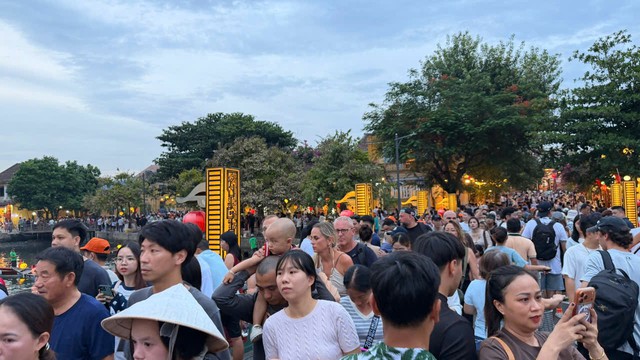
Crowds of tourists visit Hoi An Ancient Town in Da Nang City, central Vietnam during peak hours. Photo: Ba Dung / Tuoi Tre
She called for livelihood support and measures to ensure residents can participate in and benefit meaningfully from tourism.
Expanding tourism while preserving heritage
The Hoi An World Cultural Heritage Conservation Center said the ancient town should remain the core of the heritage area, with tourism expanded to nearby craft villages and natural attractions, including Kim Bong carpentry village, Thanh Ha pottery village, Tra Que vegetable village, Cam Thanh coconut forest and Cu Lao Cham.
Hoi An should also plans to develop new offerings, including 'Dau an tuong xua' (Imprints of Traditional Vietnamese Opera), nighttime tours of Hoi An Prison and the 'Ve Cam Thanh - Nghe dua ke chuyen' (Back to Cam Thanh – Hear the Coconut Trees Tell Their Stories) route exploring the area's coconut-growing culture.
Other measures include digitizing heritage sites, expanding electronic ticketing and managing visitor capacity.
The conference emphasized that Hoi An's tourism development must put heritage conservation first, keep local communities at its center and measure success by the quality of visitor experiences, not visitor numbers alone.











Max: 1500 characters
There are no comments yet. Be the first to comment.