


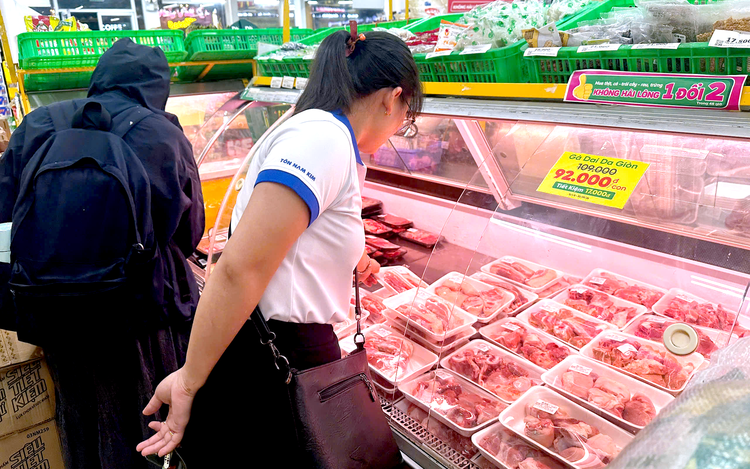
Shoppers select meat at a supermarket in Vietnam. Photo: Cong Trung / Tuoi Tre
Frozen meat imports into Vietnam have increased by an average of 15-20 percent a year, putting growing pressure on domestic livestock producers, with Brazil emerging as a major supplier of low-priced pork and beef, according to industry data.
A frozen-meat importer supplying restaurants and eateries in Ho Chi Minh City told Tuoi Tre (Youth) online newspaper that several factors explain why some imported meats cost less than domestic products.
Why imported meat can cost less
The first is production scale.
Brazil, the United States, and several European countries operate livestock farming, slaughtering, and meat-processing systems on a very large scale.
Brazil also has abundant supplies of corn and soybeans, two major ingredients in animal feed, with the U.S. Department of Agriculture forecasting the country's pork production at around 4.9 million metric tons in 2026.
This abundant feed supply helps lower production costs at the farm level.
According to the importer, live-hog prices in Brazil have at times been 30-40 percent lower than in Vietnam, where farmers face costs for breeding stock, feed, veterinary medicine, disease control, and intermediaries.
Another factor is consumer preference.
Cuts that are popular in producing countries tend to command higher prices, while less sought-after parts such as feet, wings, skin, fat, bones, offal and meat trimmings can be exported to markets where they are in demand.
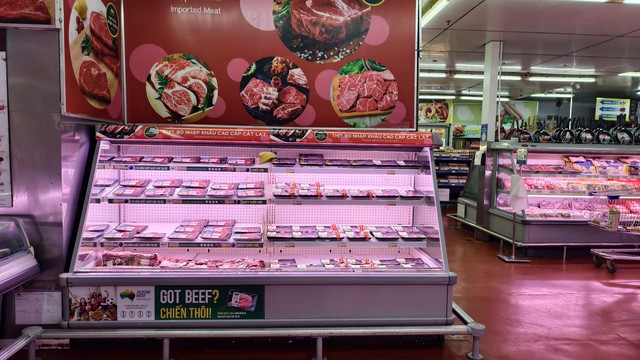
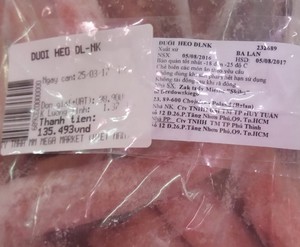
Imported meat products are displayed for sale at a supermarket in Vietnam. Photo: Thy Nhung
Frozen meat and wholesale distribution can also reduce costs.
Unlike fresh meat, frozen products do not have to be slaughtered, cut and sold within the same day.
A container can be distributed among several wholesalers, food-service operators and processing facilities, lowering costs per unit.
Another factor is lower import tariffs under free trade agreements.
Under the European Union-Vietnam Free Trade Agreement roadmap, tariffs on beef, lamb, pork, poultry and offal from the EU are being gradually reduced, making European products more competitive in Vietnam.
Lasse Pedersen Hjortshøj, head of trade and investment at the Embassy of Denmark in Vietnam, said the pork market is highly globalized, allowing meat to be transported and traded among many countries.
When Denmark, other European countries, Brazil or China have excess supplies, the meat can be shipped to other markets, while increased supply can also push prices down, he said.
Hjortshøj said improving production efficiency is key to lowering pork production costs, as feed accounts for around 60-70 percent of total costs.
A representative of Danish agricultural technology company Agrisys A/S said technologies such as weight monitoring and precision feeding can help farmers adjust feed quantities to animals' needs, improving feed efficiency while maintaining growth rates.
Brazil's advantages boost its meat exports
Nata Oliveira, vice-chairman of the Brazil Chamber of Commerce in Vietnam, said Brazil's advantage comes from its vast territory, abundant natural resources, and favorable climate for agriculture and livestock farming.
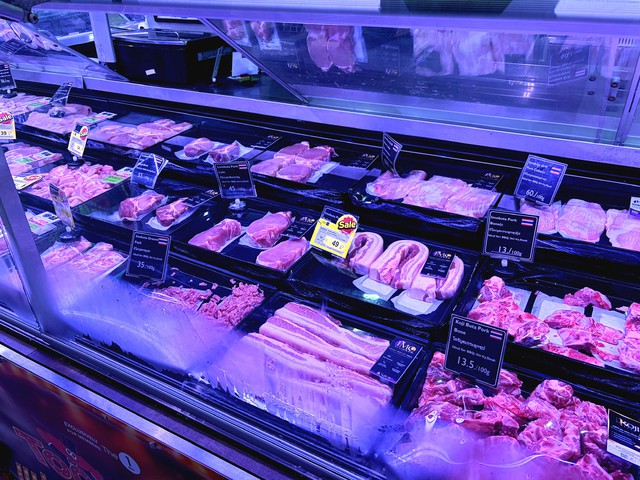
Domestic and imported meat products are displayed for sale at a supermarket in Vietnam. Photo: Nghi Vu / Tuoi Tre
Large-scale soybean and corn production provides feed for cattle, pigs and poultry, while improvements in genetics, nutrition, farm management, and animal health have helped increase productivity and shorten the time animals need to reach slaughter weight.
Brazil's domestic market of more than 200 million consumers has also supported the development of an industrial-scale livestock sector and a relatively complete supply chain covering breeding, feed production, slaughtering, processing, freezing, and distribution.
In the pork and poultry sectors, closer links between farmers and large companies have helped improve production standardization, disease control, and efficiency, Oliveira said.
Brazil has also spent decades developing systems for hygiene control, inspection, and meat traceability.
Exporters must be registered with the Federal Inspection Service and comply with both Brazilian regulations and the requirements of importing countries, with inspection and certification overseen by the Ministry of Agriculture and Livestock.
These production and quality-control capabilities have helped Brazil expand its meat exports to more than 150 countries, giving its livestock industry a broad international market.
Cheap imports put pressure on Vietnamese farmers
The cost advantage of imported meat is creating difficulties for domestic livestock producers, who are already dealing with disease and high input costs.
Anh Quang, a pig farmer in Dong Nai City, told Tuoi Tre that his herd had fallen from more than 1,000 pigs to around 600.
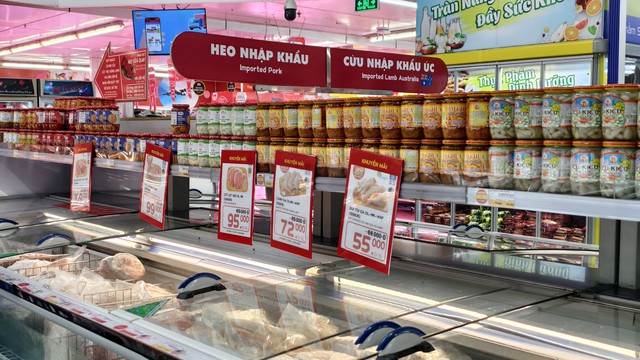
Imported pork and lamb are offered at discounted prices as part of a sales promotion at a supermarket in Vietnam. Photo: Thy Nhung
It costs him about VND5.8 million (US$223) to raise a pig to market weight, while live-hog prices of VND56,000-58,000 ($2.15-2.23) per kilogram currently leave him only breaking even or making nothing for his labor.
Imported pork priced at around VND40,000-43,000 ($1.54-1.65) per kilogram is difficult for domestic farmers to compete with.
He suggested that authorities regulate the volume of imported meat and stabilize livestock feed prices.
Nguyen Kim Doan, vice-chairman of the Dong Nai Livestock Association, said African swine fever and other difficulties have sharply reduced the contribution of farming households, whose share of production has fallen from around 80 percent to about 20 percent, while businesses now account for most of the remaining output.
Doan said imports could not simply be banned, but suggested that appropriate limits or quotas could be considered when foreign producers have lower costs and imported meat faces zero tariffs.
Data from the Import-Export Department under the Ministry of Industry and Trade show that Vietnam imported 112,090 metric tons of fresh, chilled and frozen pork worth $185.54 million in the first seven months of 2026.
Brazil was the largest supplier, accounting for 44.5 percent of the total volume.
The average import price was $1,638 per metric ton, equivalent to around $1.65 per kilogram and down 38.4 percent year on year.
Vietnam also imported 8,400 metric tons of beef and related products from Brazil in the first seven months of 2026, up 375.4 percent year on year, according to the Brazilian Association of Meat Exporting Industries.
The figure includes fresh and processed beef, salted meat, offal, fat and intestines.



Max: 1500 characters
There are no comments yet. Be the first to comment.