


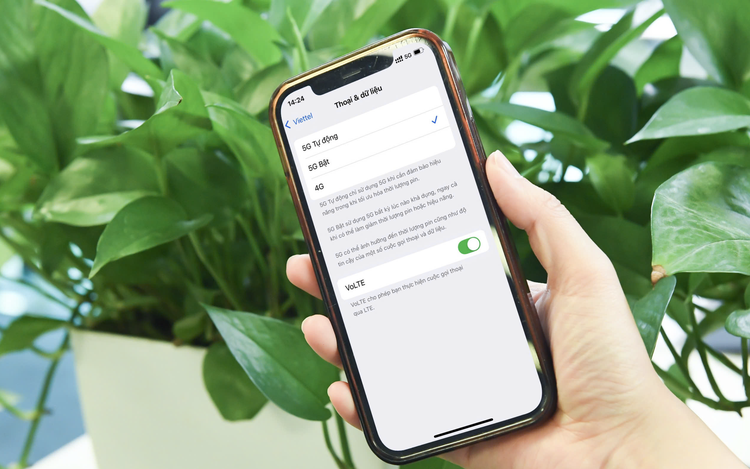
The 2G service will officially be discontinued in Vietnam from September 15, 2026. Photo: Thu Hang / Tuoi Tre
Many 4G smartphones remain at risk of losing the ability to make and receive calls if they do not meet the technical requirements for voice services over the new network.
Under the roadmap set by regulators, 2G service will officially be discontinued nationwide from September 15, with the exception of certain special areas.
Several mobile operators have already begun gradually decommissioning 2G base stations in areas where conditions for the transition have been met.
This means some users may experience disruptions to voice services before the official deadline if their devices are not ready.
The problem is not limited to basic 2G handsets.
Some 4G smartphones could also lose voice connectivity.
Why can a 4G phone still lose calling service?
Many mobile users routinely check the 4G or LTE icon on their screens while browsing the internet or watching videos, without realizing that voice calls may use a different connection mechanism.
Some older 4G phones and imported handsets use 4G only for mobile data.
When a call is made or received, the device automatically switches its voice connection to the 2G network.

As this process takes place in the background, most users are unaware that it is happening.
Once 2G is completely shut down, phones will have to handle voice calls directly over the 4G network using Voice over LTE (VoLTE) technology.
If a device does not support VoLTE, or the subscriber has not activated the service with their mobile operator, the user may still be able to access social media and browse the web normally but will be unable to make or receive phone calls.
Those at greatest risk include older-generation smartphones, handsets imported from overseas markets, and devices that were not officially distributed in Vietnam.
How to avoid losing phone service
Telecommunications experts advise users not to rush out and buy a new phone.
Instead, they should first check whether their existing device is ready for the transition.
Depending on the operating system and manufacturer, users can go into their phone’s settings to check for and enable VoLTE.
For iPhones running iOS, users can go to Settings → Cellular → Cellular Data Options → Voice & Data, then switch on VoLTE.
On Samsung phones, go to Settings → Connections → Mobile Networks and enable VoLTE calls.
On Oppo and Realme devices, go to Settings → Mobile Network (or SIM & Mobile Network), find VoLTE calls, and switch it on.
On Xiaomi and Redmi phones, go to Settings → SIM cards & mobile networks, select the SIM card in use, and enable Use VoLTE.
On Nokia and other Android phones, go to Settings → SIM & Mobile Network and look for an option such as Use VoLTE or 4G Calling.
To make calls over VoLTE, subscribers must use a 4G or 5G SIM.
They must also ensure that VoLTE voice service has been activated by their mobile operator.
Seek assistance if your device is incompatible
If VoLTE has been enabled but calls still do not work, or if the phone does not support the VoLTE standard, users should take the handset and SIM card to a mobile operator's service center.
Technical staff can check whether the SIM is compatible, provide assistance with the necessary settings, or advise customers on suitable device-transition support programs.
Telecom operators say the shutdown of 2G is an inevitable step that will allow valuable frequency resources to be reclaimed and reallocated while infrastructure is optimized for 4G and 5G networks.
The transition is expected to significantly improve data connectivity and enable higher-quality voice services.
Mobile network operators are urging people to check their devices now rather than waiting until September 15.
With the reduction of 2G coverage already accelerating in different areas, users who act early can avoid unexpected disruptions as Vietnam completes the nationwide transition.








Max: 1500 characters
There are no comments yet. Be the first to comment.