


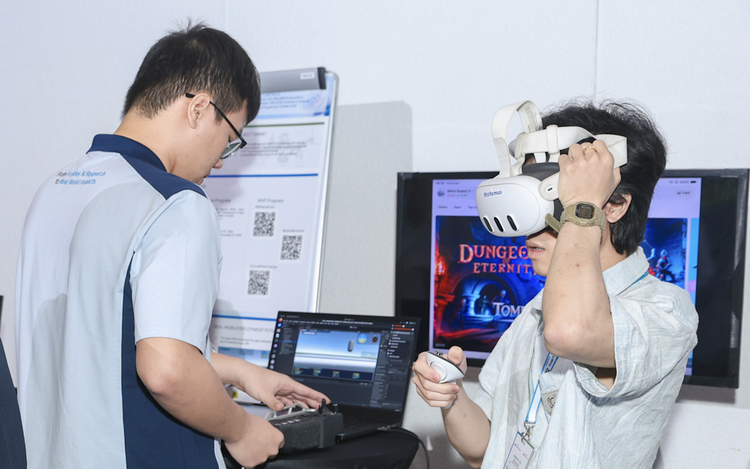
Two members of an AI research team introduce a prototype from their research at the Applied AI Lab Demo Day 2026 in Ho Chi Minh City, October 8, 2026. Photo: Khanh Linh / Tuoi Tre
These projects were showcased at the Applied AI Lab Demo Day 2026 in Ho Chi Minh City on Thursday, marking the completion of the first six-month research cycle and the launch of a new approach for the second cohort.
They were developed during the first cohort of the Applied AI Lab program, jointly organized by SAIH and the Google AI Futures Fund, a U.S.-based fund supporting AI research and startups.
The first cohort selected 10 research teams from 21 initial proposals, involving nearly 60 young researchers, according to Assoc. Prof. Dr. Tran Minh Triet, vice president of the University of Science under Vietnam National University - Ho Chi Minh City.
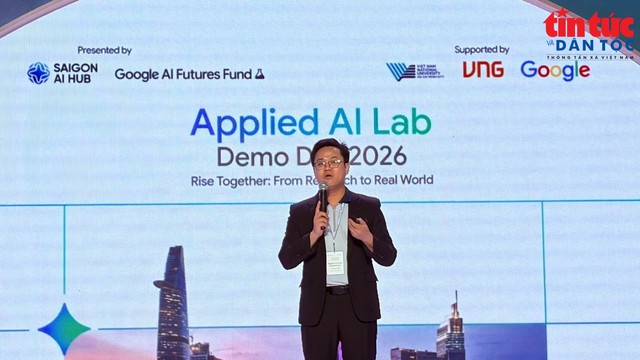
Le Duy Tan, representative of an AI research team speaks at the Applied AI Lab Demo Day 2026 in Ho Chi Minh City, October 8, 2026. Photo: Vietnam News Agency
10 AI projects target practical applications
The 10 projects in the first cohort cover verified AI reasoning, Vietnamese emotion recognition, multimodal video search, football video question-answering, drone-control simulation, Vietnamese speech separation, colorectal cancer detection, AI-powered interactive virtual reality, deepfake detection and the identification of distracting objects in images, according to the Vietnam News Agency (VNA).
Among them, the verified AI reasoning project aims to reduce false information generated by large language models by developing models capable of reasoning under verifiable constraints, while the Vietnamese speech separation project uses deep learning to distinguish individual speakers in environments where multiple people are talking at the same time.
The AI-powered interactive virtual reality project focuses on immersive experiences ranging from automatically generated storytelling and multimodal information searches to interaction and training in virtual environments.
Meanwhile, the deepfake project is designed to detect manipulated images and videos even when the footage is blurry, noisy or compressed, while another project identifies distracting objects in images to help non-professional users edit photos.
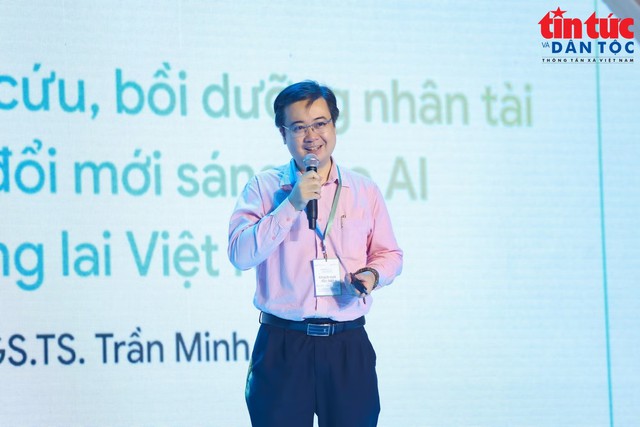
Assoc. Prof. Dr. Tran Minh Triet, vice president of the University of Science under Vietnam National University - Ho Chi Minh City, speaks at the Applied AI Lab Demo Day 2026 in Ho Chi Minh City, October 8, 2026. Photo: Vietnam News Agency
AI projects gain international recognition
The teams received access to high-performance computing infrastructure, workspace, monthly expert reviews and direct exchanges with Google experts, Triet said.
Some of the projects also achieved notable results at international competitions, VNA reported.
The deepfake detection team ranked fourth among 337 teams at the NTIRE 2026 Robust Deepfake Detection Challenge, held as part of the Conference on Computer Vision and Pattern Recognition 2026 in the U.S., while the football video question-answering team finished among the top five at the SoccerNet Challenge at the same conference.
Triet said one of the major challenges was selecting research topics that could be turned into practical solutions and accepted by society.
Data plays a key role in applying AI technology to specific problems in Vietnam, he said.
David Benjamin, co-founder of the Google AI Futures Fund, said the first cohort had produced relatively mature prototypes addressing needs in healthcare, language, safety and reliability, according to VNA.
He said high-quality research should create practical social impact while helping Vietnamese research talent develop.
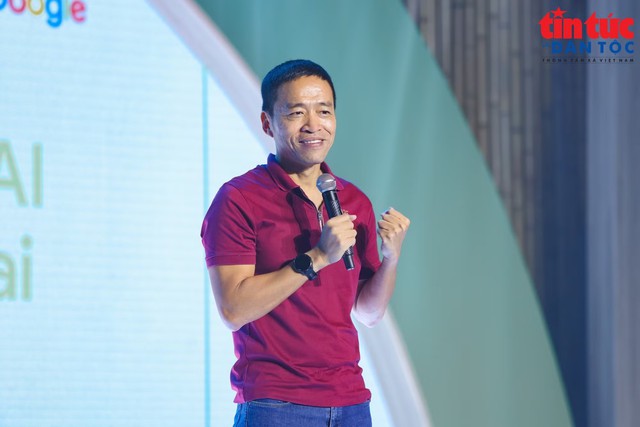
Le Hong Minh, chairman of VNG Group, a leading Vietnamese technology company, speaks at the Applied AI Lab Demo Day 2026 in Ho Chi Minh City, October 8, 2026. Photo: Vietnam News Agency
Saigon AI Hub shifts focus to practical problems
Based on the first cohort's results, SAIH will adopt a new approach for the second cohort by starting with practical problems identified by businesses, government agencies and other organizations, then selecting research teams to develop solutions.
Le Hong Minh, chairman of VNG Group, a leading Vietnamese technology company and a co-founder of SAIH, said SAIH sees itself as a gardener creating the best environment for Vietnamese research 'seeds' to grow and reach the world.
Instead of starting with research topics proposed by researchers, SAIH will identify practical problems that businesses and organizations need AI to solve before inviting research teams to develop solutions, Minh said.
SAIH aims to select at least 10 research projects in 2027, with at least six expected to be successfully tested using real-world data, three to take initial steps toward commercialization and at least one to develop into a startup, according to SAIH.
SAIH began accepting practical problems for its second cohort on October 8 and will receive them through the end of November 2026, prioritizing manufacturing, agriculture, climate change and problems with nationwide impact, VNA reported.
The second cohort is expected to begin research in February 2027 and run for six months.
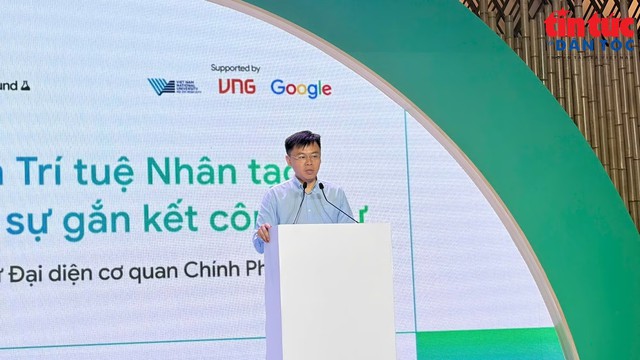
Truong Minh Huy Vu, deputy chairman of the Ho Chi Minh City administration, speaks at the Applied AI Lab Demo Day 2026 in Ho Chi Minh City, October 8, 2026. Photo: Vietnam News Agency
City seeks to connect AI talent with data, markets and investment
Truong Minh Huy Vu, deputy chairman of the Ho Chi Minh City administration, said the city wanted to create an environment where AI talent could turn research results into technology businesses.
The city is developing and completing data systems covering land, taxation, finance and urban management and plans to provide research teams with practical problems to solve.
For example, AI could help identify the specific needs of different groups of public transport passengers and determine when they require assistance, Vu said.
Vu also suggested applying deepfake detection technology in banking, identification and security as Ho Chi Minh City promotes its international financial center, while AI-powered virtual reality solutions could be used to improve tourism and cultural experiences, VNA reported.
The city is also studying AI and data infrastructure projects at technology parks to support research teams and is considering co-investment mechanisms with private venture capital funds to help promising projects develop.
Vu said AI research results should be further commercialized and developed into technology businesses, with support for building business models, raising capital, developing brands and accessing markets.
He stressed that cooperation should not stop at general commitments to support AI research but should be backed by data, testing conditions and resources for implementation.








Max: 1500 characters
There are no comments yet. Be the first to comment.